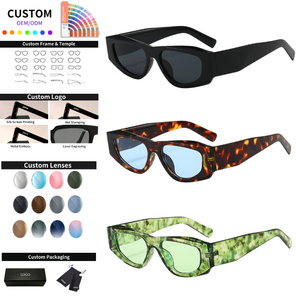
Curated Export Assortment: Unisex Optical & Sunglass Frames
Engineered for high-volume glazing compatibility, clinical prescription fitting (Rx-ready), and enduring ergonomic wear. Each silhouette reflects European minimalist aesthetic tendencies.
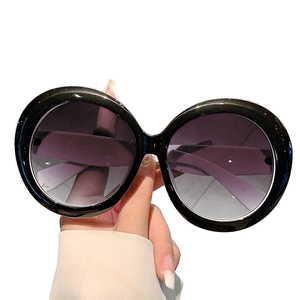
Oversized Round Unisex Sunglasses Lightweight Thick Frame Designer Eyewear UV400
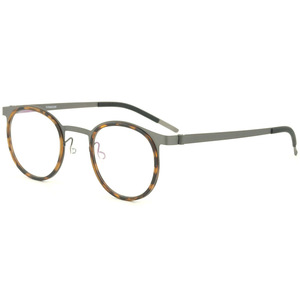
Unisex Round Retro Style Full-Rim Lightweight Titanium Spectacle Frame for Prescription Lenses
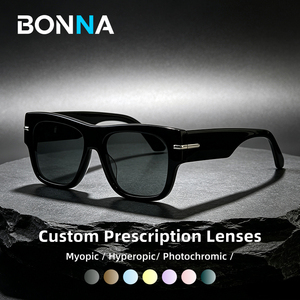
Unisex Luxury Brand Oversized Square Acetate Large Frame Sunglasses & Glazing Bases
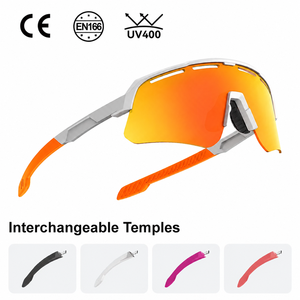
Semi Rimless TR90 Dynamic Frame Lightweight Performance Eyewear for Active Wearers
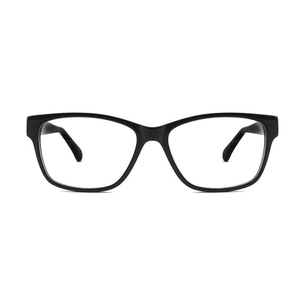
Classic Computer Glasses Ultralight Blue Light Block Prescription Eyeglass Frames
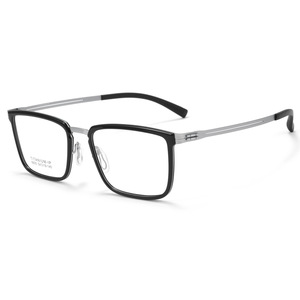
Ultra-Light Pure Titanium Square Geometric Full-Frame Optical Glasses with Nylon Temples
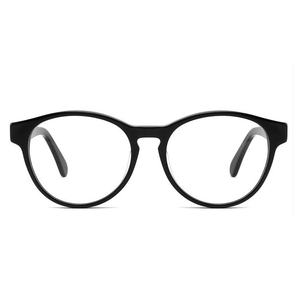
Round Sheet Iron Alloy Optical Frame for High-Diopter Myopia Glazing Factory Direct
2.4M+
Frames Exported Annually to EU
ISO 12870
Ophthalmic Optics Standard Compliant
< 0.12%
Defect Tolerance Rate at Assembly
7-10 Days
Air Freight Delivery to Prague (PRG)
Navigating the Czech Eyewear Landscape: Procurement Dynamics & Trends
A rigorous industrial perspective on why Bohemian and Moravian optical practitioners are shifting procurement channels toward vertically integrated frame factories.
Strict Adherence to MDR 2017/745
The Czech Republic, regulated under the State Institute for Drug Control (SÚKL), enforces stringent European Medical Devices Regulation (EU MDR 2017/745) requirements on Class I ophthalmic medical devices. Our manufacturing ecosystems maintain comprehensive Technical Documentation files, full biocompatibility test reports (ISO 10993-5 cytotoxicity and ISO 10993-10 irritation assessments), and valid CE conformity declarations.
Shift to Unisex & Architectural Minimalism
Czech urban centers exhibit a pronounced pivot toward the "Quiet Luxury" and Bauhaus-inspired functionalist aesthetics. Dispensers in Prague 1 and Vinohrady report growing consumer rejection of ostentatious exterior logos. Our unisex collections emphasize clean geometric balance, micro-etched temple details, satin-finished sheet metals, and crystal-clear Mazzucchelli-grade acetate.
Laboratory Glazing Efficiency
Central European glazing laboratories utilize advanced CNC edging equipment (Essilor, Nidek, MEI). Frames with uneven bevel channels cause high breakage ratios during cold-mounting. Our frames are fabricated with precision CNC-milled 110° bevel grooves and controlled base curves (Base 4.0 to 4.5), ensuring seamless glazing with high-index progressive lenses.
Engineering Specifications for Optometric Dispensers
A comparative structural breakdown engineered specifically for laboratory directors, technical purchasers, and private label optical brands.
| Material Category | Structural Composition | Glazing Suitability (Diopters) | Cold-Bending Tolerance | Key Regulatory Compliance |
|---|---|---|---|---|
| High-Density Cellulose Acetate | Eco-friendly bio-based plant acetate (coton linter base), 3-barrel/5-barrel pinned hinges | Up to -8.00D / +6.00D (Facilitates edge thickness hiding in 4.5mm rim profiles) | Moderate heat required (55°C - 65°C), zero frame shrinkage post-annealing | EN ISO 12870:2018, REACH SVHC, Nickel Release Free |
| Aerospace Grade β-Titanium | Japanese titanium wire, vacuum laser soldered joints, silicone non-slip nose pads | Optimized for Free-Form progressives; recommended up to -6.00D | Excellent cold adjustability without metal memory fatigue | CE Class I Medical Device, ISO 10993 Biocompatibility Certified |
| Swiss EMS TR90 Polymer | High elastic memory polyamide, ultra-lightweight (under 12 grams bare frame) | Ideal for stock single vision lenses (-4.00D to +3.00D) | Cold lens insertion capable; high thermal stability up to 80°C | Food contact polymer safety certified, RoHS compliant |
| Sheet Stainless Steel / Monel | Precision laser-cut Japanese steel plates with vacuum ion plating (IP) coating | All diopter ranges when paired with high-index 1.67 / 1.74 blanks | Full 3-point alignment adaptability via optical laboratory pliers | 240-hour neutral salt spray corrosion resistant (ISO 9227) |
Enterprise Strengths: The Manufacturing Backbone
Why Czech purchasing syndicates and regional optical chains choose our manufacturing facilities over spot traders and middlemen.
Vertical Integration & In-House Tooling
From initial CAD rendering and 3D resin prototyping to mold manufacturing, CNC milling, multi-axis polishing, and automatic pad printing, our operational footprint ensures end-to-end quality control. We eliminate third-party processing variance, securing seamless dimensional consistency across subsequent replenishment batches.
Flexible MOQ for Cautious Assortments
We respect the nuanced liquidity needs of independent opticians and specialized chains across the Czech Republic. Alongside our bespoke OEM private-label production (starting from 300 pieces per mold), we offer rapid replenishment on ready-to-ship catalog frames with low minimum thresholds (starting at 50 units across mixed colorways).
Streamlined Logistics & DDP Solutions
Our experienced export desk manages export licenses, customs declarations, air waybill clearances, and direct delivery to distribution centers throughout Bohemia and Moravia. Whether dealing with Prague customs clearing terminals or inland forwarding via DHL Express and Schenker, all consignments arrive fully compliant with commercial invoicing and EORI protocols.
Frequently Asked Questions: Sourcing for Czech Optical Markets
Direct answers addressing the operational, legal, and financial queries commonly presented by Czech optical wholesalers and retail groups.
Are your unisex frames fully compliant with Czech SÚKL and EU MDR requirements?
Yes. All optical prescription frames exported to the Czech Republic comply strictly with EU Medical Device Regulation (MDR 2017/745) Class I classifications. We provide the mandatory Declaration of Conformity (DoC), product technical files, traceability batch codes etched on inner temples, and testing data demonstrating conformity to the harmonized standard ČSN EN ISO 12870 (Ophthalmic optics - Spectacle frames). In addition, all metal plating finishes undergo nickel release testing under ČSN EN 16128 standards.
How do you handle custom private label branding for local optician chains?
We provide a turnkey OEM/ODM branding suite. This encompasses high-precision laser engraving on titanium temples, hot-stamped gold or silver foil logos on acetate inner cores, custom silk-screen pad printing of CE marks and dimensional model numbers, customized silicone or ceramic nose pads featuring your company monogram, and localized packaging including hard cases, microfiber cloths, and branded warranty cards.
What bridge and temple ergonomics are best suited for the Czech domestic demographic?
Central European facial morphology typically requires deeper European fit bridge contours (bridge widths ranging from 17mm to 20mm), differing from shallow Asian-fit nose bridges. Our unisex frames engineered for Czechia feature ergonomic pantoscopic tilt angles (8° to 10°), ample bridge depth, and temple arm lengths of 145mm to 150mm fabricated with adjustability cores, ensuring opticians can achieve anatomical comfort behind the mastoid process.
What are your payment terms, lead times, and customs clearance protocols for Czech ports of entry?
For custom OEM orders, production lead time averages 45 to 60 days following pre-production sample sign-off. Ready-stock inventory dispatches within 48 to 72 hours. Standard commercial terms are 30% deposit with the balance payable against the bill of lading or prior to final dispatch. For transit to Prague or Brno, air consignments via PRG Airport clear customs within 24 to 48 hours when supported by our complete HS Code documentation (Heading 9003 for spectacle frames), packing lists, and origin declarations.
Can our laboratory glaze your frames using automated industrial lens edgers?
Absolutely. Our optical frames undergo strict optical symmetry verification prior to dispatch. Lens grooves feature standard 0.6mm depths with continuous uniform bevel tracks. Whether your lab utilizes automated robotic rimless drilling, high-pressure bevel tracing, or standard V-beveling, our frames maintain uniform structural tension, mitigating the risk of lens pop-out or rim cracking during cold and warm glazing.