Curated Wholesale Optical Collections for Nigerian Importers
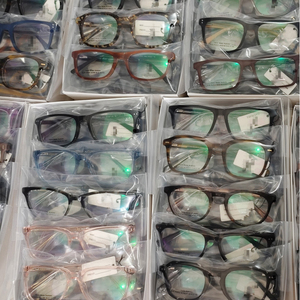
Each frame model is precision-crafted for prescription glazing (Rx-ready), high-humidity structural stability, and superior ergonomic fit across diverse facial profiles.
The Dynamics of Nigeria's Optical & Designer Frame Import Market
Understanding the structural shifts in retail ophthalmic dispensing, parallel foreign exchange management, and consumer taste evolution across West Africa's primary commercial centers.
With an estimated population exceeding 220 million people and a rapidly expanding demographic of upwardly mobile professionals, entrepreneurs, and digital specialists, the Federal Republic of Nigeria represents the highest-velocity eyewear marketplace in Sub-Saharan Africa. Epidemiological data indicates that over 15% of the adult population requires immediate refractive vision correction, ranging from simple astigmatism and presbyopia to progressive myopia. However, the commercial optical reality of Nigeria cannot be analyzed purely as a healthcare utility; it is inherently intertwined with a sophisticated cultural demand for personal aesthetics, sartorial distinction, and social presentation.
In major trading hubs such as Lagos Island (specifically the dense commercial corridors of Idumota and Balogun), the Trade Fair Complex along Badagry Expressway, and the expansive commercial conduits of Onitsha and Kano, wholesale optical importers face unique macroeconomic and supply-chain pressures. Chief among these is the volatility of the Nigerian Naira (NGN) against the United States Dollar (USD), alongside stringent Central Bank of Nigeria (CBN) foreign exchange (Form M) allocations. For independent opticians, clinic chains, and commercial importers, purchasing through intermediaries or European redistributors has become financially unsustainable due to compounded markups and freight surcharges. Sourcing directly from certified original equipment manufacturers (OEM) and precision export factories offers the required commercial antidote: lowering landing costs per unit by 40% to 65% while maintaining strict adherence to international optical tolerances.
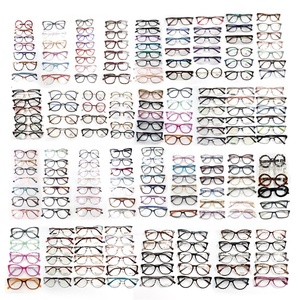
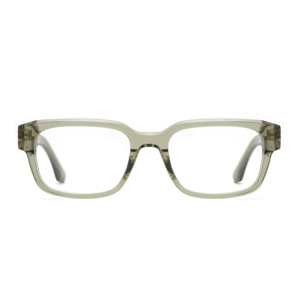
Furthermore, Nigerian retail optical consumption exhibits a bifurcated demand structure. On one end is the high-volume, price-elastic segment requiring ultra-durable, injection-molded TR90 reading frames and mixed-clearance lots capable of moving rapidly through open markets and street-level pharmacies. On the other end is an explosive appetite for "Quiet Luxury" and bold architectural designer frames made from high-density, hand-polished cellulose acetate. These high-tier collections command impressive retail margins in high-end optical practices across Victoria Island, Ikoyi, Lekki Phase 1, and Maitama in Abuja. To successfully capture both market ends, wholesale importers require a manufacturer capable of consolidating diverse stock inventories, flexible minimal order quantities (MOQs), and swift lab-compatible frame engineering.
Engineering Eyewear for Tropical Sub-Saharan Environmental Resilience
Standard generic eyewear often fails rapidly in West Africa. We engineer frame architectures specifically to counter high relative humidity, elevated solar UV-index, and perspiration-induced galvanic corrosion.
90-Day Cured Cellulose Acetate
Standard mass-market acetate contains volatile plasticizers that leach out in equatorial heat (35°C–42°C), causing frames to warp, turn brittle, or whiten. Our frames utilize cotton-seed based, aged cellulose acetate sheets cured in thermal kilns for 90 days. This stabilizes the molecular polymer matrix, guaranteeing zero shrinkage, enduring gloss, and permanent dimensional stability across the coastal humidity of Lagos and Port Harcourt.
Electro-Galvanic Passivated Metals
Salt-laden air combined with human sweat salts (sodium chloride and lactic acid) rapidly strips generic nickel electroplating, causing unsightly green verdigris oxidization and dermal dermatitis. We apply vacuum IP (Ion Plating) or PVD titanium-nitride barrier coatings over surgical-grade 304/316L stainless steel. This galvanic isolation provides unyielding corrosion resistance under demanding West African microclimates.
Swiss EMS Grilamid TR90 Polymers
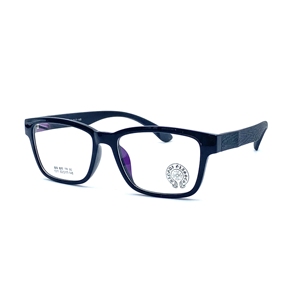
For demanding commercial volumes and reading spectacles, we employ authentic Swiss EMS TR90 memory polymers. These frames exhibit exceptional flexibility, high heat-deflection thresholds (>120°C), and negligible water absorption. They survive rough motorcycle transit (Okada distribution), tight packing in wholesale cartons, and high-impact physical stress without snapping or frame deformation.
Strategic Distribution Sectors Across Nigeria's Economic Regions
Tailoring product mixes to distinct geographical sub-markets maximizes retail sell-through and reduces stagnant inventory.
Corporate Lagos & Abuja Diplomatic Zones
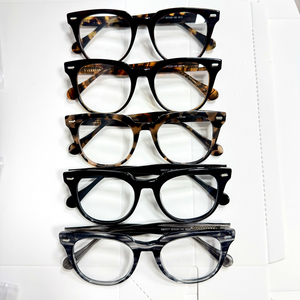
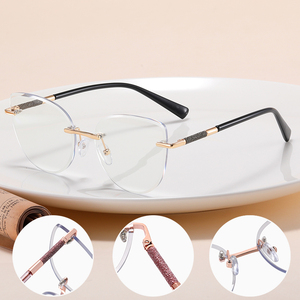
In financial institutions, embassies, and federal ministries across Victoria Island, Ikoyi, Central Business District (CBD) Abuja, and Garki, eyewear functions as an essential executive status symbol. Patients prefer architectural square silhouettes, deep black and tortoiseshell finishes, and subtle rimless stainless steel frames. Frame designs without loud, gaudy logos ("Quiet Luxury") that comfortably accommodate premium multi-focal progressive lenses dominate patient selections in these premium optical boutiques.
Open Market Wholesale Hubs (Idumota & Onitsha)
Traders in Idumota (Lagos Island) and the Onitsha Main Market in Anambra State demand high inventory velocity. Here, our mixed-assortment clearance lots, pre-assembled reading glasses, and lightweight TR90 models move in master cartons of 300 to 1,200 pieces. Fast customs clearance, compact dimensional carton packaging to minimize air-cargo volumetric weight charges, and durable hinge constructions ensure distributors achieve rapid cash turnover and consistent margins.
Clinical Ophthalmology & Optometric Practices
Private eye clinics, university teaching hospitals (such as LUTH, UCH, and UNTH), and independent optometric practices require strict mechanical precision. Dispensing opticians demand frames with precision V-grooves, consistent pantoscopic tilt, and anatomical nose-pad splay to house CR-39, high-index 1.67 lenses, and polycarbonate safety glazing. Our frames eliminate lab lens slippage and reduce costly lens edging breakage during automated bench finishing.
Key Optical Industry Trends Transforming the Nigerian Landscape
Anticipating consumer shifts allows smart optical importers to position forward inventory before market saturation occurs.
Blue-Light Blocking Boom
Nigeria's booming technology ecosystem (centered around Yaba, Lekki, and Abuja) alongside widespread smartphone banking has triggered an epidemic of digital asthenopia. Frame orders with pre-fitted plano blue-cut filter lenses have grown by over 140%, serving non-prescription wearers seeking stylish ocular defense during long work hours.
Photochromic Lens Synergy
Due to equatorial solar irradiance, Nigerian optical customers expect their daily prescription spectacles to double as sunglasses. Frames must have sufficient rim depth (minimum 32mm–38mm B-measurement) to comfortably host fast-reacting photochromic (Transition) lenses without edge distortion or cheek contact.
Bold Statement Silhouettes
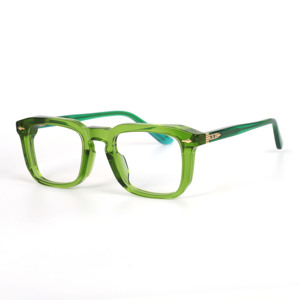
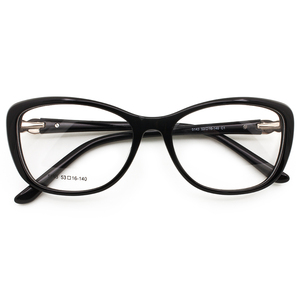
Influenced by Nollywood film styling and contemporary Afrobeats fashion, Nigerian buyers gravitate toward confident, thick-gauge geometric shapes. Square vintage rivets, sharp cat-eye contours, and rich emerald green or warm amber hues outperform muted, generic frames across metropolitan boutiques.
Private Label Branding
To escape price wars on branded generics, established Nigerian optical chains and retail groups are aggressively launching private labels. We supply turnkey OEM production: pad-printing customer brand names on inside temples, laser-engraving demo lenses, and delivering custom luxury cases.
Why Leading West African Importers Partner With Our Manufacturing Facilities
Combining European design aesthetics with scalable Asian manufacturing efficiency, certified quality control, and direct trade facilitation.
Direct Factory Pricing
We eliminate trading middlemen, agents, and offshore markups. Working directly with our production facility allows Nigerian buyers to secure true ex-factory pricing, safeguarding gross operating margins even during periods of Naira foreign exchange contraction.
Low MOQ Trial Orders
We understand the capital restrictions imposed by strict FX banking rules. Importers can place diversified test orders with low MOQs (as low as 10–20 pieces per color on ready stock) to trial new frame silhouettes across their regional customer base without holding heavy inventory.
Rx-Ready Lab Precision
Every optical frame leaving our assembly lines is calibrated to standard lens base curves (Base 4 to Base 6) with clean, burr-free bevels. Lab technicians can glaze lenses on automated edgers (Essilor, Nidek, Briot) with zero frame snapping or lens pop-out issues.
Custom Branding & OEM
Elevate your retail business from a price-sensitive re-seller to an established proprietary eyewear house. We offer custom temple core wire embossing, custom logo pad-printing, CE/UV400 packaging, microfiber cleaning cloths, and custom cases tailored to your specifications.
Step-by-Step Logistics, NAFDAC, and Clearing Protocols for Nigeria
Clear, compliant freight and customs protocols ensure smooth shipment arrivals via air or sea freight without unexpected port delays.
1. Freight Routing (Air Consolidation vs. Ocean Sea Freight): For time-sensitive optical stock, high-margin acetate designer lines, and urgently needed clinic inventories, air cargo consolidation via Murtala Muhammed International Airport (LOS / MMIA) in Lagos is the preferred route. Average transit from our Guangzhou or Hong Kong dispatch hubs takes 5 to 9 business days via scheduled commercial air-freight carriers (Ethiopian Airlines Cargo, Qatar Cargo, or direct cargo consolidators in Ikeja). For large-scale bulk procurement, clearance lots, and comprehensive reading glasses inventories (5,000+ units), Full Container Load (FCL) or Less than Container Load (LCL) maritime shipping to the Lagos Port Complex (Apapa) or Tin Can Island Port yields substantial freight cost savings per unit with typical transit durations of 32 to 45 days.
2. Regulatory Landscape (NAFDAC & SONCAP Verification): Optical frames classified under Harmonized System (HS) Code 9003 (Frames and mountings for spectacles, goggles or the like) require clear commercial and technical classification. While finished corrective ophthalmic medical devices and contact lenses fall under strict National Agency for Food and Drug Administration and Control (NAFDAC) clinical registration, non-powered optical frames and sunglasses primarily require Standards Organisation of Nigeria Conformity Assessment Programme (SONCAP) documentation and Clean Inspection Reports (CCVO). Our export department provides complete factory Certificates of Analysis (CoA), CE declarations, drop-ball impact compliance, and non-hazardous material documentation to facilitate expedited Pre-Arrival Assessment Report (PAAR) issuance through your licensed customs clearing agent in Nigeria.
3. FX Settlement & Flexible Commercial Terms: To mitigate the operational bottlenecks of securing commercial bank Form M foreign exchange allocations, we accommodate flexible, compliant international trade settlement structures. We accept major freely convertible currencies (USD, EUR, GBP), direct offshore commercial accounts, and Chinese Yuan (RMB) settlement. This allows Nigerian importers with commercial accounts or purchasing partnerships in China to settle transactions swiftly without incurring double currency-conversion penalties.
Frequently Asked Questions for Nigerian Optical Importers & Opticians
Detailed technical and operational answers to support your procurement evaluation and risk management.
What is the minimum order quantity (MOQ) for shipping to Lagos or Abuja?
For ready-stock models available in our central warehouse catalog, our minimum order quantity is exceptionally accessible: as low as 10 to 20 pieces per model/colorway, with a consolidated order minimum of 50 to 100 units across different designs. This allows independent optical practices and boutique owners to test various designer silhouettes before committing to deeper volume. For fully custom OEM/ODM production featuring your proprietary brand logo and unique custom acetate colors, standard production MOQs range from 300 to 500 pieces per mold.
How do your acetate frames withstand the intense humidity and heat of West Africa?
Cheap plastic or low-cure acetate frames absorb moisture and leach plasticizer compounds when exposed to Nigeria's high ambient humidity (regularly exceeding 80% along coastal Lagos and the Niger Delta) and temperatures above 35°C. This leads to frame warping, bridge splaying, and surface clouding. We exclusively use high-density cellulose acetate sheets that undergo 90-day thermal stabilization before CNC cutting. Furthermore, our internal temple cores feature nickel-silver wire with mechanical barb locks, ensuring that opticians can adjust temples with heat and trust that the pantoscopic angle and temple curve will stay locked in place permanently.
Can your optical frames accommodate high-power prescription and progressive lenses?
Yes. All of our optical frames are built with engineered optical bevel grooves calibrated for international prescription glazing standards. The rims feature uniform groove depths (0.6mm to 0.8mm) and appropriate wall thicknesses designed to conceal lens edge thickness in moderate-to-high myopia prescriptions (-4.00D to -8.00D) when cut with standard 1.56, 1.61, or 1.67 index lenses. Furthermore, our frame collection maintains balanced B-measurements (vertical lens height > 32mm) on key models, ensuring sufficient corridor height for progressive addition lenses (PALs) without truncating reading zones.
What shipping agents or cargo forwarders do you partner with for Nigerian delivery?
We work seamlessly with both client-designated freight forwarders and our established network of specialized cargo partners operating between China/Hong Kong and Nigeria. For air cargo, we regularly dispatch to well-known consolidation forwarders located in Ikeja, Lagos, who provide complete door-to-door or terminal pickup services at MMIA Cargo Village, handling customs clearance internally. If you already have an appointed logistics handler or buying agent in Guangzhou, Yiwu, or Hong Kong, we provide free consolidation delivery directly to their warehouse.
How can Nigerian optical businesses mitigate foreign exchange (FX) risks when importing?
To reduce currency conversion exposure and delays from banking FX allocations, we offer multiple flexible payment structures. We support payments in Chinese Yuan (RMB) for clients with access to direct trade accounts, international wire transfers (T/T) in USD, EUR, or GBP, and third-party commercial settlement services. Additionally, by maintaining low MOQs on ready-inventory models, Nigerian buyers can operate on a "lean inventory" model—ordering smaller batches every 4 to 6 weeks—thereby matching purchasing cycles to real-time retail cash collections and reducing currency devaluation risks.
Do you provide private-label branding, customized cases, and marketing collateral?
Yes. Brand building is essential for Nigerian optical retail chains seeking sustainable profit margins. We offer complete custom OEM branding packages. This includes high-resolution pad-printing or hot-stamping of your clinic/store name and logo on the inner temple arms, laser-etching your mark on the demo lenses, and producing custom-branded hard-shell clam cases, faux-leather travel pouches, and micro-denier cleaning cloths. Packaging can be pre-barcoded with your inventory SKU data for direct integration into your retail POS system upon arrival.
What is the defect rate, and what warranty replacement coverage is provided?
We maintain an industry-leading factory defect rate below 0.3%, supported by our three-tier quality control protocol (raw material verification, mid-assembly bench inspection, and pre-shipment alignment/barrel-hinge torque testing). In the rare event that a frame arrives with structural flaws, micro-fractures, or plating blemishes, we provide immediate credit notes or complimentary piece-for-piece replacements added directly into your next consolidated air shipment.
Can we order mixed assortments of optical frames and sunglasses in a single carton?
Absolutely. Many of our Nigerian partners merchandise matching "Optical + Sol" display collections—pairing a clear ophthalmic model with its sister sunglass model fitted with UV400 polarized sun lenses. We allow you to consolidate optical frames, reading spectacles, and fashion sunglasses into a single master carton, optimizing your freight weight ratios and providing your practice with a cohesive merchandising story right out of the box.
Upgrade Your Optical Frame Sourcing in Nigeria Today
Connect directly with our dedicated export sales team to obtain our full B2B wholesale catalog, current inventory line sheets, and sample trial orders for your optical clinic, boutique, or distribution company.
Send an Inquiry