
New Arrival Oversized Retro Square Pilot Optical Frames Unisex Anti Blue Light Eyeglasses Men Women
Structure: Dual-Bridge Metal
Fit: Rx Single/Progressive
The Uruguayan prescription eyewear market represents one of the most mature, quality-discerning optical sectors in South America. Driven by high purchasing power, rigorous public health standards, and a sophisticated consumer base centered across Montevideo, Punta del Este, and Canelones, optical retail in Uruguay prioritizes precision grooving, lightweight ergonomic comfort, and enduring raw materials. As a premier original equipment manufacturer (OEM) and private-label optical supplier, we engineer export-grade prescription frames tailored strictly to the technical and logistical demands of Uruguayan optical laboratories and boutique eyewear retailers.
Every optical model is engineered with uniform lens bevel depth, stable bridge architecture, and reinforced barrel/spring hinges to withstand daily adjustments in local optical edging workshops.

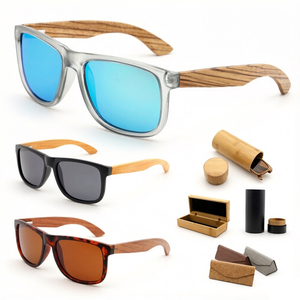
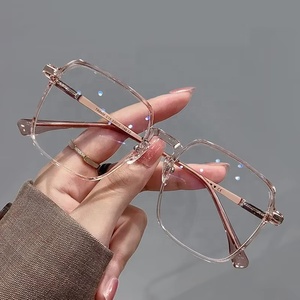
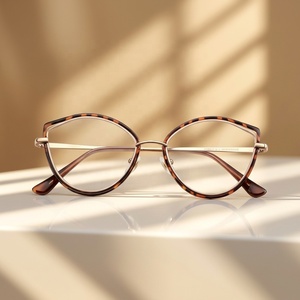
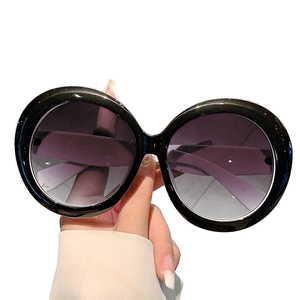


Wholesale frames deployed in the Uruguayan market face unique ecological, vocational, and recreational demands. Our design philosophy integrates material science with local usage conditions across Montevideo's corporate sectors and the coastal Atlantic corridor.
Montevideo is increasingly recognized as a Latin American technology hub (Zonamerica, World Trade Center Montevideo, and Ciudad Vieja tech firms). Optometry retail clients require low-mass, high-tensile TR90 and Mazzucchelli-style bio-cellulose acetate frames engineered for 10-12 hours of screen interaction. Our precision-engineered frames support high-index anti-reflective blue-light lenses without optical aberration or bridge slippage.
Coastal maritime environments, stretching along the Rambla of Montevideo eastward through Rocha and Maldonado, demand high resistance to saline air corrosion and severe solar irradiance. Standard electroplated coatings deteriorate rapidly in maritime humidity. Our metal-acetate hybrid silhouettes feature PVD (Physical Vapor Deposition) multi-layer sealants, medical-grade nickel-free metals, and prescription-glazed polarized lenses that resist salt spray and oxidation.
Uruguay holds South America's most senior demographic distribution, resulting in substantial domestic demand for progressive addition lenses (PAL) and multifocals. Progressive lens fitting requires strict minimum B-measurement (lens height ≥ 32mm), stable pantoscopic tilt, and reliable face-form wrap. Our core acetate and metal frames maintain rigid lens grooves that prevent progressive lens distortion and ensure immediate optical adaptation.
Optical businesses in Uruguay are reorienting their procurement pipelines away from fast-fashion synthetic disposables toward durable, quiet-luxury silhouettes with certified chemical safety and supply chain transparency.
| Market Vector | Legacy Paradigm in Uruguay | Emerging Paradigm & Sourcing Shift | Our Manufacturing Engineering Solution |
|---|---|---|---|
| Aesthetic Demands | Heavy external branding, prominent fashion labels. | "Quiet Luxury": Unbranded minimalist profiles, bespoke bevels, natural hand-polishing. | Custom laser debossing, concealed core-wire engravings, ergonomic sculpted temple tips. |
| Material Integrity | Recycled plastics with high brittleness & plasticizer migration. | Bio-Based Cellulose Acetate & Swiss EMS TR90 hypoallergenic polymers. | SGS and REACH-tested eco-acetate materials with zero harmful phthalates, skin-safe for long daily wear. |
| Lab Edging Compatibility | Generic bevel depths causing lens pop-out or edge chipping. | Standardized V-Groove Depth aligned with Briot, Essilor, and Nidek auto-edgers. | CNC computer-milled 1.8mm ±0.05mm uniform groove channels ensuring rapid optical lab glazing. |
| Regulatory Standards | Informal cross-border trading lacking DIN EN certifications. | MSP (Ministerio de Salud Pública) & LATU compliance audits. | Full lot traceability, biocompatibility certification, and complete technical dossiers for fast clearance. |
Uruguayan optical boutiques increasingly favor paired collections (such as identical silhouettes available simultaneously in clear optical demo and tinted polarized Sol variants). This enables opticians to upsell prescription sun solutions without requiring secondary physical frame fits.
With high computer adoption rates across Uruguayan enterprises, total frame weight has emerged as a top consumer buying factor. Frames exceeding 28 grams suffer higher return rates, while our ultra-light TR90 and titanium-acetate hybrids weigh 14–19 grams.
Independent optometry chains in Montevideo and Punta del Este are building proprietary in-house brands to escape multinational distributor markups. Our turnkey OEM private-label program supplies custom temple-tip laser engraving, personalized hard cases, and branded microfibers.
We combine European aesthetic discipline with ISO-certified mass-production scalability. Every optical chassis undergoes continuous mechanical stress testing before packaging.
Frame failure most commonly occurs at the temple joint. Our optical frames utilize multi-barrel rivets and German-engineered internal spring systems subjected to 50,000 continuous open-close cycles without structural loosening, play, or mechanical misalignment.
Our cellulose acetate components undergo four successive stages of dry tumbling in Japanese walnut wood chips followed by skilled artisan hand-finishing. This produces glass-smooth bevels, rich visual depth, and elimination of sharp molding ridges on all skin contact zones.
Exporting optical goods into the Port of Montevideo requires spotless documentation. We provide verified Certificates of Origin, Bill of Lading, Certificate of Conformity, and technical material safety data sheets (MSDS) to streamline LATU inspection and eliminate clearance delays.
Direct factory pricing, comprehensive technical blueprints, and material sample kits dispatched directly to your optical lab or practice in Uruguay.
Practical answers addressing regulatory hurdles, lens glazing compatibility, private labeling, and port logistics for optical business directors and buyers in Uruguay.