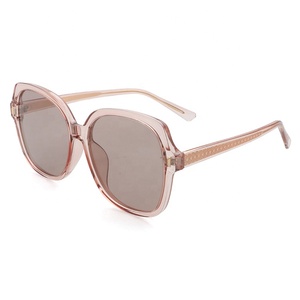
Vintage Oversized Women TR90 Lightweight Sunglasses
TR90 Polyamide
UV400 Polarized
A curated lineup of prescription-ready optical structures and high-performance solar silhouettes. Built for independent Swiss opticians, boutique chains, and optical distributors demanding exceptional tolerance and subtle aesthetic refinement.
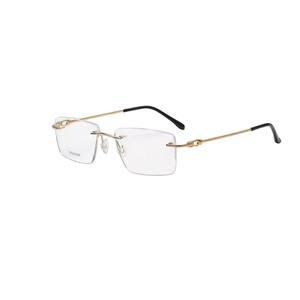
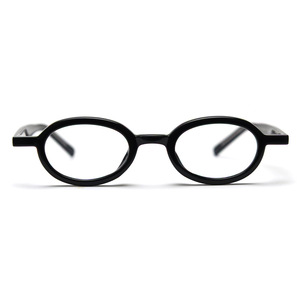
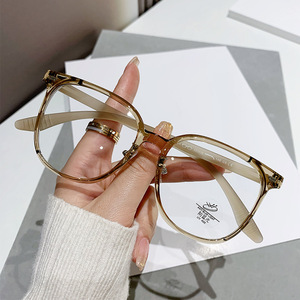
CNC Glaze Tolerance
REACH & Swiss MedDO Compliant
Tumble-Polished Luster
Export Partner Cantons
From the high-frequency trading suites of Zurich to the intense UV altitudes of the Bernese Alps, eyewear in Switzerland requires strict functionality matched with unstated luxury.
The urban professional demographic demands the Quiet Luxury aesthetic. There is an aversion to conspicuous logos. Instead, optical wearers seek slimline, hypoallergenic Japanese Beta-Titanium and subdued, matte-brushed acetate silhouettes that convey status through precision hand-finishes, clean hinge integrations, and absolute weightlessness during 14-hour business routines.
The Swiss terrain presents demanding optical requirements. Skiing in St. Moritz or trekking in Zermatt requires sunglasses capable of withstanding intense UV radiation, alpine snow glare, and rapid thermal shocks. Our TR90 memory polymers maintain dimensional integrity down to -30°C, offering stress-crack resistance and accommodation for Category 3 and Category 4 polarized lenses.
Independent Swiss opticians operate with high clinical standards. Optical frames must have precise lens bevel angles, consistent pantoscopic tilt adjustability, and uniform temple coring. This allows master opticians to glaze high-index freeform progressives without structural deformation or axis drift, ensuring uncompromised visual fidelity for the patient.
Technical whitepaper insights into consumer shifts, sustainability mandates, and demographic vectors impacting eyewear sourcing across Switzerland.
Swiss consumers hold brand sustainability to rigorous standards. Traditional cellulose acetate is increasingly replaced by certified Bio-Based Acetate derived from renewable wood pulp, using phthalate-free, plant-based plasticizers that achieve over 68% biodegradability under ISO 14855 conditions. Concurrently, public demand has accelerated procurement for Global Recycled Standard (GRS) stainless steel and re-melted marine polyamides. Sourcing strategies must provide verifiable supply chain provenance rather than superficial green marketing claims.
Switzerland has one of Europe's most active silver-generation populations, with high disposable income and an uncompromising demand for visual ergonomics. This demographic profile has led to rising prescription requirements for complex progressive addition lenses (PAL). For an OEM/ODM factory, frames must feature deep B-measurements (minimum 32mm–36mm) and stable, micro-adjustable titanium nose pad assemblies. This ensures opticians can establish optimal vertex distance and progressive corridor alignment without sacrificing frame balance.
In mature luxury markets such as Basel, Lucerne, and Lausanne, the "quiet luxury" ethos guides purchasing behavior. Visible exterior branding and heavy monograms are declining in independent boutiques. Instead, client retention centers on tactile quality: multi-barrel barrel-tumbled finishes, functional wire cores visible through custom crystal acetate, beveled chassis rims, and balanced weight distributions that ensure long-wear comfort without pressure on the bridge.
Dedicated manufacturing pipelines built to satisfy European Medical Device Regulation (EU MDR 2017/745) and Swiss Medical Devices Ordinance (MedDO).
Our facility uses multi-axis CNC machines to cut acetate and pure titanium blocks with a machining tolerance within ±0.02mm. This precision guarantees stable lens groove depths across production runs, preventing cold-glaze lens popping and lens strain birefringence.
We perform rigorous laboratory screening on every batch. Materials comply fully with REACH Annex XVII for nickel release (EN 16128:2015), total cadmium, and lead concentrations. Sunglasses meet ISO 12312-1:2022 and CE Medical Device standards under class I designations.
To support independent optician consortiums and emerging Swiss luxury brands, we provide custom brand manufacturing starting at 300 pieces per acetate model, split across up to 3 bespoke colorways. Services include laser logo engraving, custom temple core tooling, and specialized German hinge hardware.
Addressing import customs, quality verifications, supply chain logistics, and production metrics for Swiss optical business directors.
Shipments to Switzerland benefit from the bilateral Free Trade Agreement between Switzerland and China. We provide fully authenticated Certificates of Origin (EUR.1 or FTA preferential declarations), enabling Swiss importers to clear the Federal Office for Customs and Border Security (BAZG) with preferential or zero tariff rates, leaving only standard Swiss VAT (MWST) obligations.
Yes. Corrective prescription frames are categorized as Class I medical devices in Switzerland. Our production lines maintain ISO 13485 quality systems. We supply Technical Documentation files, UDI coding configurations, and ensure all demo lenses, printing inks, and structural parts are biologically safe and certified according to EN ISO 12870 standards.
We cure our premium cellulose acetate in controlled drying kilns for 60 to 90 days prior to final tumbling and milling. This removes internal material stresses and volatile solvents, preventing frame shrinkage or warping when optical technicians apply hot air glazing at 50°C–60°C.
Yes. We offer complete private label packaging production, including FSC-certified rigid boxes, collapsible vegan leather cases, micro-denier cleaning cloths, and custom authenticity cards. Packaging can be developed to mirror boutique-level unboxing standards.
Rapid functional prototypes via 3D printing and master hand-sculpting require 10 to 14 working days. Finished pre-production samples run in dedicated tooling take 30 to 45 days. Standard bulk production runs generally finalize within 60 to 75 days, followed by direct door-to-door express air freight to Zurich, Geneva, or Basel airports within 4 to 6 business days.
Connect with our product development engineering team. Request material swatches, mechanical CAD blueprints, and full collection wholesale catalogs for the current season.
Get Catalog