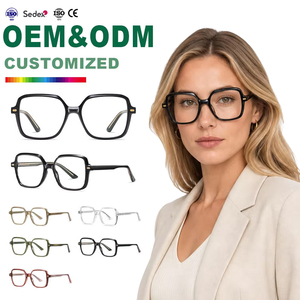
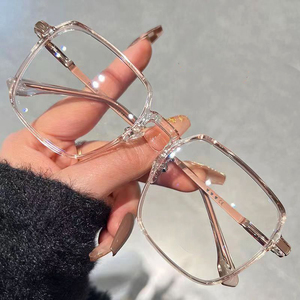
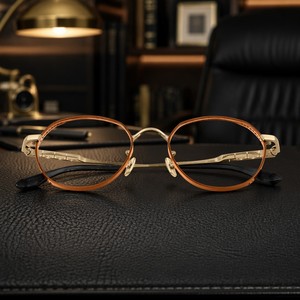
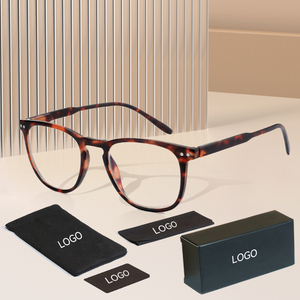
Structural Requirements of TR90 Memory Polymers in the Austrian Ophthalmic Market
The Austrian optical distribution landscape possesses distinct clinical and mechanical expectations that diverge sharply from broad consumer fashion sectors. Characterized by high prescription lens market penetration (notably free-form progressive lenses and high-index 1.67/1.74 organic resins), retail opticians from Vienna’s Mariahilfer Straße to independent clinics in Tyrol demand ophthalmic chassis that display absolute torsional stability and cold-glazing flexibility. As a premier original equipment manufacturer (OEM) and high-precision injection foundry in China, we formulate our optical TR90 frames exclusively with authentic Grilamid TR-90 polyamide derived from Swiss EMS-CHEMIE. This material selection eliminates the chronic cracking, spontaneous plasticizer migration, and hinge-pocket deformation that frequently undermine inferior generic homopolyamides in cold Central European microclimates.
In Austria, optical dispensing requires strict adherence to Austrian Federal Economic Chamber (WKO) standards and the Medical Device Regulation (EU MDR 2017/745 Class I). Frame geometries cannot merely be aesthetically pleasing; they must feature precisely calculated lens groove depths (typically 0.6mm to 0.8mm with a 115-degree standard V-bevel). This critical engineering dimension ensures that complex astigmatism cuts and high-minus edges do not push the eyewire out of symmetry or create corneal vertex distance (CVD) deviations when fitted on Austrian consumers.
Clinical Progressive Glazing (Gleitsichtbrillen)
Austrian opticians prioritize stable pantoscopic tilt (8°–10°) and minimal frame splay. Our precision-tempered TR90 core ensures progressive channels stay aligned throughout years of daily tension without temple outward fatigue.
Sub-Zero Alpine Outdoor Performance
From Innsbruck alpine sport enthusiasts to winter commuters, standard cellulose acetate becomes brittle at sub-zero temperatures. EMS TR90 retains its ductile impact resistance down to -30°C, drastically lowering breakage warranty returns.
Dermatological Biocompatibility
Fully compliant with EN ISO 12870 nickel-release thresholds. Our raw granules contain zero phthalate plasticizers, making them entirely skin-friendly for hyper-reactive dermatological profiles common in clinical optometry practices.
Austria's eyewear trade has witnessed a structural shift toward sustainable, functional luxury and ergonomic utility. Independent buyers across Styria, Upper Austria, and Carinthia are pruning low-margin, generic stock in favor of high-durability polymer solutions that protect retail margins while curbing after-sales adjustments. Five key macro trends dictate purchasing decisions among Austrian optical sourcing directors:
Quiet Luxury & Zero-Logo Aesthetics
Austrian buyers reject conspicuous brand logos. Market velocity is dominated by balanced silhouettes, muted architectural tones (matte slate, olive horn, translucent smoke), and refined structural joints.
Hybrid Co-Molding (TR90 + β-Titanium)
Combining the lightness of TR90 front rims with ultra-resilient Japanese or German beta-titanium temples. This configuration allows opticians to execute micro-adjustments to endpieces without frame heat ovens.
Circular Bio-Based Polyamides
With the EU Green Claims Directive reshaping retailer accountability, our production lines now feature eco-TR90 derived from sustainable castor bean bio-feedstocks, reducing product life-cycle carbon emissions by 42%.
Pre-Calibrated Bevel Geometry
Industrial lens edgers (such as Essilor Mr Blue or Nidek ME series) prevalent in Austrian workshops require exact lens groove consistency to prevent frame torque when installing thick positive meniscus lenses.
Manufacturing Rigor
Why Tier-1 European Optical Brands Choose Our Chinese Production Ecosystem
As direct manufacturing partners to internationally recognized private labels and wholesale networks, our facility bridges high-throughput Chinese tooling advantages with the uncompromising precision required by European optical labs. We don't operate as a typical trading middleman; our infrastructure contains proprietary mold tooling suites, multi-axis robotic finishing, and dedicated cleanroom vacuum coating cells.
Custom Tooling & Mold Integrity
Equipped with high-precision CNC spark erosion machinery from Makino and Fanuc Roboshot electric injection presses, we hold mold cavity tolerances down to ±0.02mm. This eliminates irregular eyewire tension across batch runs.
Proprietary Surface Treatment
Unlike standard air-dried PU spray paints that peel under skin acid exposure, our TR90 optical frames undergo electrostatic cleanroom coating followed by dual-cure UV hard coatings, passing 72-hour sweat immersion tests (ISO 12870 Section 4.8).
Complete Regulatory Assurance
Every dispatch bound for Vienna, Graz, or Linz is supported by full CE documentation, Declarations of Conformity under EU Regulation 2017/745, REACH Annex XVII certification, and transparent customs TARIC tariff classification codes.
Procurement Directives
Frequently Asked Questions: Sourcing TR90 Eyewear for Austria
How do your TR90 frames handle cold-glazing and high-prescription (+/- 4.00D+) lenses?
Our frames are specifically molded with deep, symmetrical 115° optical V-grooves utilizing pure Swiss Grilamid TR90. This enables Austrian optical labs to perform standard cold insertion without frame heaters, preventing eyewire rollover or lens birefringence stress marks even when glazing thick high-index mineral or CR-39/polycarbonate lenses.
What documentation do you provide for Austrian Customs and EU Medical Device Regulation compliance?
We provide full Technical Construction Files (TCF) containing the EU Declaration of Conformity for Class I Medical Devices (MDR 2017/745), testing certificates according to EN ISO 12870:2018 (covering dimensional tolerance, mechanical strength, perspiration resistance, and bridge deformation), and SGS laboratory reports proving complete zero-nickel release and REACH chemical clearance.
What are your Minimum Order Quantities (MOQ) for custom private-label branding?
For ready-stock models featured in our core catalog, minimum orders start from just 50 to 100 units per model across mixed colorways, supporting independent opticians and boutique groups testing assortment sell-through. For full bespoke OEM color casting, pad-printed temple branding, and custom packaging, the standard minimum is 300 to 500 units per model.
How do you ship to Austria, and what are typical lead times including customs clearance?
We routinely ship via expedited air freight (DHL, FedEx, UPS) arriving at Vienna International Airport (VIE) within 4 to 7 business days for express shipments, including door-to-door DDP arrangements where customs duties and Austrian import VAT (EUST) are fully managed. For bulk sea-rail freight (via the Silk Road freight network directly into Central Europe hubs), lead times average 22 to 28 days.
Can you manufacture hybrid models combining TR90 fronts with Titanium or Acetate temples?
Yes. Our dedicated composite assembly workshop produces advanced hybrid optical frames pairing Grilamid TR90 front chassis with ultra-flexible β-titanium or high-density Mazzucchelli acetate temples. These hybrid models are fitted with OBE or Comotec engineered hinges, ensuring exceptional tactile ergonomics and long-term serviceability at the optician counter.
Ready to Strengthen Your Eyewear Margins in the Austrian Market?
Connect directly with our engineering and B2B export desk for model specifications, sample line sheets, and comprehensive factory-direct pricing structures.