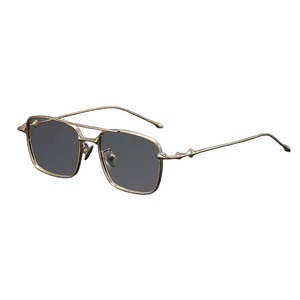
Featured Classic & High-Precision Eyewear Engineered for Japan
Explore our precision-crafted optical lines and sunglasses calibrated to strict Tokyo optical standards, integrating beta-titanium balance, skin-safe TR90, and hand-finished Mazzucchelli acetate.
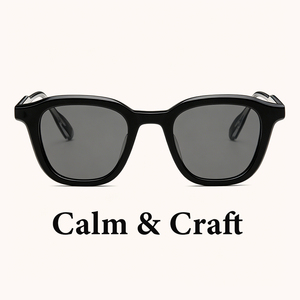
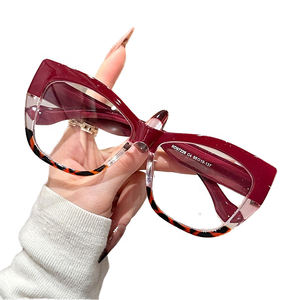
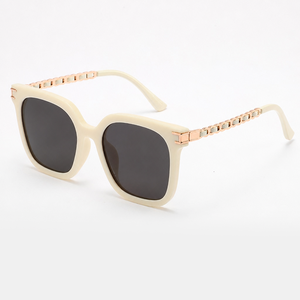
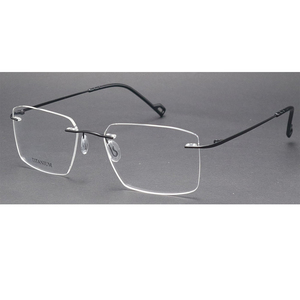
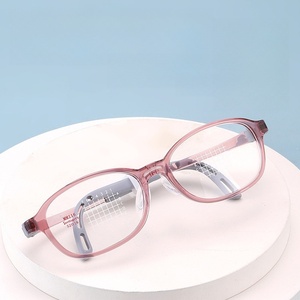
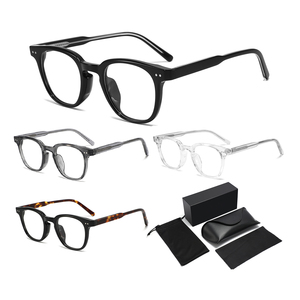
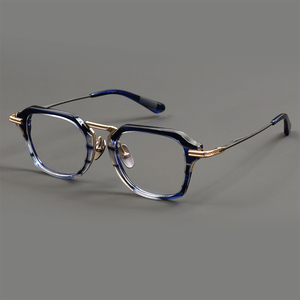
Precision Cross-Border Engineering: Elevating China's Eyewear Manufacturing for Japan's Discerning Retail Sector
The Japanese prescription optical market remains one of the world's most technically sophisticated and quality-sensitive retail sectors. Driven by an aging population requiring complex progressive glazing, alongside an urban working demographic demanding lightweight all-day comfort, the barrier to market entry is governed by structural integrity, micro-tolerances, and ergonomic excellence. For decades, the global optical trade looked exclusively to Fukui Prefecture for benchmark metal craft. However, the modernization of Shenzhen and Wenzhou precision manufacturing clusters has catalyzed an evolutionary shift. As premier Chinese classic optical frame manufacturers, our facilities combine computerized 5-axis CNC machining with traditional artisan tumbling techniques to deliver frames engineered specifically to meet the rigorous Japanese Industrial Standard (JIS B 7285:2008).
Manufacturing classic optical frames for Japanese private labels, optical chains, and independent boutique collections requires abandoning broad-brush bulk manufacturing paradigms. The Japanese facial morphology requires tailored bridge geometry, carefully calibrated pantoscopic tilt, and anatomical temple curving that prevents temporal pressure during prolonged computer or transit use. By synthesizing solid Japanese titanium billets, pure beta-titanium wire, and aged high-density cellulose acetate, our production line bridges high-capacity output with master-level craftsmanship. Every frame batch undergoes comprehensive surface finishing regimens, including vacuum ion plating (IP) and multi-stage manual rotary polishing, ensuring corrosion resilience in Japan's humid summers and structural elasticity throughout harsh winters.
Target Application Environments in the Japanese Lifestyle Ecology
Optical ergonomics calibrated to daily usage across metropolitan workspaces, commuter arteries, and high-end retail venues across Tokyo, Osaka, and Fukuoka.
Marunouchi Financial & IT Workstations
Japanese corporate professionals spend up to 10 hours daily interacting with dual-screen monitors and smart devices. In this setting, frames like our ultralight Pure Titanium Business Full-Rim and Anti-Blue Cat Eye Frames serve a dual functional purpose: providing unobtrusive bridge comfort without pinching the bridge of low-profile nasal arches, and securely housing high-index blue-light filtering or progressive lenses without center-of-gravity imbalance.
Shinkansen Transit & Mobile Commute
With millions traversing subway lines like Tokyo's Yamanote route, constant head movement and friction demand robust temple memory. High-grade beta-titanium temples flex outwards dynamically, resisting lateral deformation when consumers quickly don or remove frames while navigating crowded rail platforms, ensuring long-term axis calibration critical for astigmatic prescriptions.
Ginza & Omotesando Minimalist Boutiques
For fashion concept shops catering to high-touch 'Quiet Luxury' shoppers, branding logos are deliberately absent. The focus lies purely on the organic warmth of Japanese-preferred tortoise shell acetate, beveled rim profiles, flush riveted joints, and subtle satin metal finishes that echo contemporary Japanese design philosophies: elegance through quiet restraint.
Key Trajectories Reshaping the Japanese Optical Frame Landscape
Strategic shifts in material science, ergonomics, and retail economics defining procurement roadmaps for Japanese optical houses in 2025–2027.
1. The Shift to "Featherweight" Hybrid Metallurgy
Japanese end-users are gravitating decisively toward sub-10-gram frame architectures. To satisfy this demand without sacrificing mechanical rigidity, our factory utilizes high-vacuum electron-beam welding to join ultra-thin titanium front rims with flexible beta-titanium wire temples. This structural configuration accommodates thick 1.74 index minus prescriptions without inducing forward-heavy lens tilt.
2. Hypoallergenic Ion Plating & Sustainable Acetate
Stringent consumer protection protocols across Japan have accelerated the retirement of conventional nickel-alloy electroplating. The industry standard now mandates nickel-free vacuum ion plating (IP), providing tenfold wear resistance against saline perspiration. Concurrently, eco-conscious Japanese retailers increasingly request bio-based acetates derived from sustainable wood pulp and non-phthalate plasticizers.
3. Silver Generation Ergonomics & Progressive Lens Accommodations
Japan's demographic composition dictates an unprecedented volume of progressive and multifocal glazing. Classic optical frames are evolving with extended B-measurements (vertical lens height ≥ 33 mm), adjustable 3D titanium pad arms, and customizable base curves, allowing in-store opticians in Shinjuku or Yokohama to achieve immediate pupillary fitting and focal point calibration.
Engineering Capabilities Engineered to Japanese Sourcing Standards
How our manufacturing infrastructure bridges Shenzhen's rapid technological scalability with the meticulous precision expectations of Japanese buyers.
Micro-Toleranced Tooling & Wire EDM
Our CNC tooling centers maintain tolerances within ±0.02 mm, ensuring that rim closures, lens bevel angles, and hinge barrels achieve an airtight fit. For Japanese private label clients, this microscopic precision completely eliminates gap imperfections, loose hinges, or irregular lens bevel tensions that cause lens chipping during automated edger processing.
Aged Acetate Curing & Hand-Finishing
Unlike fast-fashion factories that process green, unstable plastic sheets, all our high-density cellulose acetate sheets undergo a controlled 90-day oven-curing process to eliminate internal moisture. This stabilization protocol prevents post-production frame warping, hinge loosening, and shrinkage under varying climatic shifts, complemented by a 72-hour walnut-shell drum polish.
Comprehensive Quality Verification Protocol
Every single batch targeted for export to Japan undergoes four consecutive audit phases: raw chemical spectro-analysis (ensuring 0% lead and nickel emissions), mechanical barrel stress testing exceeding 20,000 cycles, cross-hatch adhesion testing on IP coatings, and an unhurried 100% cosmetic visual inspection under calibrated 5000K daylight inspection lamps.
Frequently Asked Questions by Japanese Eyewear Buyers
Key commercial, technical, and regulatory clarifications address common procurement inquiries from Japanese importers, optical chains, and trading houses.
How do your classic optical frames satisfy the mechanical standards outlined in JIS B 7285?
Our production systems are structured specifically to meet or exceed the Japanese Industrial Standard (JIS B 7285:2008). Our in-house testing laboratory subjects frames to cyclical temple fatigue testing (20,000 continuous opening/closing actuations), bridge deformation tests, sweat-resistance immersion assessments in synthetic acid-perspiration solutions, and thermal shock cycles ranging from -20°C to 65°C. Test documentation and chemical compliance data can be formally integrated into your company's Japanese import dossier.
What specific bridge and temple modifications are applied for East Asian anatomical fitting?
We implement custom Asian-fit bridge geometry characterized by narrowed bridge widths (typically 16 mm to 19 mm), heightened and curved acetate saddle pads, or 3D adjustable titanium pad-arms mounted with food-grade silicone or pure titanium nose-pads. Frame face-form angles (wrap) are maintained relatively flat (within 4 to 6 degrees) to eliminate edge distortion for high-index prescription lenses, paired with extended temple length curves that contour smoothly over the mastoid without pin-point pressure.
Can your facility process custom OEM/ODM packaging tailored to the Japanese retail experience?
Yes. Japanese retail requires extraordinary attention to presentation packaging. We support fully customized OEM/ODM packaging ecosystems, including high-density matte paper hard boxes with Japanese typography foil stamping, custom debossed magnetic leatherette cases, microfiber cleaning cloths woven with custom lint-free Japanese micro-filaments, and Barcode/JAN-code label compliance printed to your specific logistical specifications.
What are the minimum order quantities (MOQ) and production lead times for custom runs?
For standard catalog optical frames with custom laser-engraved branding and tailored plating, our typical MOQ is 300 units per model (sub-divisible into 2 to 3 colorways). For entirely new custom mold tooling (ODM titanium or acetate), our MOQ is 600 to 1,200 units. Prototyping and CNC sample creation generally take 25 to 30 days, while standard bulk manufacturing cycles range from 45 to 65 days depending on the complexity of titanium milling and vacuum IP coating schedules.
How are defective units and quality control managed before shipment to Japanese ports?
We execute an AQL 1.0/1.5 inspection standard for all Japanese orders, well beyond the common commercial AQL 2.5 benchmark. Furthermore, we invite third-party inspection firms (such as CCIC, SGS, or your designated Tokyo QC agency) to inspect shipments in-plant prior to departure. Any component demonstrating micro-scratches, uneven hinge torque, or coating disparities is culled immediately on the line, ensuring that goods delivered to Narita, Haneda, or Yokohama port are ready for distribution without secondary triage.