
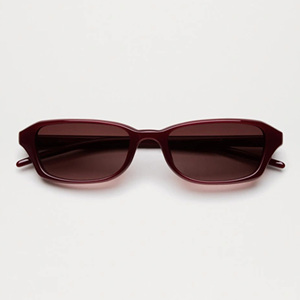
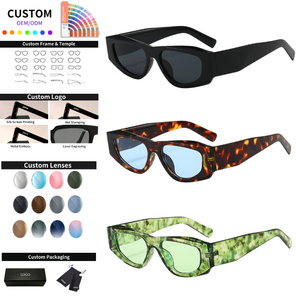
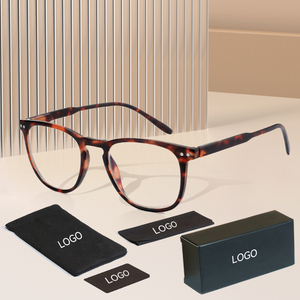
Comprehensive Industry Whitepaper: Wholesale Blue Eyewear Supply Chain Optimization
The global demand for high-performance optical frames, specifically targeting high-energy visible (HEV) blue light radiation and aesthetic structural integrity, has transitioned from an auxiliary consumer trend into a fundamental category in prescriptive retail. As corporate digital exposure increases alongside the widespread adoption of OLED and micro-LED displays, international wholesale procurement managers require verified material specifications, reproducible beveling accuracy, and documented optical filtration rather than superficial marketing claims. Navigating China's industrial manufacturing clusters requires deep scrutiny into acetate curing protocols, β-titanium annealing tolerances, and multilayer vacuum lens sputtering.
A critical challenge for boutique opticians and regional distributors is balancing blue light cut percentages against internal lens yellowness and chromatic deviation. The legacy method of dipping lenses into mass-pigmented organic tint tanks often generates elevated Delta E (color shift > 3.2), creating unacceptable distortion for visual creators, CAD architects, and corporate executives. Our production facilities deploy dual-sided nano-vacuum electron beam evaporation chambers, laying down 16 to 24 discrete dielectric coats that selectively reflect target wavelengths between 415nm and 455nm while sustaining an ultra-high luminous transmittance (Tv > 92.5%) and preserving clear base aesthetics.
Material Dynamics: Pure Titanium, Cellulose Acetate, and Precision Polycarbonates
Commercial longevity across boutique retail environments relies entirely on substrate metallurgy and polymer composition. As an integrated China supplier and exporter, our core catalog operates across three industrial verticals:
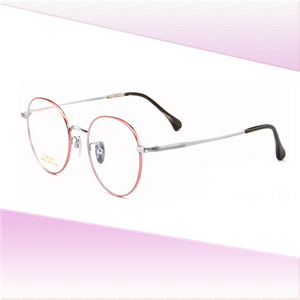
1. Pure Titanium (Grade 2 & Beta-Ti): Designed for ultra-lightweight optical lines, our titanium frames leverage Japanese-sourced ingot stock to produce temples and endpieces demonstrating memory flexural modulus and absolute zero nickel leach. This eliminates skin corrosion and maximizes mechanical comfort under continuous daily wear.
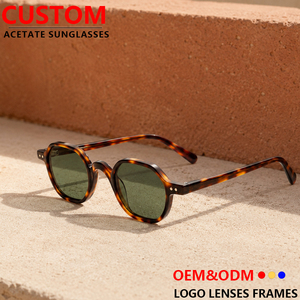
2. Bio-Based Cellulose Acetate: Using plant-derived cotton linter flakes cured through static drying processes exceeding 60 to 90 days, our sheets minimize internal residual stress. This stabilization step eliminates the bowing and twisting frequently seen in under-cured, low-cost frames when exposed to temperature swings during maritime freight or heated optometric glazing.
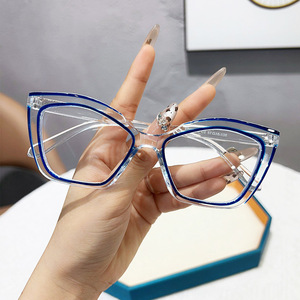
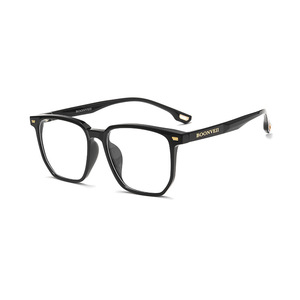
3. High-Purity Polycarbonate and TR90 Resins: Built for scalable volume lines, our computer-protective reading frames use medical-grade, injection-molded resins featuring integrated HEV absorber matrices directly compounded into the core pellet batch, ensuring continuous anti-blue properties that do not wear out with standard lens cleanings.
Procurement Trends Shaping 2026–2030 Global Optical Sourcing
Procurement directors navigating current export cycles must account for structural shifts across global retail:
• Quiet Luxury & Zero-Logo Styling: Consumer sentiment continues to shift away from oversized, loud branded logos toward precision wire cores, micro-beveled rim edges, subtle custom pin-riveting, and ergonomic bridge tapers. Minimalist frame engineering now carries higher retail price resilience.
• The "Optical + Sol" Synchronized Assortment: Retailers increasingly streamline wholesale purchasing by acquiring single core silhouettes simultaneously configured in clear prescription blue-blocking setups alongside matching polarized UV400 sun iterations. This unified SKU strategy halves tooling costs while giving floor displays a clean, cohesive visual merchandising identity.
• Circular Sustainability Documentation: European and North American customs authorities now require traceable documentation regarding eco-acetates, phthalate-free plasticizers, recycled stainless steel alloys, and REACH/RoHS compliance. Establishing audited production runs with certified batch documentation is no longer optional for high-tier volume importers.
Factory Direct Advantages: The Integrated Chinese Manufacturing Pipeline
Procuring directly from specialized industrial hubs like Wenzhou, Danyang, and Shenzhen through a single verified export channel removes intermediate markups while ensuring direct control over every production stage:
5-Axis CNC Milling & Chamfering: Acetate components are milled within sub-0.05mm tolerances, ensuring that prescription glazing labs can snap-in high-index lenses (1.67, 1.74) without rim deformation or lens pop-outs.
Barrel Tumbling & Hand Luster Buffing: Every frame undergoes an unhurried four-stage barreling cycle using hardwood chips and pumice pastings for 72 continuous hours, followed by multi-step manual hand buffing to yield high depth of gloss and ultra-smooth temple endpoints.
Hinges and Structural Testing: Every batch is subject to rigorous spring-hinge fatigue tests (20,000 continuous cycle open-close runs), bridge solder pull tests, salt spray corrosion evaluations (48-hour continuous exposure), and drop-ball impact compliance (FDA 21 CFR 801.410).