Engineering Ultralight Eyewear: Material Integrity Meets Scalable Manufacturing
The international eyewear market is witnessing a fundamental shift toward sub-15-gram optical frames and performance sunglasses. Modern optical retailers, independent optician groups, and private label distributors require structural resilience, hypoallergenic compliance, and seamless prescription glazing capabilities without bearing unnecessary weight. As China consolidates its standing as the world's epicenter for advanced optical metallurgy and precision polymer injection, selecting the ideal export partner requires an in-depth understanding of material sciences, physical vapor deposition (PVD) finishes, and strict DIN EN ISO dimensional standards.
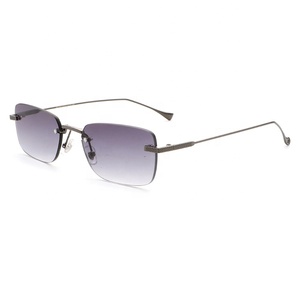
Aochi Square Anti UV400 Sunglasses Black Metal Frameless
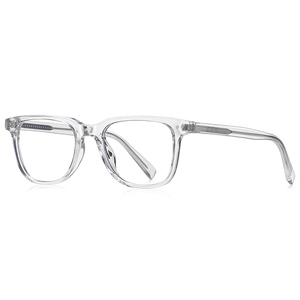
Ultra Light Myopia Anti-Blue Light Memory TR90 Frame
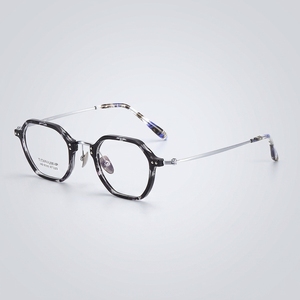
Pure Titanium Alloy Irregular-Shaped Full Rim Optical Frame
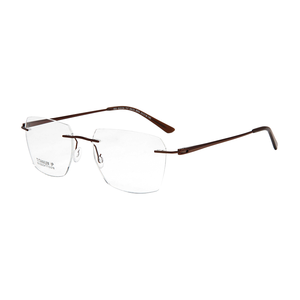
Transparent Pilot UV400 Pure Titanium Luxury Shades
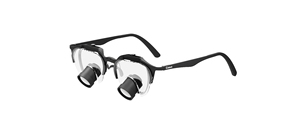
[COBAZ Loupes] Solid Lens Semi-TTL Optical Prism Loupes
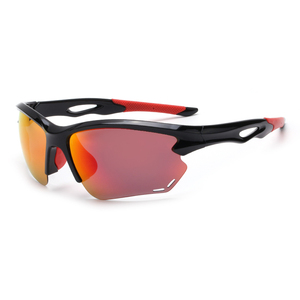
Aerodynamic Polarized Sport Performance Cycling Eyewear
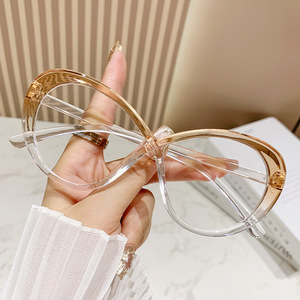
Figure-8 Geometric Gradient Ultra-Light Blue Block Optical Frame
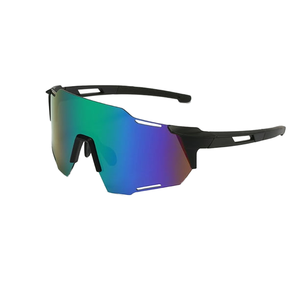
Wide-Field UV400 Toric Protective Cycling Goggles
Comparative Matrix: Advanced Ultralight Substrates
To assist procurement directors and brand technical leads in selecting appropriate materials for their demographic segments, the engineering matrix below outlines density, tensile strength, elasticity modulus, and manufacturing complexities across major frame substrates deployed across our Shenzhen and Wenzhou production facilities.
| Substrate Material | Specific Density (g/cm³) | Tensile Strength (MPa) | Elastic Memory / Flexibility | Corrosion Resistance | Prescription (Rx) Suitability | Target Segment |
|---|---|---|---|---|---|---|
| Pure Titanium (Grade 1/2) | 4.51 | 240 – 390 | Moderate (Rigid structure) | Superior / Inert | Ideal (Single & Progressive) | Executive, Minimalist Luxury |
| Beta-Titanium (Ti-15V-3Cr-3Sn-3Al) | 4.75 | 880 – 1100 | Extremely High | Superior / Inert | High (Flexible bridge/temples) | Ultra-flexible Ergonomic Frames |
| Swiss EMS Grilamid TR90 | 1.02 | 60 – 85 | High Shape Retention | Resistant to sweat & cosmetics | Standard to Moderate Rx | Athletic, Daily Active, Youth |
| High-Modulus Carbon Fiber Composite | 1.55 | 600 – 1200 | Anisotropic / Highly Rigid | Completely Chemically Inert | Dedicated Beveling Required | High-Tech Industrial & Sports |
| Ultra-Thin Cellulose Acetate (1.8mm HD) | 1.28 | 45 – 70 | Thermally Adjustable | Moderate (UV stable) | Exceptional (Glazing friendly) | Quiet Luxury Fashion Optical |
Future Procurement Trends in the Ultralight Eyewear Sector
1. Convergence of Optical and Sun Categories
Modern inventory risk mitigation favors brands deploying synchronized silhouettes. By offering core geometric designs simultaneously as clear optical Rx frames and polarized "Sol" iterations, distributors minimize tooling overhead while providing optical shops with an integrated merchandising counter story.
2. Screwless & Friction-Fit Hinge Architectures
Traditional micro-screws remain the primary point of field failure in lightweight frames. The export market is pivoting rapidly toward 3D-milled interlocking hinges, cylindrical friction-barrel assemblies, and monobloc sheet-metal folded temples that eliminate loose hardware permanently.
3. Bio-Circular Polymers & Green Metallurgy
European and North American regulatory frameworks (such as CSRD and Extended Producer Responsibility) are compelling international buyers to audit carbon intensity. Forward-looking Chinese suppliers now offer certified bio-based polyamide (derived from castor oil) and 100% recycled aerospace titanium billets.
Technological Innovations Driving Chinese Eyewear Exporters
The narrative of Chinese eyewear manufacturing has transformed from low-cost mass assembly to high-precision engineering. Leading export facilities leverage multi-axis Swiss-type automated lathes, selective laser melting (SLM) for titanium additive manufacturing, and automated physical vapor deposition (PVD) chambers capable of bonding metallic carbo-nitride films at nano-meter thickness.
Nano-PVD & Anodic Oxidation
Conventional wet electroplating compromises base metal elasticity and releases hazardous chemical waste. Advanced Chinese exporters apply eco-conscious vacuum ion plating, achieving 2.5–3.0 Vickers hardness micron coatings resistant to prolonged artificial perspiration and ocean salt-fog exposure.
Center-of-Gravity (CoG) Balancing
A frame weighing 8 grams can still feel fatiguing if front-heavy. Contemporary engineering models balance temple terminal tip weight with nose bridge inclination, redistributing facial contact load across the nasal crest and the retroauricular sulcus for true "zero-gravity" all-day wear.
Specialized Optometric Applications
The expansion into specialty segments—such as dental and surgical loupes (semi-TTL prism designs) and high-velocity wraparound cycling goggles—demands frames that support optical convergence, heavy glass prisms, or high-wrap base-8 shields without mechanical torquing.
Built for Considered Retail: Our OEM/ODM Export Advantages
Drawing from our deep-rooted production heritage in boutique and luxury eyewear craft, our manufacturing ecosystem bridges European quiet-luxury aesthetics with industrial-scale execution. We supply independent opticians, luxury eyewear private labels, and medical optics distributors worldwide.
Dual Optical & Sol Program
We engineer each core silhouette as both an ophthalmic optical frame and a UV400 sun protection model, allowing your distribution network to maintain visual brand continuity with consolidated SKU management.
Precision Rx-Ready Engineering
Frames feature micro-beveled eyewire grooves calibrated for standard CR-39, 1.67 high-index, and progressive lenses. Opticians experience smooth lens popping and rim closure without edge chipping or localized internal stress.
Hand-Polished Edge Finish
Even ultra-thin metal profiles and titanium rims receive multi-stage tumbler burnishing and hand-buffing by seasoned craftsmen to eliminate microscopic burrs and create soft, skin-friendly contours.
Flexible B2B Low-MOQ Onboarding
To support high-turnover boutique retail and agile testing, we provide curated stock replenishment models alongside dedicated OEM/ODM custom private labeling with reasonable batch minimums.
Frequently Asked Questions (FAQ) for Eyewear Sourcing
Key technical, regulatory, and supply chain questions answered for procurement managers, retail buyers, and optical brand owners.
How do you verify the authenticity of pure titanium vs. titanium alloy frames?
We supply chemical assay test reports and third-party spectroscopic analysis (XRF spectrometry) confirming Ti content > 99.2% for pure Grade 1/2 titanium. Furthermore, frames undergo standardized tensile stress and non-magnetic verification to ensure beta-stabilized alloys match contracted mechanical parameters.
What testing protocols are conducted to ensure DIN EN ISO 12870 compliance?
Every production batch is tested for nickel release (EN 1811/EN 12472) to protect sensitive wearers, bridge endurance deformation (dynamic fatigue across 500 cycles), temple pull-off resistance, and sweat resistance testing (submersion in artificial alkaline perspiration for 24 hours at 35°C).
Can demo lenses be swapped easily by optical dispensing laboratories?
Yes. Our optical demo lenses are crafted with standard 0.8mm edge thickness and appropriate base curves (typically 4.00 or 4.50 Base) to preserve frame rim geometry during transport while releasing cleanly when clamped in automated optical tracer-edgers.
What is the standard production lead time for custom OEM ultralight collections?
Prototyping and CNC CAD/CAM sampling typically require 15 to 20 days. Full-scale production cycles for pure titanium and beta-titanium run approximately 45 to 60 days, accounting for precision wire EDM cutting, automated welding, multi-step tumbling, and vacuum PVD coating.
How are nose pads engineered for hypoallergenic and anti-slip performance?
We deploy surgical-grade liquid silicone rubber (LSR) nose pads, ceramic-coated air-cushion chambers, or integrated pure titanium pad arms. All pads are resistant to sebum degradation, makeup discoloration, and prolonged ultraviolet yellowing.
What packaging and drop-shipping safeguards protect delicate ultralight frames?
Every frame unit is individually encased in anti-static biodegradable EVA sleeves with temple protective wraps, placed within rigid compartmentalized inner cartons (12 units per inner caddy), and fortified by five-ply corrugated master cartons tested against ISTA-2A drop and vibration standards.
Partner With China's Premier Ultralight Eyewear Manufacturer
Connect directly with our engineering team to receive full product line sheets, CAD frame geometry parameters, compliance dossiers, and wholesale volume pricing. Experience quiet luxury craft backed by industrial manufacturing capability.