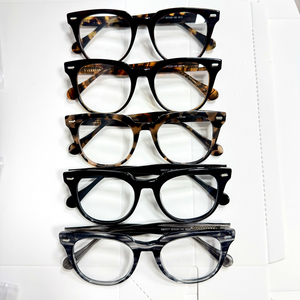
Hybrid Craft
Rivet Precision
Get Catalog →
Manufactured using CNC-machined titanium, aircraft-grade German stainless steel, and composite Mazzucchelli acetate laminations for exceptional dimensional stability and ergonomic balance.
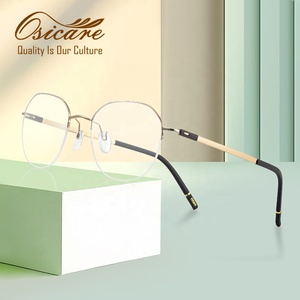
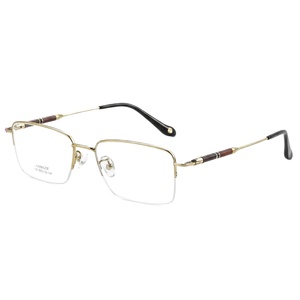
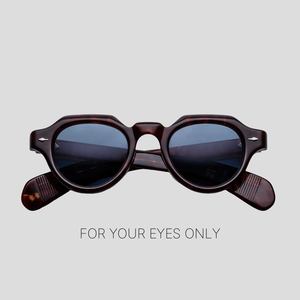
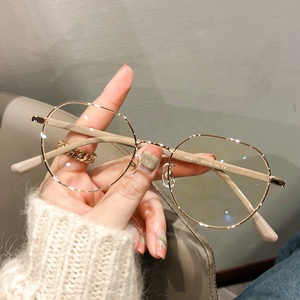
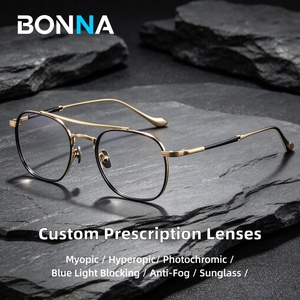
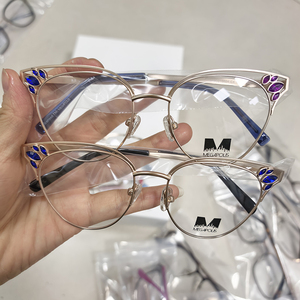
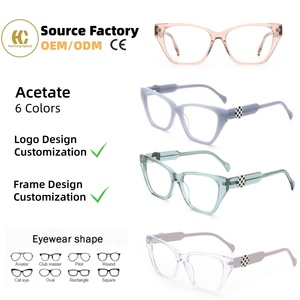
As a tier-one manufacturing partner serving international private label programs and luxury eyewear distributors, our facility operates on rigorous micro-engineering protocols designed for flawless prescription glazing and sustainable retail sell-through.
We source raw Grade 2 Pure Titanium and Beta-Titanium wire alongside nickel-free German 316L medical stainless steel. These alloys maximize tensile strength and elastic memory, providing fatigue-free spring action while cutting total frame chassis weight down to under 12.8 grams.
Our in-house physical vapor deposition (PVD) vacuum electroplating applies microscopic titanium nitride coats up to 0.5-micron thickness. This provides extreme sweat and corrosion resistance, verified by standard ISO 12870 dermatological and artificial sweat testing.
Groove geometries, rim depths, and base curves (Base 4.0 to 4.5) are CNC-profiled to prevent lens flaking, optical distortion, or frame popping. Suitable for heavy high-index myopic lenses, anti-fatigue designs, and high-addition progressive lenses.
Utilizing high-end OBE hinges, micro-threaded screws with thread-locking polymer treatments, and integrated barrel designs. Every batch is qualified through a 25,000-cycle open-close mechanical oscillation test with zero angular tilt or friction degradation.
Equipped with hypoallergenic medical-grade ceramic or air-cushion pure titanium nose pads. Combined with laser-welded pad arms, frames provide three-axis adjustability to accommodate diverse facial contours, bridge widths, and vertex distance parameters.
From initial rapid 3D prototyping and CAD structural analysis to small-batch pilot validation (MOQ 300 pcs) and large-scale mass manufacturing (monthly output exceeding 250,000 units), we ensure reliable supply-chain continuity for worldwide chain retailers.
Market insights for global brand owners, retail optometrists, and distribution category directors navigating seasonal replenishment and multi-channel assortment strategies.
B2B retail data indicates an ongoing pivot away from oversized logo plaques toward architectural silhouettes, micro-milled coin-edge rim profiles, and filigree-engraved core wires. Optical buyers focus on the tactile density of the finish, bespoke hinge action, and refined color hues like gunmetal, champagne gold, and brushed graphite.
Environmental compliance is no longer an optional attribute. Leading European and American eyewear chains mandate closed-loop metal swarf recovery, ISO-audited effluent treatment plants, and FSC-certified packaging. Sourcing recycled aircraft alloys directly offsets carbon footprints across high-volume collections.
Distributors maximize margins by pairing one proven metal optical chassis with an identically balanced polarized or tint-dip Sol sunglass sibling. This strategy cuts tooling overhead by 40%, simplifies in-store merchandising layouts, and boosts consumer multi-pair capture rates during eye exam visits.
Advancements in photo-chemical laser cutting enable single-piece stainless steel sheet fronts without weld seams. This eliminates structural weak points at the bridge and eyewires, providing an ultra-lightweight profile (under 1.2mm) tailored for all-day office comfort.
Chain opticians increasingly demand pre-tested frame tracer coordinates. By distributing digital trace files (OMAC/VCA compliant data) alongside bulk inventory, manufacturers save dispensary lab processing time and eliminate rim rupture claims during progressive lens mounting.
To hedge against dynamic freight tariffs and inventory holding expenses, major buyers prefer factories with lean production lines. Flexible minimum order quantities (MOQs) for seasonal color refreshes prevent balance sheet strain while keeping core SKUs perpetually in stock.
Direct technical answers addressing production lead times, lab tolerances, material certifications, and custom branding options.
Pure Titanium (Grade 2) features over 99% titanium purity, providing maximum corrosion resistance, complete hypoallergenic characteristics, and exceptional structural rigidity—ideal for the front chassis, rims, and bridge construction. Beta-Titanium is an advanced alloy containing elements such as vanadium and aluminum, offering superior elasticity and tensile memory. We engineer frame temples using Beta-Titanium to ensure gentle, self-adjusting clamping pressure on the wearer's temples without warping over time.
We implement multi-stage ultrasonic surface degreasing followed by high-vacuum Ion PVD (Physical Vapor Deposition) or IP electroplating. In addition to a nickel-free base barrier, frames receive an electro-phoretic protective seal. All production batches are tested against EN ISO 12870 criteria, undergoing 72-hour neutral salt spray tests and 24-hour artificial perspiration immersion tests without pitting, bubbling, or discoloration.
Yes. We engineer specialized rim profiles ranging from 2.2mm to 3.8mm in rim wire depth to gracefully hide thick lens bevels common in prescriptions above -6.00 Diopters. Furthermore, our lens eyewire grooves are micro-milled with standard 110-degree V-grooves at consistent depths, allowing smooth mounting on automated Essilor, Nidek, or MEI lab edgers without lens pinching or stress birefringence.
For custom ODM/OEM models with unique tooling, CAD blueprints and 3D resin prototypes are provided within 7 working days. Physical metal counter-samples require 25 to 30 days. Mass manufacturing lead time averages 45 to 60 days depending on plating complexity. Minimum order quantities typically start at 300 pieces per model (divided into 2 to 3 colorways), supporting nimble inventory rollouts for boutique networks.
Our OEM capabilities cover every aspect of frame branding: precision high-definition fiber laser engraving along the inside temples and bridge, color-infill pad printing, custom temple-tip metal logo inlays, ergonomic custom-cast nose pads, and demo lenses printed with your brand logo. Complete custom retail packaging sets (cases, microfiber cleaning cloths, authentication cards) are also produced in-house.
Request our comprehensive B2B wholesale product line sheet, complete with precision optical dimensions, material assay certifications, and factory-direct volume pricing structures.