Featured Private Label Blueprint Collections
Every commercial eyewear program requires anchor styles capable of high inventory velocity. The eight frame specifications detailed below demonstrate our technical mastery in bio-acetates, Japanese beta-titaniums, post-consumer RPET resins, and precision CNC cold-glazing tolerances.
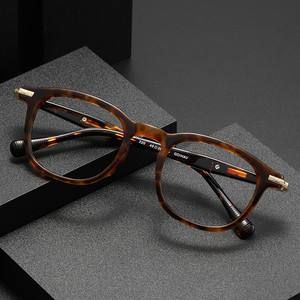
Acetate Titanium Solid Classic Full-Rim Glasses Frames for Unisex Lightweight Vintage Retro Japanese Eye Protection Eyewear
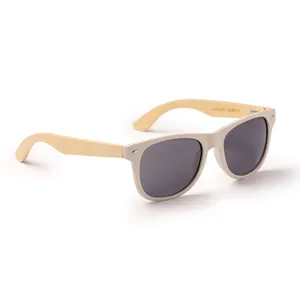
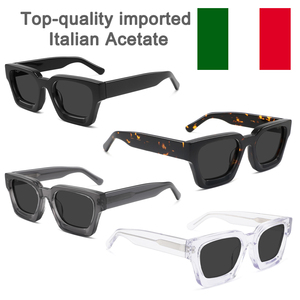
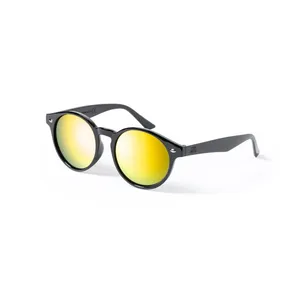
Oversized Luxury Designer Women Shade Glasses Square Italian Custom Acetate Sunglasses Custom Logo UV Protection Sunglasses Men
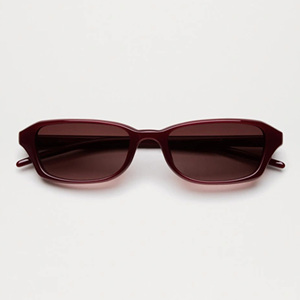
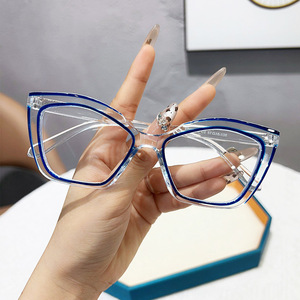
Fashionable Cat Eye Sunglasses Customized Logo Brand Designer Vintage Retro CR39 Acetate Sunglasses for Women Men
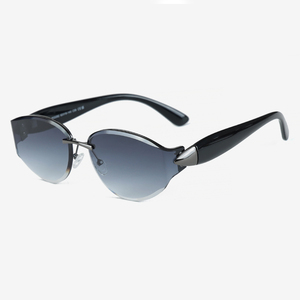
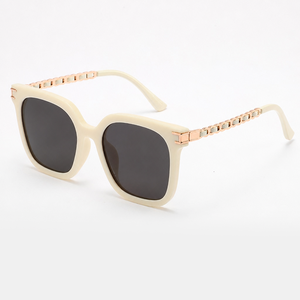
Navigating the Global Private Label Eyewear Ecosystem
The international eyewear landscape has fundamentally shifted away from broad, high-volume contract stamping toward high-precision OEM and ODM partnerships. Independent optical dispensaries, emerging luxury fashion labels, and multi-location retail boutiques now demand rapid iterative sample production, certified raw materials, and traceable environmental compliance. Selecting a private label manufacturer is no longer simply an exercise in comparing unit costs; it is an audit of tool path precision, hinge barrel barrel friction endurance, lens coating vacuum chambers, and labor ergonomics.
To streamline your procurement vetting, our engineering team evaluated over 45 production hubs globally. The resulting benchmark matrix ranks the leading manufacturing clusters and original equipment manufacturers based on precision machinery, chemical stability certifications, and customized brand support.
| Manufacturer / Hub Category | Primary Material Expertise | Typical OEM Minimums | Tooling & Mold Cycle | Key Strengths & Compliance |
|---|---|---|---|---|
| 1. Temple Eyewear Core Ecosystem | Italian Acetate, Beta-Titanium, RPET | 300 - 500 pcs | 25 - 35 days | Paired Optical/Sol silhouettes, ISO 12870, custom Rx-ready hand finish |
| 2. Belluno Valley Consortium (Italy) | Block Mazzucchelli Acetate, Monel | 1,200 - 2,500 pcs | 60 - 90 days | Heritage artisan finishing, high European brand equity, premium cost basis |
| 3. Sabae Precision Guild (Fukui, Japan) | Pure Titanium, Beta-Titanium, Celluloid | 500 - 1,000 pcs | 45 - 60 days | Micron-level metallurgy, cold-forged hinges, ultra-lightweight luxury |
| 4. Shenzhen High-End Cluster (Henggang) | High-Density Acetate, Stainless Steel | 300 - 600 pcs | 30 - 40 days | Advanced multi-axis CNC routing, rapid prototyping, agile export logistics |
| 5. Wenzhou Dynamic Export Hub (Zhejiang) | Injected PC, TR90, Recycled Acrylic | 1,000 - 3,000 pcs | 20 - 30 days | High-volume scalability, competitive promotional price points, fast molding |
| 6. Oyonnax Precision Works (France) | Bio-Acetate, Polyamides, Horn | 800 - 1,500 pcs | 50 - 70 days | Bespoke geometric silhouettes, classic French beveling, high artisanal touch |
| 7. Xiamen Composite & Sports Labs | Nylon Grilamid TR90, Carbon Fiber | 600 - 1,200 pcs | 35 - 45 days | Aerodynamic wraparound tooling, ballistic impact tests, rubberized co-molding |
| 8. Danyang Ophthalmic Center (Jiangsu) | Optical Resins, CR-39, Polycarbonate | 1,000 - 5,000 pcs | 15 - 25 days | Advanced AR/hydrophobic lens coatings, prescription lens integration |
| 9. Daegu Eyewear District (South Korea) | Memory Metals, Ultem, Thin-Sheet Steel | 500 - 1,000 pcs | 35 - 50 days | Pioneering screwless hinge designs, fashion-forward minimalist wireframes |
| 10. Nuremberg Precision Prototyping (Germany) | Selective Laser Sintering (SLS) Polyamide | 100 - 300 pcs | 10 - 20 days | Zero-tooling on-demand 3D printing, parametric bridge sizing, circular loops |
Material Engineering: Acetate Curing, Titanium Sintering, & Lens Substrates
The durability and perceived hand-feel of private label sunglasses depend entirely on the molecular architecture of the frame chassis and the optical purity of the lens substrate. Understanding the trade-offs between extruded plasticizers, cellulose plant content, and lens Abbe values enables purchasing agents to protect brand equity against field returns, delamination, and warpage.
Cellulose Acetate Curing
Premium sheets derived from cotton linters and wood pulp must undergo multi-week kiln curing to eliminate residual solvents. Skipping this aging phase causes frame shrinkage and temple curvature distortion over retail display life.
Beta-Titanium Metallurgy
By alloying pure titanium with vanadium and aluminum, manufacturers achieve elastic spring memory and exceptional tensile strength without brittle failure points, providing a frame weight reduction of up to 48% versus nickel alloys.
Lens Optics & Abbe Dispersion
While Polycarbonate provides impact resistance, CR-39 and Polyamide (Nylon) provide superior Abbe values (58 vs 30), eliminating chromatic aberration around the peripheral viewing zone while accepting multi-layer dielectric anti-reflective backing.
Global Procurement Trends: 2026 and Beyond
Corporate buyers are actively revising their vendor scorecards to align with international ESG mandates, changing consumer demographics, and the convergence of digital eyewear displays. Private label eyewear brands that fail to adapt their supply contracts to the following macro shifts risk inventory obsolescence and regulatory non-compliance in the EU and North American jurisdictions.
Circular Resins & Ocean Bound Plastics
Post-consumer RPET and GRS-certified marine polymers have evolved beyond promotional novelties. Advanced compounding achieves high Shore D hardness, allowing sustainable sports silhouettes to rival virgin TR90 in flexibility and thermal retention.
Paired Optical-to-Sun Architectural SKUs
Leading retailers increasingly reject isolated sunglass launches. The proven commercial methodology mirrors optical bestsellers directly into sun editions ("Sol" variations), cutting merchandising risk in half and unifying the retail display wall narrative.
Decentralized On-Demand Batch Production
To reduce capital lockup, procurement directors are negotiating micro-batch agreements (300-piece initial production runs) tied to rapid-replenishment SLAs. Precision 5-axis CNC machines permit rapid colorway swaps without expensive custom re-tooling.
Testing Methodologies: Beyond Aesthetic Inspection
A private label sunglass is fundamentally a personal protective equipment (PPE) medical device under international law. Brand owners bear strict liability for ocular injuries, lens dislodgement, or toxic dermal migration. A professional OEM facility must document full testing protocols prior to shipping containers across borders.
Our verification laboratories deploy automated five-barrel hinge tension testers (operating to 10,000 cycles under cross-load), artificial sweat immersion baths (48-hour nickel release immersion per EN 16128), and spectrophotometric verification ensuring 100% absorption between 280 nm and 400 nm wavelengths.
Why Independent Opticians & Brands Manufacture With Us
Built upon the foundation of quiet luxury and clinical optical engineering, Temple Eyewear's OEM/ODM manufacturing division operates as an extension of your product design team. We eliminate the friction typical of generic mass-contract factories by providing turnkey private label solutions tailored specifically to boutique retail sell-through.
Clinically Engineered Rx-Ready Bevels
Every frame is engineered with accurate eyewire groove depth and standard base curve tolerances, allowing your dispensing opticians or lab technicians to glaze custom single-vision or progressive lenses without frame strain or warping.
Cohesive Dual-Merchandising Collections
We solve the disconnect between optical displays and sunglass cases. Every flagship optical model has an identically proportioned "Sol" sunglass companion, enabling clean, unified retail presentation that boosts basket size and cross-selling.
Artisanal Barrel Hinges & Hand-Tumbled Edges
We reject glue-in single-barrel hinges. Our chassis utilize precision-anchored 3-barrel, 5-barrel, and custom riveted hinges paired with organic Japanese vegetable tumbling compounds that achieve a deep, glass-like luster across every acetate edge.
Frequently Asked Procurement & Production Inquiries
Key operational details on manufacturing parameters, sampling fees, quality control benchmarks, and international freight handoffs.
What are the standard Minimum Order Quantities (MOQ) for custom private label tooling?
Can your factory provide prescription-ready (Rx-able) sunglasses?
What international sunglass safety and quality certifications are provided with shipments?
What is the typical lead time from 3D CAD design approval to final bulk receipt?
How does your factory handle custom packaging, cleaning cloths, and presentation cases?
Build Your Signature Eyewear Collection Today
Connect with our senior technical procurement engineers to review our complete private label line sheets, obtain physical material samples, and receive comprehensive volume cost breakdowns.