Featured Optical Frames & Engineered Sun Formats
Engineered for seamless laboratory prescription glazing, precise anatomical balance, and ergonomic retail longevity. Explore our production-ready OEM/ODM references.
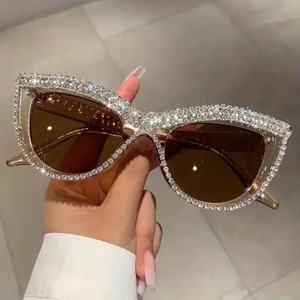
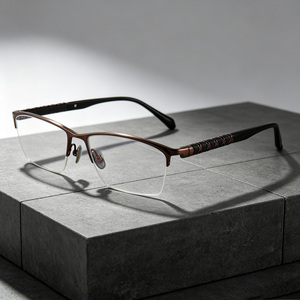
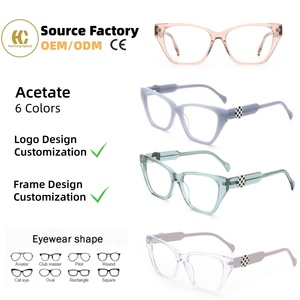
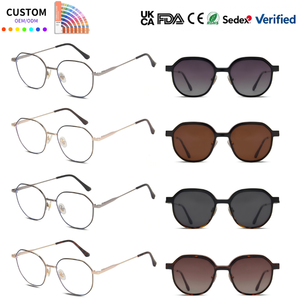
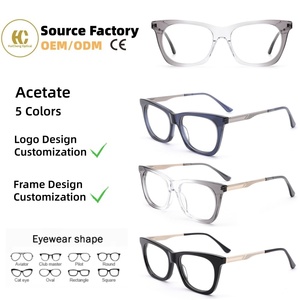
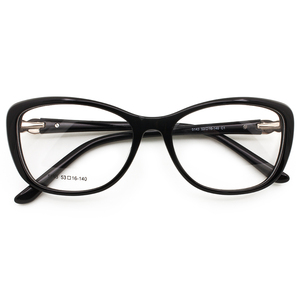
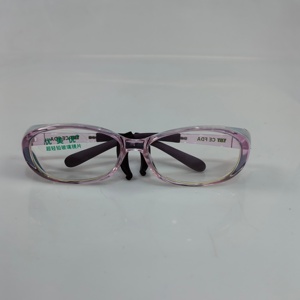
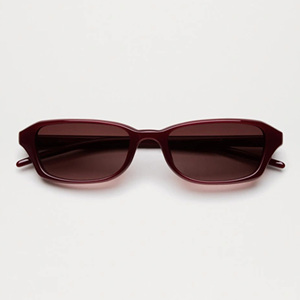
Global Sourcing Benchmark: Top 10 Eyewear Manufacturing Hubs
Understanding regional core competencies is crucial for procurement optimization. The global spectacle frame industry balances Italian artisanship, Japanese metallurgy, and advanced Chinese precision manufacturing clusters.
| Rank / Category | Manufacturing Cluster | Primary Material Dominance | Average Lead Time | Core Competitive Advantage |
|---|---|---|---|---|
| 01. Precision Titanium | Sabae, Fukui (Japan) | Pure & Beta-Titanium (Grade 2/Grade 5) | 90 - 120 Days | Cold-forged tolerance, zero-deflection micro-hinges |
| 02. Quiet Luxury Acetate | Shenzhen/Dongguan (China) | Cellulose Acetate & HD Acetate | 45 - 60 Days | Hand-finished artisanal beveling, rapid custom prototyping |
| 03. Heritage Luxury | Belluno (Veneto, Italy) | Mazzucchelli Bio-Acetates | 120 - 150 Days | Heritage styling, proprietary color laminations |
| 04. Ultra-Light Monoblock | Jura (Morez, France) | Stainless Surgical Steel & Polyamide | 75 - 90 Days | Screwless hinge architecture, minimalist aesthetics |
| 05. High-Volume Metal/TR | Wenzhou & Danyang (China) | TR-90, Monel, Stainless Alloys | 30 - 45 Days | Mass-market cost structures, large capacity reserves |
| 06. Technical & Safety | Xiamen (China) | Polycarbonate, Lead Glass, Grilamid | 35 - 50 Days | ANSI Z87.1 & ISO 12312 technical optics compliance |
| 07. Fine Gold & Horn | Rathenow (Germany) | Natural Buffalo Horn, 18K Solid Gold | 60 - 90 Days | Organic natural milling, bespoke atelier benchcraft |
| 08. Surgical Rimless | Linz (Austria) | High-Tensile SPX & Titanium wire | 60 - 80 Days | Featherlight rimless chassis, tension mounting |
| 09. Injection Eco-Polymers | Taizhou (China) | Castor Oil Bioplastics, Recycled PET | 25 - 40 Days | Rapid high-cavity tooling, entry-level commercial scalability |
| 10. Sustainable Wood/Slate | Tyrol (Austria / Northern Italy) | FSC Laminated Wood Veneers | 75 - 100 Days | Organic architectural layering, niche retail pricing |
Future Procurement Vectors & Engineering Paradigms
As consumer behavior pivots toward sustainability and discreet branding, enterprise buyers must align their line sheets with evolving material science and ergonomic parameters.
Cellulose Acetate & Bio-Circular Polymers
The standard petroleum-derived diethyl phthalate plasticizers are being replaced rapidly with bio-based triethyl citrate alternatives. Sourcing teams prioritize biodegradable cellulose acetate (cotton and wood pulp content >68%) complying with ISO 14855 biodegradation standards without forfeiting structural rigidity, thermal moldability, or multi-axis milling tolerances.
Additive 3D SLS & Zero-Waste Production
Selective Laser Sintering (SLS) using Polyamide 11 (PA11 derived from renewable castor beans) allows custom anatomical bridge sizing with zero scrap production. Digital inventory protocols allow boutique brands to hold digital CAD line sheets, printing on-demand to balance cash flows and eliminate dead stock risk across independent retail networks.
Dual Merchandising: Optical + Sol Formats
Omni-channel eyewear retailers prefer collections designed under paired silhouette models. Offering an optical frame alongside its exact sunglass counterpart (fitted with polarized nylon or CR-39 lenses) simplifies inventory management, enhances brand identity, and captures optical dispensing conversions at higher margin yields.
Engineered for Optical Dispensaries & Boutique Brands
Bridging artisanal hand-finishing with industrial tolerances. Our production facility provides complete OEM/ODM solutions tailored for high-turnover optical boutique accounts.
Toleranced Eyewire & Rim Grooving
Our custom CNC 5-axis milling heads produce precise V-bevel eyewire channels matching standard 1.50 through 1.74 index prescription lenses. This eliminates frame warping, bridge distortion, or lens pop-outs during optometric heat glazing and cold snap-in assemblies.
7-Barrel Integrated Hinge Anchoring
Using proprietary heat-staking and rivet-pinned hinge plates, our temple assemblies withstand more than 25,000 cyclical flex tests without temple drop or joint loosening. All hardware features vacuum physical vapor deposition (PVD) anti-corrosion micro-coatings.
Hand-Polished Japanese Barrel Tumbling
Raw acetate blanks undergo a thorough 4-stage polishing cycle over 72 continuous hours using German beechwood pegs and varying grades of pumice paste. Edges achieve a rounded, ergonomic hand-feel while keeping razor-sharp architectural bevel details.
Frequently Asked Questions for B2B Frame Buyers
Technical considerations, minimums, testing certifications, and custom tooling workflows.
What are standard Minimum Order Quantities (MOQ) for custom OEM acetate vs. titanium lines?
Standard bespoke acetate frame runs require 300 pieces per model (allocated across 2–3 bespoke colorways, e.g., 100 pcs per SKU) due to sheet cutting and CNC router optimization. Pure titanium and beta-titanium styles typically mandate 500 pieces per silhouette to amortize bespoke stamping dies, precision tooling blocks, and specialized plating jigs. In-stock core catalog references support lower trial sampling allocations.
How do you maintain dimensional consistency for laboratory automated lens edging?
Dimensional variance creates major lab re-glazing failures. We use precision CNC-milled wooden and aluminum checking jigs tailored directly from our CAD line sheets. Our frames adhere to strict tolerances of ±0.2mm on lens eye sizes (A dimension), distance between lenses (DBL), and groove depth profiles, preventing frame rolling when high-cylinder or thick progressive lenses are fitted.
Which international testing certifications accompany shipments for EU and US markets?
Every commercial batch is accompanied by comprehensive testing documentation under ISO 12870 (Ophthalmic Optics - Spectacle Frames requirements and test methods). Compliance includes testing for nickel release (EN 16128), biocompatibility, sweat and thermal resistance (corrosion resistance), bridge deformation under ISO standards, and mechanical fatigue endurance. Sun lens variations satisfy FDA 21 CFR 801.410 impact resistance and ISO 12312-1 UV400 spectral filtration requirements.
Can we request proprietary color combinations and customized internal temple core-wires?
Yes. Customization includes laser-etched stainless steel internal core-wires (showcasing your custom guilloché or geometric branding patterns visible through transparent acetate temples), custom multi-layer laminate acetate block bonding, internal temple foil stamping, and diamond-point pantoscopic tilt calibration.