High-Precision Export Assortment
Engineered for exact prescription glazing, premium structural balance, and market-ready consumer sell-through.
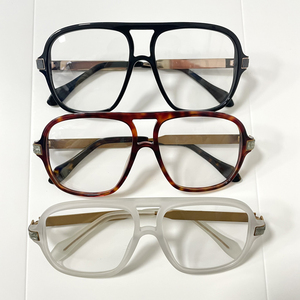
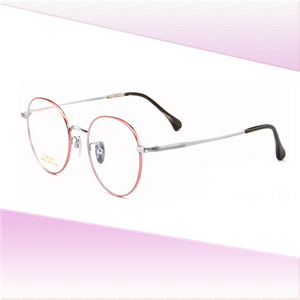
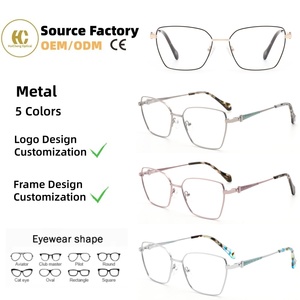
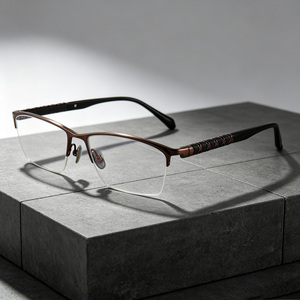
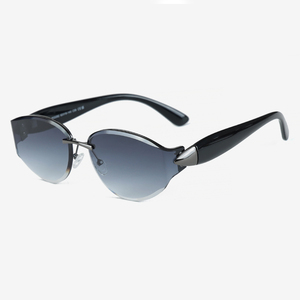

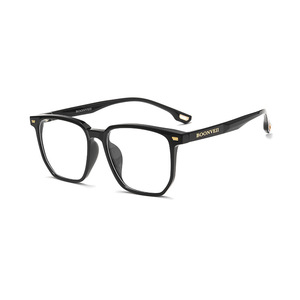

Comprehensive Global Benchmark: Selecting Top Tier Custom Optical Frames Manufacturers
In modern optical commerce, wholesale eyewear procurement has transitioned from transactional catalog picking to collaborative product lifecycle engineering. Evaluating an original equipment manufacturer (OEM) and original design manufacturer (ODM) requires auditing raw material purity, geometric tooling accuracy, hinge tensile mechanics, and international regulatory compliance (including CE, FDA, and ISO 12870 standards).
Whether your private label brand relies on high-density cured cellulose acetate, Japanese medical-grade titanium, or hyper-flexible Swiss EMS TR90 polymer, production capabilities must ensure zero warping during laboratory bevel edging, absolute color stability under prolonged ultraviolet exposure, and balanced mass distribution across nasal and temporal contact zones.
Material Science Benchmark: Acetate vs. Titanium vs. TR90 Polymer
Global optical brands require varied material solutions tailored to target demographics, prescription power requirements (diopters), and climate zones. The comparative framework below illustrates standard engineering expectations provided to international optical chains.
| Material Matrix | Structural Density | Tensile Yield Strength | Optical Glazing Suitability | Target Demographic Segment |
|---|---|---|---|---|
| Cured Cellulose Acetate | 1.28 – 1.32 g/cm³ | High Rigidity (Hand Polished) | Exceptional (Cold & Warm Insertion) | Quiet Luxury, Boutique Fashion, Heritage |
| Pure Titanium (β-Titanium) | 4.51 g/cm³ | Ultra-High (Hypoallergenic) | Exact Rimless / Semi-Rimless Grooving | Executive Business, Ultra-Light Minimalist |
| Swiss EMS TR90 | 1.14 g/cm³ | Extreme Memory Flexibility | Standard Snap-in Demo Fitting | Active Lifestyle, Urban Commuter, Youth |
| Integrated Metal-Acetate | Composite Density | Reinforced Dual-Core Corewire | Balanced Frontal Load Distribution | High-End Architectural Eyewear |
Technical Production Drivers in Modern Optical Manufacturing
Multi-Axis CNC Milling
Utilizing automated high-precision multi-axis CNC machines to mill complex rim grooves, ensuring uniform 3D pantoscopic tilt and consistent bridge dimensions across batches.
72-Hour Barrel Tumbling
Raw acetate frontals and temples undergo gradual multi-stage wet and dry wooden barrel polishing with natural pumice stones to achieve a deep luster without melting delicate chamfers.
Reinforced Hinge Integration
Precision-soldered German OBE or custom 5-barrel and 7-barrel hinges riveted directly through the temple corewire, preventing loose temple action during long-term wearer usage.
Global Optical Sourcing: 2025–2030 Procurement Trends
Optical supply chains are experiencing structural shifts driven by clinical dispensing requirements, sustainable raw material regulations, and consumer appetite for modular collections. Forward-thinking procurement teams must adapt to the following operational vectors:
1. Bio-Based & Circular Cellulose
Regulatory frameworks such as the EU Corporate Sustainability Due Diligence Directive are accelerating the adoption of phthalate-free, plant-derived bio-acetates with certified organic plasticizers that degrade naturally without leaving microplastic residues.
2. Unified Optical + Sol Product Architecture
Boutique retailers and optical chains minimize display footprint and customer friction by sourcing matching silhouettes: an optical master frame alongside its sun-tinted polarized Sol equivalent, maintaining consistent facial styling across indoor and outdoor use.
3. Progressive-Friendly Low Base Curvatures
As the global population ages, demand for high-addition progressive addition lenses (PAL) surges. Modern frame design specifies front curves between 2.0 and 4.0 Base, preventing optical distortion in peripheral corridor segments while ensuring secure lens seating.
4. Hypoallergenic Ion Plating (IP)
Traditional nickel electroplating is being phased out in favor of vacuum-based Ion Plating (IP). This method yields scratch-resistant, sweat-corrosion-proof finishes on pure titanium and stainless steel frames that withstand harsh saline environments.
5. Agile Low-MOQ OEM Tooling
Brand procurement is moving away from massive single-model container shipments toward iterative batch manufacturing, relying on modular tooling plates that allow brands to order smaller quantities across a wider selection of colors.
Enterprise Manufacturing Infrastructure: The OEM/ODM Advantage
Our manufacturing philosophy bridges traditional hand craftsmanship with automated CNC precision. Sourcing directly from an established exporter guarantees reliability at every stage of the manufacturing cycle, from initial CAD ideation to retail point-of-sale displays.
Rapid CAD-to-Prototype Prototyping
From sketches or 2D technical drawings, our engineering department produces high-fidelity physical 3D acetates and CNC metal prototypes within 7 to 10 working days, accelerating go-to-market review timelines.
Stringent Defect Tolerance (AQL 1.0)
Every frame lot undergoes comprehensive optical laboratory tests: four-point temple alignment verification, hinge resistance cycling, artificial sweat immersion, and rigorous lens-groove bevel inspections.
Complete Custom Packaging Logistics
End-to-end white-label execution including custom folded hard cases, microfiber cloths with bespoke debossing, branded demo lenses with pad printing, and barcoded SKU labeling ready for retail dispatch.
Frequently Asked B2B Procurement Questions
Clear, direct answers to common questions regarding optical lab requirements, sample dispatches, minimum order quantities, and custom tooling.
Are all optical frames supplied pre-glazed or demo-fitted?
All optical frames are equipped with clear acrylic or CR-39 demo lenses featuring high-precision bevel profiles. This maintains shape stability during international shipment and provides an accurate baseline for opticians' automated tracing and edging machines.
What are the standard Minimum Order Quantities (MOQ) for custom production?
For custom acetate eyewear involving bespoke color laminations, typical runs begin at 300 pieces per model (distributed across 2 to 3 colorways). Pure titanium and semi-rimless frames require 300 to 500 pieces per style due to dedicated casting and stamping tooling requirements.
Do your titanium models comply with Nickel-Free standards?
Yes. All titanium components are manufactured from Grade 1 through Grade 4 pure titanium or β-titanium wire. Surfaces undergo high-adhesion vacuum ion plating (IP), meeting the stringent nickel-release thresholds required by the EU REACH regulation and EN ISO 12870.
How are custom private label branding and temple corewires executed?
We provide multiple branding options: high-precision laser engraving, metallic foil hot stamping, custom cast corewire embossing within transparent acetate, and micro-injected dual-color end-tip logos that withstand prolonged skin contact.