Engineered Optical Silhouettes: High-Precision Turnkey Catalog
Explore our flagship OEM/ODM unisex optical frames engineered with Japanese grade-5 titanium, bio-based cellulose acetate, and lab-tested ergonomic balance. Glazing-ready, dimensionally certified, and optimized for global retail reorders.
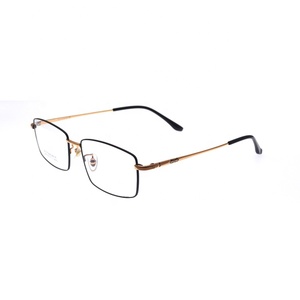
Men Titanium Eyewear Frames Optical Frame Glasses Wholesale
- Material: Beta-Titanium / Pure Ti
- Bridge Geometry: 19mm Anatomical Saddle
- Hinge Mechanics: Monoblock Screw-Lock
- Glazing Fit: High Index Rx Compatible
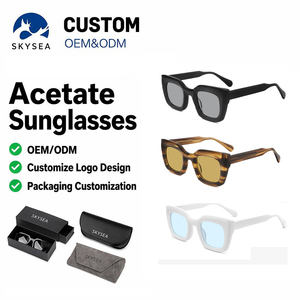
Hot Sale Acetate Oversized Square Thick Frame UV400 European American Retro Vintage Fashion Sunglasses for Men Women Wholesale
- Material: 8.0mm High-Density Acetate
- Profile: Bold Architectural Square
- Hinge Mechanics: 7-Barrel German Riveted
- Optic Versatility: Rx Optical / Sun Lens
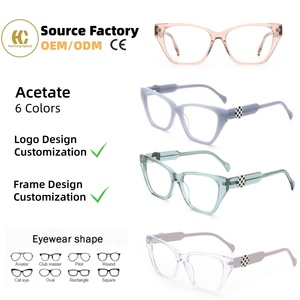
Customization High-end Fashionable Acetate Optical Glasses Durable Handcrafted Full-Rim Eyeglasses Frames For Daily Wear OEM/ODM
- Material: Multi-Layer Organic Acetate
- Core Wire: Engraved Custom Metal Core
- Nose Fit: Universal Ergonomic Build
- Finish: 72-Hr Tumble + Hand Polished
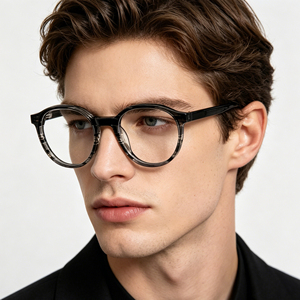
Round Glasses Frames Acetate Woman Glasses Luxury Designer Optical Glasses Frame Thick Acetate Optical Frame
- Material: Polished Cellulose Polymer
- Shape: Classic Intellectual Panto
- Bridge: Keyhole Precision Arch
- Glazing: Progressive & Single Vision
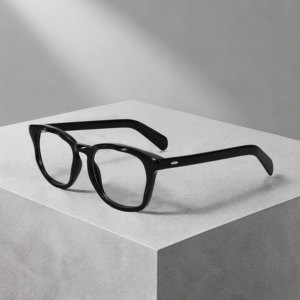
Latest New Design High Quality Black Acetate Optical Frame With Solid Hinge Design Acetate Eyeglasses Frames For Adults Unisex
- Material: Deep Ebony Cellulose Acetate
- Hinge Mechanics: 5-Barrel Reinforced Joint
- Ergonomics: Universal Asian & Euro Fit
- Target: Boutique Everyday Unisex
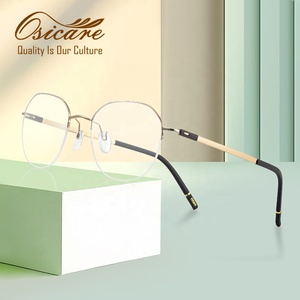
Osicare High Quality Titanium Half Rim Eyeglasses Ultralight IP Electroplating Optical Spectacles Designer Men Urban Frames Semi
- Material: Aerospace-Grade Ti-Wire
- Coating: Vacuum IP Electroplating
- Weight: Under 8.8 Grams (Uncut)
- Rim Type: Nylon Monofilament Half-Rim
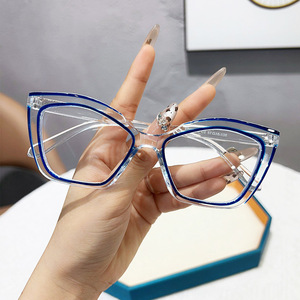
Myopia Glasses For Men And Women Frame Myopia Can Be Matched With Retro Art Glasses Frame Online Celebrity Flat Mirror 97199
- Material: Hybrid Acetate + Alloy Temples
- Bridge: Engineered Anti-Slip Geometry
- Demo Lens: Anti-Reflective Acrylic Glaze
- Customization: Laser Logo & Custom Sizing
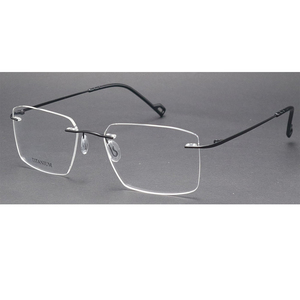
Readsun clear 0.5 Gentleman Titanium High End Rimless Optical Frames
- Material: Flexible Beta-Titanium Bridge
- Drill Mount: Precision Dual-Bushing Mount
- Pads: Medical Silicone Air-Cushion
- Aesthetic: Minimalist Architecture
The Structural Evolution of OEM/ODM Unisex Optical Eyewear
Navigating technical ergonomics, non-binary facial geometry, and the convergence of medical optics with high-fashion industrial design.
In the contemporary B2B eyewear market, the distinction between menswear and womenswear optical collections has shifted from rigid taxonomic bifurcation to fluid, geometry-driven engineering. Contemporary procurement heads, regional distributors, and boutique optical directors increasingly prioritize unisex optical frames—not as a stylistic compromise, but as an advanced engineering solution designed to maximize shop-floor sell-through, reduce shelf inventory overhead, and satisfy an international consumer base that evaluates eyewear based on pantoscopic tilt, bridge seating, temple spring balance, and material authenticity.
As an ISO 9001 and ISO 12870 compliant optical manufacturing facility, our factory operates at the exact intersection of ophthalmological precision and artisanal tactile refinement. Producing unisex eyewear requires nuanced mathematical considerations that diverge sharply from traditional mono-gender sizing. While conventional male frames historically favored 54mm–58mm eye sizes with wide 18mm–22mm bridges, and female frames catered to 48mm–51mm eye sizes with narrow nasal saddles, modern unisex frames are crafted around unified anthropometric clusters. By leveraging parametric CAD modeling, adjustable pad-arm metallurgy, and anatomical keyhole bridge curves, our OEM/ODM production lines yield frames that sit flawlessly across diverse facial bridge profiles—including Caucasian high-nasal bridges and East Asian flatter nasal structures—without inducing temporal pressure or lateral slippage.
Parametric Bridge Engineering
Unisex bridge geometry must accommodate variable pupillary distances (PD 58mm to 68mm) without causing optical decentration or excessive nasal crest pinching. Our CNC-milled acetate keyholes and micro-welded titanium bridges distribute frame mass evenly along the nasal dorsum.
Mazzucchelli & Bio-Acetate Metallurgy
We source raw plant-derived cellulose flake acetates free from phthalate plasticizers. Aged in environmental control chambers for up to 90 days to eliminate internal thermal stresses, preventing post-glazing frame warping or spontaneous temple twist.
Rx-Lab Turnkey Glazing Compatibility
Every rim groove is cut with a precise 110° to 120° V-profile, maintaining consistent 0.5mm edge depths. This guarantees high-index (1.67, 1.74) single-vision and freeform progressive lenses snap into place with zero optical ring birefringence.
Engineering Standards: Material Specifications & Lab Tolerances
A comparative evaluation of raw frame substrates utilized across our OEM/ODM custom tooling and private label client collections.
| Material Classification | Yield Strength / Density | Biocompatibility (ISO 10993) | Surface Treatment Tech | Recommended Frame Silhouette |
|---|---|---|---|---|
| Japanese Beta-Titanium (Ti-15V-3Cr-3Sn-3Al) | Yield: 980 MPa Density: 4.51 g/cm³ |
100% Hypoallergenic (0.0% Nickel release) | Multi-arc Ion Plating (IP) vacuum deposition (1.2µm - 2.0µm) | Ultralight rimless, semi-rimless, flexible temple arms |
| Aerospace Grade 5 Titanium (Ti-6Al-4V) | Yield: 880 MPa Density: 4.43 g/cm³ |
100% Medical Grade (Zero allergenics) | Precision Micro-blasting + PVD Ruthenium / 24K Gold Plating | Structural bridges, monolithic unisex end-pieces, eyewire rims |
| Mazzucchelli 1849 Cellulose Acetate | Tensile: 45 MPa Elongation: 30% |
Skin-neutral vegetable polymer (cotton linters + wood pulp) | 72-Hour tumbled walnut shell micro-abrasion + hand beeswax buff | Substantial architectural square frames, panto styles, vintage keyholes |
| Eco-Friendly Bio-Acetate (M49 Compliant) | Tensile: 42 MPa Degradability: ISO 14855 |
Certified 100% biodegradable & non-toxic plasticizers | Organic diamond-paste high-gloss wheel finishing | Clean luxury unisex collections, modern Scandinavian minimal frames |
| Cupronickel & Monel Alloy (Core Wire) | Tensile: 550 MPa High elastic return |
Embedded core (isolated from direct epidermal contact) | Anti-oxidation passivation + inner galvanic barrier | Internal temple wire-cores, filigree embossing, micro-hinge lugs |
Our material selection process is governed by a strict non-negotiable protocol. While budget wholesale suppliers rely heavily on recycled secondary acetate or low-grade zinc-alloy die castings, our manufacturing lines enforce pristine raw bar stock and sheet inputs. Secondary acetates suffer from volatile solvent evaporation over shelf time, causing frames to turn brittle, lose rim tension, and eject prescription lenses when exposed to temperature gradients. By contrast, our curated cellulose acetate slabs undergo strict stabilization cycles at 45°C and 60% relative humidity before precision 5-axis CNC machining, ensuring that each eyewear piece maintains its geometry through years of optician handling and daily wear.
Future Procurement Trends in the Global Unisex Optical Market
Strategic foresight for product directors, optical chain merchandising executives, and venture-backed eyewear founders.
1. "Quiet Luxury" Without Visible Branding
Global optical retail data reveals an accelerated departure from overt temple logos. Discerning end-users demand understated elegance characterized by internal laser etching, hand-chamfered bevels, and subtle rivets. B2B buyers must prioritize frame silhouettes that capture attention through silhouette equilibrium and tactile depth rather than ostentatious branding.
2. Paired Assortment Merchandising (Optical + Sol)
The industry benchmark now requires offering core frames in tandem configurations: an Rx-ready clear demo optical version alongside an identical silhouette fitted with UV400 Category-3 nylon sun lenses. This merchandising dynamic enables retailers to display a cohesive brand story across optical and sunglass display boards while streamlining tooling investment.
3. Decarbonized & Traceable Supply Chains
European and North American regulatory pressures (such as the EU Corporate Sustainability Due Diligence Directive) require wholesale importers to demonstrate verifiable supply chain footprints. Procurement trends favor factories capable of providing certified bio-based acetates, closed-loop water filtration during tumbling, and recycled titanium smelting credentials.
In addition to material sustainability, the rapid rise of remote telemedicine optometry and virtual try-on (VTO) algorithms has altered how wholesale frames are engineered. Unisex frames must now possess photogrammetrically distinct landmarks—sharp rim transitions, controlled surface reflectivity, and standardized facial indexing points—to render accurately within Augmented Reality (AR) try-on SDKs. Our ODM design department delivers production-matched 3D CAD files (.STP, .OBJ, .GLTF) alongside physical shipments, enabling your digital marketing and e-commerce teams to deploy photorealistic virtual try-on experiences well before cargo touches domestic distribution hubs.
Turnkey Manufacturing Lifecycle: From Blueprint to Dispatch
An inside look at our industrialized fabrication protocol, detailing each verification gate in custom unisex frame production.
Industrial CAD & 3D Prototyping
Transforming client mood boards, technical sketches, or physical reference samples into micron-accurate 2D technical drawings and 3D parametric models. Functional SLA/SLS resin prototypes are produced within 72 hours for ergonomic trial fitting.
Precision Tooling & CNC Milling
Hardened steel stamping dies and multi-axis CNC path files are cut in-house. Acetate slabs are contour-cut under continuous coolant flow, while titanium components are cold-stamped under 300-ton hydraulic presses to maximize crystalline metal density.
Multi-Stage Organic Tumbling
Raw acetate front pieces and temples undergo a 4-stage, 72-hour automated polishing cycle inside rotary hexagonal barrels loaded with selected Italian walnut shells, pumice abrasives, and organic vegetable oil pastes, yielding silky smooth bevels.
Artisanal Assembly & Alignment
Master optical technicians hand-pin hinges, insert embedded filigree core wires, mount silicon-air nose pads, and calibrate pantoscopic tilt to a standard 8-degree angle. Every frame undergoes four-point horizontal alignment on calibrated granite slabs.
A crucial quality indicator for high-end optical buyers is the integrity of the hinge mechanism. Budget manufacturers typically press heat-staked hinges directly into warm acetate—a shortcut that inevitably results in loose temples and wobbling arms after minor adjustments. In our factory, all premium acetate lines feature genuine pinned hinges secured through rivets or CNC-counterbored anchoring plates with thread-locking micro-screws. For titanium frames, we utilize vacuum brazing techniques in inert argon environments, eliminating weld oxidation and securing a microscopic joint bond that resists over 250 Newtons of torsional strain.
Authoritative Quality Assurance & Metrology Validation
Every production run is certified against rigorous global optical standards before leaving our logistics hub.
Bridge Deformation & Fatigue Cycling
Under ISO 12870:2016 clause 4.8, our pneumatic cyclical testers compress and expand the eyewire 500 times at 40 cycles per minute. The frame must exhibit zero cracking, no plastic deformation exceeding 1.5mm, and retain secure lens groove clamping pressure.
Artificial Perspiration & Salt Spray
Frames undergo 96-hour continuous exposure to synthetic perspiration solutions buffered at pH 4.7 and 55°C (DIN EN ISO 12870). Metal platings and acetate luster must demonstrate zero blistering, corrosion, discoloration, or delamination.
EN 16128 Nickel Release Validation
All electroplated and alloy components touching the wearer's dermis are certified to release less than 0.5 µg/cm²/week of nickel ions. This standard protects private-label brands from European customs seizures and consumer dermatological recalls.
Factory-Direct Competitiveness: The Sourcing Advantage
Bridging the gap between artisanal design sensitivity and industrialized high-volume capacity.
Working directly with our OEM/ODM facility eliminates multi-tiered trading company markups, reduces design-to-shelf lead times by up to 45%, and affords brand founders direct contact with our senior tooling engineers. We serve a wide spectrum of international clientele, including independent opticians curating bespoke in-house private labels, concept boutiques, regional distribution houses requiring container-level volume, and venture-backed D2C brands.
| Procurement Pillar | Traditional Trading Broker | Our OEM/ODM Factory Infrastructure | Direct Strategic Benefit |
|---|---|---|---|
| Minimum Order Quantities (MOQ) | 1,200 pcs per sku / high financial lock-in | Flexible 100–300 pcs per colorway for qualified partners | Low working-capital exposure, agile inventory testing |
| Tooling & Mold Ownership | Retained by third-party subcontracted shops | Contractually assigned 100% to the client brand | Absolute IP defense and unique proprietary silhouettes |
| Glazing Tolerances | Inconsistent; frequent laboratory edging rejects | CNC calibrated to 0.05mm bevel profile standards | Zero laboratory glazing return rates for optical accounts |
| Branding & Packaging | Generic tampo printing; stock clamshell cases | Custom laser engraving, metal temple caps, bespoke vegan leather packaging | Elevated perceived retail value supporting 4x–8x retail markups |
Frequently Asked Questions for Wholesale Sourcing Directors
Clear, technically rigorous answers covering tooling, sample development, certification, and logistics.
What are the minimum order quantities (MOQ) for custom OEM and private-label ODM optical frames?
Can your factory supply prescription-ready demo lenses with custom anti-reflective coatings?
How does your engineering team ensure that "unisex" frames fit both male and female facial anatomies?
What documentation and compliance certifications do you provide for customs clearance in the US and EU?
What is the standard production timeline from technical concept approval to shipping?
Can we request matched sunglass (Sol) versions of our chosen optical shapes?
Build Your Signature Eyewear Collection With an Established Factory Partner
Whether you are engineering a proprietary unisex titanium frame line from scratch or seeking to elevate sell-through with our proven private-label acetate models, our engineering team is ready to review your line sheet specifications and CAD files.
Inquire Now