Curated OEM/ODM Optical Frames & Sunglasses Lineup
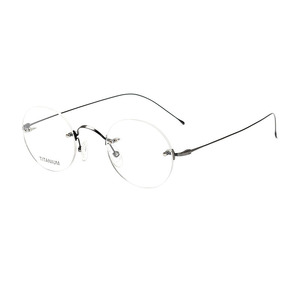
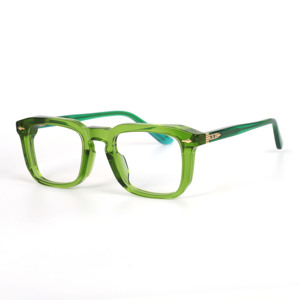
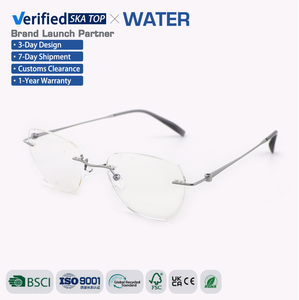
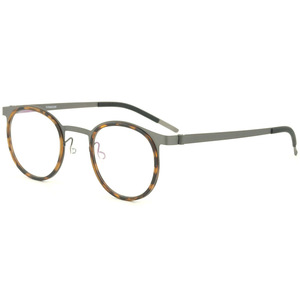
Direct from our cleanroom fabrication and CNC machining lines. Each frame profile is engineered with balanced pantoscopic tilt, refined temple core wire insertion, and calibrated groove depth for effortless single-vision and progressive prescription glazing.

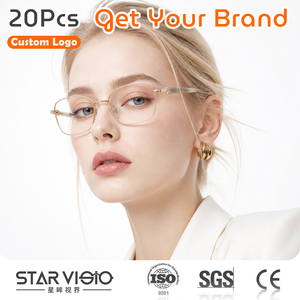
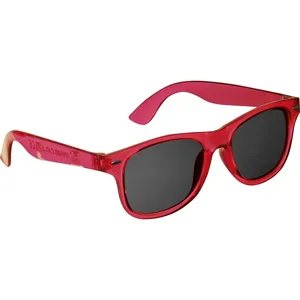
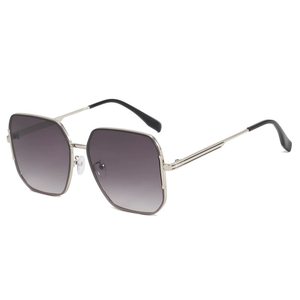
Industrial Spectacle Frame Engineering: Precision Tooling & Quality Architecture
An authoritative engineering analysis for procurement directors, product managers, and eyewear brand founders evaluating contract manufacturing capabilities across Asia.
In the premium prescription eyewear and sunglasses sector, the barrier between acceptable commercial grade and true luxury optical standard is defined by micrometer tolerances and metallurgical purity. A custom OEM wholesale spectacle frame factory must do far more than assemble components: it must operate as a precision engineering facility where optical ergonomics, biomechanics, and raw polymer thermodynamics converge.
Our OEM manufacturing lines are structured around closed-loop CAD/CAM workflows and multi-axis CNC milling centers. Whether transforming block cellulose acetate sourced from Italian masters (such as Mazzucchelli 1849) or drawing high-elasticity Grade 5 Beta-Titanium (Ti-15V-3Cr-3Sn-3Al), our tooling protocols ensure that every eyewire perimeter adheres strictly to ISO 12870 dimensional stability metrics. For wholesale buyers, this prevents the catastrophic workshop issue of lens slippage, edge delamination, or warpage during local prescription lens glazing.
OEM Manufacturing Specification Matrix & Tolerances
| Frame Substrate | Material Specification | CNC Milling Tolerance | Surface Finishing Protocol | Lab Glazing Yield Rate |
|---|---|---|---|---|
| High-Density Cellulose Acetate | Cotton linter bio-acetate sheets, ≥70% bio-based phthalate-free plasticizers | ±0.03 mm eyewire perimeter | 72-hour 4-stage walnut shell & pumice tumbling + twin-wheel hand buffing | 99.6% (Cold-snap or gentle warm insert) |
| Aerospace Beta-Titanium | Ti-15V-3Cr-3Sn-3Al seamless drawn wire & stamped sheet | ±0.015 mm bridge & hinge pin | Ultrasonic degreasing, micro-bead blasting, 0.4μm Vacuum IPG / IPB ion plating | 99.8% (Rimless compression bushing) |
| Combination Frames | Milled acetate browline with Monel / Nickel-free stainless steel chassis | ±0.02 mm eyewire closure | Electrophoretic cathodic lacquering with double-baked polyurethane seal | 99.2% (Grooved nylon monofilament) |
| Circular RPET Polymer | 100% Post-Consumer Recycled Polyethylene Terephthalate pellets | ±0.05 mm injection cavity | Solvent-free waterborne PU matte or gloss clear-coat, UV-stabilized | 98.9% (Standard Rx base 4 to 6 curve) |
Beyond cosmetic precision, the structural integrity of mechanical pivots determines product return rates and long-term brand equity. Our factory utilizes multi-barrel OBE-style German engineered hinges, anchor-pinned into acetate temples using ultrasonic heat staking or micro-machined traditional through-rivets. By preserving the crystalline grain structure of the acetate around the hinge anchor, our frames withstand over 25,000 cyclic temple flexing cycles without loosening or lateral play.
Future Spectacle Frame Sourcing & Procurement Trends (2025–2030)
Navigating regulatory mandates, circular material economics, and digital manufacturing shifts in the global optical landscape.
Circular Acetates & Mandatory ESG
With the EU Corporate Sustainability Due Diligence Directive (CSDDD) taking effect, forward-looking optical chains are phasing out petroleum-derived DEP plasticizers. Sourcing strategies are pivoting to certified biodegradable bio-acetate (ISO 14855) and certified GRS recycled ocean polymers with full digital material pass-ports.
Parametric & Ergonomic SKU Micro-Splits
Standard global fit sizing is giving way to inclusive micro-fitting matrices. Optical brands now split core models across Asian Alternative Fit (elevated bridge, reduced pantoscopic angle, lengthened silicone splay pads) and European Standard Fit within the same OEM production cycle, minimizing regional boutique unsold inventory.
Smart Eyewear Ready Architecture
High-end OEM factories are increasingly integrating hollowed wire-core channels, acoustic chamber temple cutouts, and micro-battery cavities directly into premium acetate and titanium tooling. This hybrid design allows fashion brands to seamlessly transition traditional collections into audio-enabled or heads-up display wearables.
A critical operational shift observed among Tier-1 optical groups is supply chain disintermediation. Rather than buying through third-party trading intermediaries, retail optical banners and luxury private-label brands are establishing direct factory relationships. Direct engineering interaction eliminates communication latency, shortens rapid 3D prototyping from weeks to 72 hours, and lowers the cost per frame by 22% to 38%, which can be redeployed into custom metal branding and premium packaging collateral.
Technological Innovations in Spectacle Frame Production
From subtractive micro-milling to advanced PVD ion physical vapor deposition: how modern factories achieve zero-defect repeatability.
5-Axis High-Speed CNC Profiling
Traditional die-cutting creates internal thermal stresses that cause acetate warping over time. Modern factories employ cryogenic-cooled 5-axis CNC router cutters operating at 40,000 RPM, maintaining uniform edge curvature, faceted architectural bevels, and flawless optical base curve conformity.
Vacuum Ion Physical Vapor Deposition (IP)
Wet chemical electroplating faces severe wear and allergen release risks. Modern spectacle facilities utilize high-vacuum magnetron sputtering to deposit titanium nitride and gold alloys at molecular thickness (0.3–0.5μm), passing 96-hour synthetic sweat immersion tests without pitting or peeling.
Automated Laser Micro-Welding
For pure titanium and stainless steel rim assemblies, pulsed Nd:YAG and fiber laser welding systems replace manual gas torches. Laser micro-welds form an inert argon-shielded bond with zero heat-affected zone distortion, preserving the molecular temper and tensile spring of delicate bridges.
Why Global Optical Brands Choose Our OEM/ODM Facilities
Combining European artistic proportion with rigorous East Asian high-capacity industrial precision and lean quality management.
End-to-End Vertical Integration
From raw acetate slab slicing, tumbling, and core-wire stamping to CNC titanium milling, cleanroom lacquering, and pad printing. Eliminating subcontractor handoffs enables uncompromising quality tracking, predictable production schedules, and competitive factory-gate pricing.
Strict International Compliance
Every batch is manufactured under ISO 9001:2015 and ISO 13485 (Medical Devices) standards. All materials are certified nickel-free, lead-free, non-toxic, and conform to FDA 21 CFR 801.410 impact resistance drop ball tests, ANSI Z80.3, CE Class I Medical Device, and Australian AS/NZS 1067 guidelines.
Comprehensive Private Label Services
We provide complete turnkey support for growing optical houses: laser-etched temple insignias, customized cast metal temple end tips, foil debossed bespoke packaging boxes, microfiber cloths, and customized demo lenses calibrated precisely for optical chain showroom merchandising.
Frequently Asked Questions for Spectacle Frame Importers
Detailed technical clarifications on MOQs, tooling costs, barrel hinges, glazing parameters, and international freight logistics.
What are the typical Minimum Order Quantities (MOQs) for custom OEM vs. private-label ready models?
How does your factory ensure eyewire bevels match lab prescription edgers?
What is the lead time for prototype sampling versus bulk mass production?
What anti-corrosion and physical durability tests are standard for OEM batches?
Can your factory accommodate proprietary eco-friendly materials such as RPET or bio-acetate?
Ready to Engineer Your Next Eyewear Collection?
Consult with our senior optical manufacturing engineers today. Whether you need confidential OEM production for an established retail chain or technical design assistance for an emerging quiet luxury eyewear label, our factory floor is equipped to execute your vision.
Send an Inquiry