Engineered Frame Assortment & Signature Prototypes
Curated from our ISO-certified production lines. Each frame features balanced temple tension, micron-grade wire-core tolerances, and optical laboratory beveling ready for immediate OEM customization or private label branding.
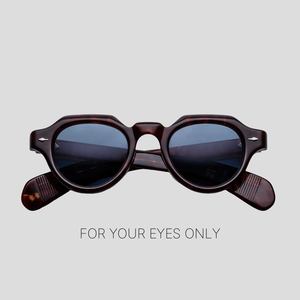
MDITA MD512005 Retro Oval Full Rim Custom Sunglasses

2026 Vintage 8mm Beveled Thick Frame Polarized Sunglasses
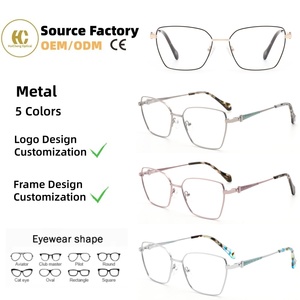
Handcrafted Monel & Acetate Combination Optical Frames
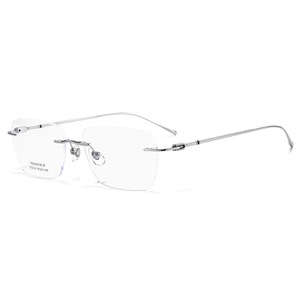
Ultra-Light Pure Titanium Minimalist Rimless Optical Frames
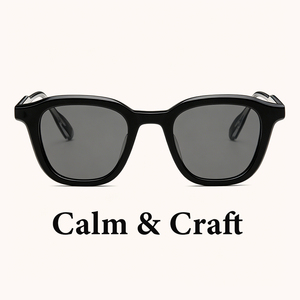
TFB Square Tortoise Architectural Acetate Sunglasses
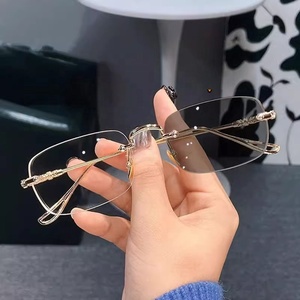
Square Rimless Rapid-Transition Photochromic Eyewear
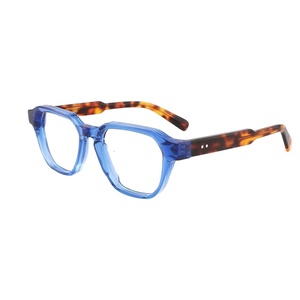
Classic Rectangular Thick-Profile Acetate Optical Frames
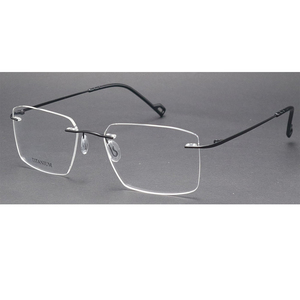
Readsun 0.5 Gentleman High-Elasticity Titanium Optical Frames
Factory Infrastructure, Quiet Luxury Philosophy & Technical Capabilities
True OEM/ODM excellence is not merely about assembling parts—it is about proprietary material science, disciplined ergonomics, and a manufacturing environment built to support both emerging luxury disrupters and century-old dispensary chains.
Mazzucchelli 1849 & Cellulose Aging
Our raw acetate sheets undergo controlled curing in climate chambers for 60 to 90 days. This degassing stage eliminates residual plasticizer solvent, preventing frame distortion, bridge warping, and shrinkage when exposed to glazing heat or diverse regional climates.
Lab-Glazing Optical Compliance
Every optical silhouette is engineered to exact ISO 12870 criteria. V-grooves are cut at uniform 115-degree angles to ensure bench opticians experience zero lens slippage, zero stress-birefringence cracks, and smooth insertion of high-index progressive lenses.
Japanese Beta-Titanium Metallurgy
We source medical-grade β-titanium wire from specialized mills in Sabae, Japan. Combined with PVD vacuum ion-sputtering, our metal chassis achieve over 300 hours of artificial sweat and salt-spray resistance with zero nickel leaching or surface micro-pitting.
Technical Whitepaper: Precision Tolerance & Ergonomics
In high-end eyewear manufacturing, quality is quantified in the absence of friction and the retention of geometry. A frame is a kinetic medical device that rests on cranial pressure points for up to sixteen hours daily. Our OEM engineering process bridges aesthetic luxury and biometric mechanical integrity.
Through our proprietary five-axis CNC carving lines, we maintain perimeter variance within 0.02mm. Following CNC routing, each frame undergoes a four-tier tumbling cycle: rough birchwood pegs with pumice slurry for 24 hours, medium walnut shell granules for 24 hours, fine hard-maple chips with organic carnauba wax for 18 hours, and final hand-buffing by master craftsmen with over fifteen years of optical lineage. This removes all micro-burrs and produces an unclouded mirror finish that stands up to decades of wear.
| Engineering Parameter | Mass Market Standard | Our OEM / Private Label Standard | Direct Clinical / B2B Impact |
|---|---|---|---|
| Acetate Curing Period | 10 - 15 Days (Accelerated) | 60 - 90 Days (Natural Degassing) | Zero bridge flattening; prevents post-glazing frame pop-out. |
| Hinge Fastening Mechanism | Thermal Heat-Sink Implantation | Drilled Rivet & Counter-Thread Screws | High shear tolerance; field-repairable across global dispensaries. |
| Titanium Sputtering Process | Electroplating (1.5 - 2.0 μm) | Cathodic Arc PVD Ion Deposition (4.5 μm) | Superior scratch resistance, complete hypoallergenic nickel barrier. |
| Lens Groove Angle | Approximate 90° - 105° | Calibrated 115° with 0.65mm Depth | Seamless fit for high diopter (Index 1.67 / 1.74) single vision & freeform progressives. |
Furthermore, our "Quiet Luxury" production line honors the subtle design codes modern consumers demand. Instead of garish external brand stamps, we incorporate concealed micro-engravings inside the temple arm core, customized stepped bevels along the end-piece lugs, and proprietary German OBE Teflon-coated safety screws that prevent loosening over extended hinge life-cycles.
Strategic Sourcing: Next-Gen B2B Eyewear Procurement Trends
The global optics supply landscape has shifted dramatically from speculative mega-batch purchasing to intelligent, agile replenishment models driven by digital assortment planning and compliance transparency.
Agile Private Label Run Sizes (Low MOQ Velocity)
Boutique chains and regional distributor networks are replacing single-SKU 1,200-piece purchase orders with modular runs of 100 to 300 pieces per colorway. This reduces capital tie-up while allowing rapid style iteration based on real-time sell-through velocity and seasonal palette updates.
Digital Product Passports (DPP) & Auditable Traceability
European and North American regulatory updates mandate full supply chain verification. Leading B2B buyers now require raw material certification confirming FSC-certified wood pulp origins, phthalate-free plasticizers, and ethical labor compliance throughout tier-1 and tier-2 facilities.
Unified Optical & Sun (Sol) Pairing Assortments
Retail dispensaries generate significantly higher basket values when merchandised with paired silhouettes. Retailers buy identical frontal profiles in optical clears alongside matching tinted Sol executions, providing patients an effortless cross-purchase opportunity for prescription sun wear.
Turnkey Custom Packaging & Drop-Ship Fulfillment
B2B buyers are moving toward integrated OEM packages where factory floor handling includes micro-fiber cloths, hand-stitched vegan leather hard cases, custom FSC gift boxes, and barcoded inventory packaging ready for direct distributor warehouse intake.
Advanced Manufacturing Trends: Material Science & Production Tech
Continuous evolution in polymer chemistry and precision additive fabrication is redefining modern optical frame performance, sustainability, and industrial scalability.
M49 Bio-Acetate Formulations
Transitioning from traditional diethyl phthalate (DEP) plasticizers to bio-based triethyl citrate derived from renewable non-food agricultural biomass. These frames biodegrade by more than 85% within 115 days under industrial compost conditions without sacrificing tensile rigidity.
SLS PA12 Additive Manufacturing
Selective Laser Sintering of bio-sourced polyamide powder allows zero-tooling rapid prototyping, radical hollow-core lightweighting, and hyper-ergonomic bespoke nose bridges for Asian-fit and diverse cranial typologies that are unachievable with stamping dies.
Smart-Hinge Cavity Engineering
As smart eyewear and audio wearables mature, our OEM factories develop dual-molded acetate temples with internal wire routing cavities, enabling audio transducers and directional micro-speakers while preserving traditional luxury hand-finishing aesthetics.
Frequently Asked Questions for B2B Buyers & Opticians
Clear, direct answers regarding contract manufacturing, MOQ flexibility, lead times, optical certifications, and custom tooling.
What are the standard Minimum Order Quantities (MOQ) for OEM vs. ODM?
For existing catalog models (ODM with private label laser or hot-stamped logos), our baseline MOQ starts at 100 to 150 pieces per model (divided across 2-3 colorways). For bespoke 3D CAD ground-up OEM development requiring custom tooling and extrusion molds, the standard MOQ is 300 to 500 pieces per style.
How do you guarantee frame stability and avoid lens pop-out?
Frame shrinkage and lens pop-out stem from inadequate acetate degassing. We enforce a 60 to 90-day natural aging protocol for raw acetate sheets. Additionally, our CNC machines cut lens grooves with an exact 115-degree standard V-bevel and 0.65mm depth, rigorously tested with demo and high-index lenses.
What international compliance and safety certifications are provided?
All eyewear batches are tested and certified to comply with CE (EU 2017/745 Medical Devices Regulation and EN ISO 12870 for ophthalmic frames), ANSI Z80.3-2018 (US FDA sunglasses impact resistance drop ball test), AS/NZS 1067.1:2016 for Australasia, and UKCA standards for the United Kingdom market.
What is the typical production timeline from technical drawing to delivery?
For custom ODM branding on in-production blanks, delivery is 25-35 days. For ground-up bespoke OEM designs: 2D/3D engineering blueprints take 7 business days, functional CNC physical prototypes take 14-20 days, mold tooling takes 25-30 days, and full batch assembly takes 45-60 days.
How do you protect private label proprietary design IP?
We sign bilateral Non-Disclosure Agreements (NDAs) before reviewing any client CAD drawings or concept art. Proprietary tooling, custom hinges, unique wire-core patterns, and brand-specific acetate lamination recipes remain the sole intellectual property of our client and are never shared or cross-sold.
Can you support custom core-wire engravings and metal hardware?
Yes. We offer micro-cast or stamped custom filigree core-wires, custom rivets, temple tip end-inlays, pad-printed silicone nose pads, and diamond-cut titanium end pieces. These details deliver that distinct "quiet luxury" signature required in the premium optical sector.
What sun lenses are available for private label sunglass orders?
We supply optical grade CR-39, polyamide (nylon) sun lenses, impact-resistant polycarbonate, and real glass lenses. Finishes include Category 1 to 3 tinting, gradient coloration, high-contrast polarization (TAC or injected nylon), internal anti-reflective (AR) backside coatings, and flash oleophobic mirror finishes.
Scale Your Eyewear Assortment with Precision Manufacturing
Connect directly with our engineering team to review 3D CAD files, request material swatches, or configure private label production runs designed for rapid commercial sell-through.