Engineered Prescription Optical & Dual-Story Sol Frames
Explore our export-grade optical silhouettes. Each model is engineered with uniform eyewire grooves, premium barrel hinges, and anatomical bridge geometries that transition seamlessly from boutique presentation to optical lab glazing.
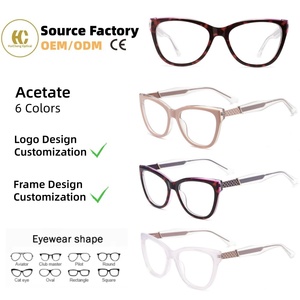

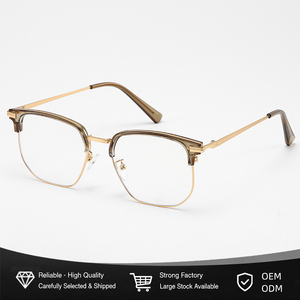
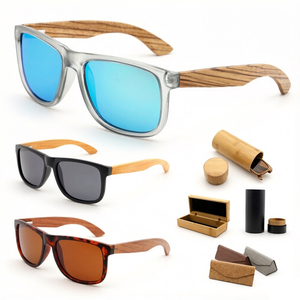
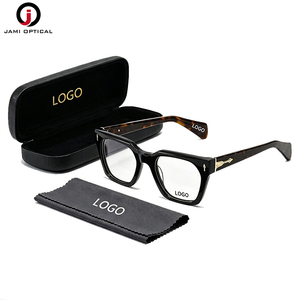
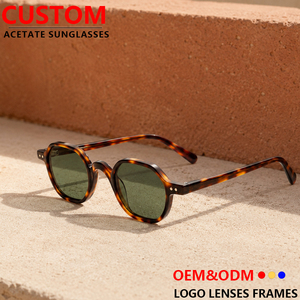
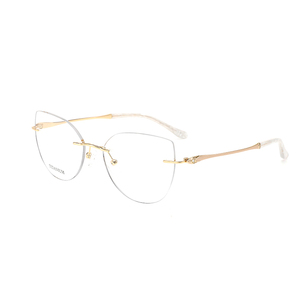
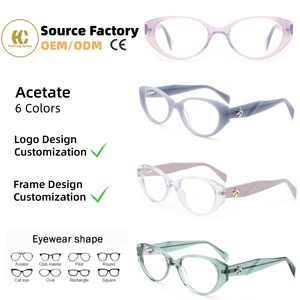
The Engineering Foundation: Why Global Optical Brands Partner With Us
In high-tier prescription eyewear manufacturing, true luxury lies in structural equilibrium, internal stress elimination, and unyielding micro-tolerances. We operate as an integrated technical partner for independent optical retail groups, chain distributors, and luxury fashion labels.
Controlled Moisture Desiccation & Curing
Unlike rapid turnaround injection plastics, high-density cellulose acetate sheets undergo a 45-day resting period followed by 3-stage forced thermodynamic kiln curing. This process expels residual plasticizer solvents, preventing post-sale chassis warpage, face-wrap slippage, or eyewire shrinkage during high diopter lens bevel edging.
5-Axis High-Speed CNC Milling
Our computerized machining centers execute profile carving with micro-stepping drives holding tolerances within ±0.04mm. Eyewire bevels are carved with uniform 115° to 120° V-grooves matching ISO lens edgers, guaranteeing cold-snap lens insertion without stress fracturing or chipping anti-reflective (AR) lens coatings.
German OBE & Comotec Hinge Integration
We anchor multi-barrel and custom damped spring hinges via ultrasound core pin insertion and riveted tenon construction. Tested past 25,000 deflection cycles without lateral hinge play, our temple assemblies sustain firm closure tension and continuous temple-tip pressure without inducing mastoid fatigue.
Japanese Beta-Titanium Cold Drawing
For rimless, semi-rimless, and hybrid frames, we utilize Japanese-sourced Ti-15V-3Cr-3Sn-3Al raw beta-titanium wire. This metallurgical profile yields a flexural modulus 40% superior to standard CP titanium, allowing paper-thin temple designs that conform to cranial contours while remaining 100% hypoallergenic and sweat-proof.
Triple Tumbling & Hand-Lapping Polish
Frames undergo a 96-hour multi-stage barrel tumbling cycle transitioning from walnut shells and birch chips to fine pumice paste. Edges are subsequently hand-lapped by master polishers on custom cotton wheels, yielding a liquid-like mirror polish that highlights natural tortoise marbling without blunting crisp architectural facets.
Comprehensive Quality Traceability
Every batch is certified against EN ISO 12870, ANSI Z80.5, and FDA Title 21 CFR Part 801.410 (drop-ball impact). Dimensional stability, bridge deformation fatigue, sweat resistance, and nickel release compliance (BS EN 16128) are logged across every production lot for complete regulatory compliance.
OEM Manufacturing Specifications Matrix
A side-by-side technical performance comparison demonstrating how our premium manufacturing parameters contrast with baseline commercial production.
| Evaluation Parameter | Commercial Wholesale Grade | Our OEM Precision Specification | Optical Practice / Brand Impact |
|---|---|---|---|
| Base Raw Material | Recycled post-industrial acetate or CP metal alloys | Virgin Cellulose Acetate (Cotton Linter) & Grade 5 Beta-Titanium | Hypoallergenic, superior skin contact feel, zero brittleness, lifetime luster. |
| Chassis Curing Duration | 5 - 10 days rapid thermal bake | 80 - 120 days multi-chamber ambient curing | Zero temple shrinkage, permanent pantoscopic tilt retention, no lens pop-outs. |
| Eyewire Bevel Consistency | Molded or stamped (±0.25mm deviation) | Diamond 5-Axis CNC Milled (±0.04mm strict) | Perfect glaze mating with high diopter lenses; eliminates in-office edging delays. |
| Surface Finishing Method | 24-hour chemical vapor dipping | 96-hour organic tumbling + hand cotton wheel buffing | Sensory tactile smoothness; zero micro-crazing under UV and skin sebum exposure. |
| Hinge Fastener System | Direct screw friction in plastic | Ultrasonic anchored steel inserts with nylon-sleeved lock screws | Resists screw backing out; maintains calibrated open/close resistance indefinitely. |
| Dual-Story Merchandising | Uncoordinated sunglasses and optical runs | Harmonized 1:1 Optical + Sol sunglass silhouette pairs | Maximizes retail shelf yield; enables unified brand storytelling across both categories. |
Global Eyewear Procurement & Sourcing Trends (2025–2030)
The global luxury optical marketplace is undergoing a profound paradigm shift. Optical chains, boutique concept stores, and independent eyewear designers are re-engineering their procurement supply chains to address evolving regulatory and commercial dynamics.
1. Bio-Based Acetates & Circular Supply Chains
By late 2025, stringent EU corporate sustainability regulations (CSRD) and heightened consumer eco-consciousness will make non-phthalate plasticizers mandatory. Leading optical brands are transitioning from traditional fossil-based triacetin to bio-based plasticizers derived from renewable sources. Our manufacturing line is already certified for 68%+ bio-cellulose acetate, preserving the material's structural density, crystal clarity, and thermodynamic formability while drastically curbing greenhouse gas footprints.
2. Agile Low-MOQ Production vs. Bulk Depots
Excess stock is toxic to modern retail margins. High-end opticians are abandoning 1,200-piece single-color bulk commitments in favor of agile OEM agreements featuring 100-300 piece minimums across split colorways. Our production workflows leverage rapid mold-change fixtures and pre-calibrated 5-axis CNC cutters, granting private labels the agility to test localized seasonal capsules, gauge retail sell-through, and trigger replenishment without tied-up capital.
3. Digital Twin CAD & Virtual Try-On Readiness
B2B procurement now demands complete digital integration. Optical retailers increasingly require photorealistic 3D CAD modeling files (.OBJ, .GLB) alongside physical shipments. We deliver accurate 3D dimensional assets for each manufactured frame code, empowering our partners to deploy frictionless virtual try-on modules, AR mirror systems, and e-commerce pre-sale campaigns well before container delivery lands in port.
Technological Innovations Shaping Modern Frame Design
Consumer expectations for daily eyewear have evolved beyond basic refractive correction into the realm of ergonomic wellness, acoustic integration, and subtle luxury detailing.
Architectural Weight Balancing & Mastoid Ergonomics
Traditional chunky retro acetate frames frequently suffered from a common complaint: nose pad slipping and severe mastoid bridge fatigue. Modern OEM engineering counters this through 3D weight redistribution. By tapering front rim thicknesses from 6.0mm at the end pieces to 3.8mm around the bottom eyewire, and counterweighting the temple tips with solid metal core end-caps, the center of gravity shifts inward. Wearers experience a tailored, featherlight fit throughout 16-hour daily wear cycles.
Physical Vapor Deposition (PVD) & IP Micro-Plating
Standard electroplating degrades rapidly under prolonged contact with skin acidity, humidity, and alcohol-based cleaning agents. Our factory has integrated high-vacuum Ion Plating (IP) and PVD sputtering chambers. This technology creates a titanium nitride or diamond-like carbon (DLC) molecular bond on metal surfaces, offering scratch resistance 500% higher than traditional wet barrel dip plating and passing the stringent 48-hour synthetic sweat immersion test without pit corrosion.
Variable Groove Depths for Digital Freeform Glazing
Modern digital freeform lenses—particularly high-negative prescriptions and ultra-thin 1.74 index materials—exhibit complex edge thicknesses along the temporal periphery. Our CNC eyewire carving programs utilize variable-depth parabolic profiling. The groove automatically deepens by 0.25mm along the lateral corners, enabling ophthalmic labs to mount high-diopter lenses without unsightly edge protrusions or bevel pop-out risks.
Unified 'Optical + Sol' Modular Engineering
Rather than treating sunglasses and optical frames as isolated SKUs, our design framework produces matching pairs sharing identical bridge spreads, eyewire circumferences, and vertex distances. This modular design system empowers retail partners to stock a cohesive aesthetic identity, allowing clients to transition effortlessly between their clear prescription glasses and tinted polarized sunglasses without refitting their facial ergonomics.
B2B Optical Procurement: Frequently Asked Questions
Comprehensive answers addressing sample prototyping, MOQ thresholds, custom branding methodologies, quality compliance certifications, and lead-time scheduling.
Q1: What are your minimum order quantity (MOQ) guidelines for OEM/ODM optical frames?
For custom OEM manufacturing with bespoke tooling and private acetate extrusion, our standard MOQ is 300 pieces per model, configurable into 3 distinct colorways (100 pieces/color). For in-stock catalog silhouettes requiring custom logo laser engraving, pad printing, and personalized packaging integration, we support agile pilot orders starting from 50 to 100 units per style.
Q2: Are all optical models pre-engineered to accept prescription progressive and high-index lenses?
Yes. Every optical model in our portfolio is engineered for prescription lab glazing. We hold an exact 4-base curve across optical rims, standard 115°–120° V-groove geometries, and adequate B-measurement heights (≥ 32mm) to ensure full compatibility with modern digital progressive corridor layouts and high-index (1.67, 1.74) lens materials without chassis distortion.
Q3: What certifications and testing records are provided with export shipments?
Every commercial export consignment is accompanied by full batch traceability records, including CE Declaration of Conformity (EN ISO 12870:2018), FDA Medical Device Establishment Registration, drop-ball impact testing reports (Title 21 CFR Part 801.410), nickel release test certification (BS EN 16128:2015), and UV400 spectral transmittance verification reports.
Q4: Can you support dual-story collections (matching optical frame and Sol sunglass versions)?
Yes. A signature capability of our OEM program is coordinated silhouette development. We engineer the primary structural chassis to accommodate both demo optical lenses and 2.0mm tinted nylon/CR-39 polarized sun lenses. This allows your brand to merchandise a harmonized optical-to-sunglass story across retail counters without doubling your frame mold investment costs.
Q5: What is the standard timeline from initial design concept to final landed shipment?
Our rapid prototyping phase delivers 3D printed concept mockups in 5–7 business days, followed by fully functional handcrafted sample frames in 15–20 days. Mass production cycles typically require 45–60 days for metal and titanium models, and 60–75 days for cured acetate frames to ensure proper material stability and hand polishing.
Q6: How do you manage private branding, temple hot-stamping, and packaging ecosystems?
We provide full-spectrum branding services: high-resolution fiber laser engraving, metallic foil foil hot-stamping, epoxy temple plaque inlay, metal casting core wires, and pad-printed inner temple specifications (model, color code, lens/bridge/temple sizing). Custom collapsible cases, microfiber cleaning cloths, and rigid retail packaging can be developed concurrently.
Q7: What QA protocols are deployed to prevent frame warping during international shipping?
All frames are placed in temperature-controlled post-cure chambers to relieve internal material tension before final dimensional calibration. Finished pieces are packed in vacuum-sealed individual poly sleeves with anti-static desiccant packets, nestled inside compartmentalized 10-piece inner master trays, and protected by reinforced 5-ply corrugated export cartons.
Q8: Can international buyers order a physical sample assortment before committing to volume production?
Yes. We operate an express sample delivery program for optical practitioners, brand founders, and distribution category managers. You can curate a sample box of current production silhouettes to inspect hinge tolerances, hand-finishing, and glazing ease firsthand. Connect with our export sales engineering team via the catalog button below.