Fast Turnaround
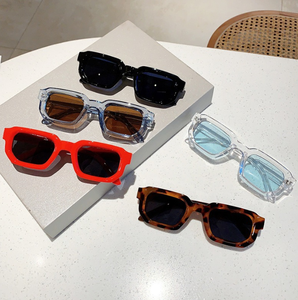
Discover certified cellulose acetate profiles, hand-polished finishes, and calibrated lens geometries engineered for immediate global private label distribution.
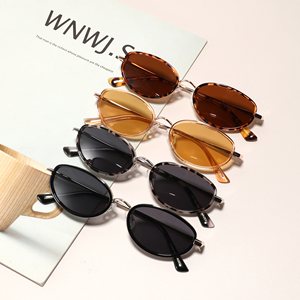
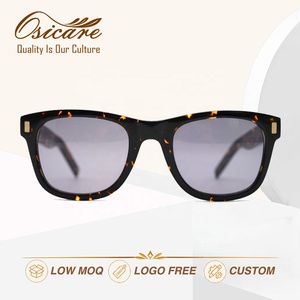
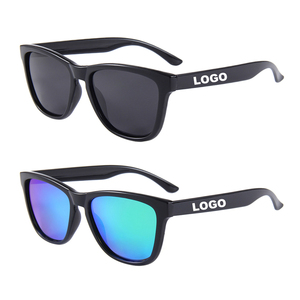
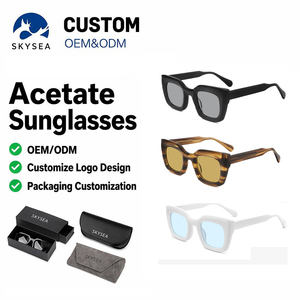
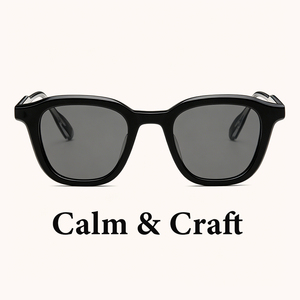
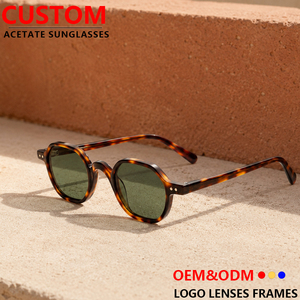

Technical comparison, material density analysis, and micro-structural benchmarks for independent brands and distributor procurement teams.
Cellulose acetate is a non-petroleum polymer derived from purified natural cotton lint and wood pulp flakes. Unlike injected plastics (Polycarbonate/TR90) that degrade via plasticizer evaporation, sheet-cut cellulose acetate features anisotropic crystalline orientation. This structural matrix allows multi-stage thermo-forming adjustments without stress whitening or micro-fissures.
High-end acetate slab stock requires stabilization in thermal ovens at 45°C to 55°C for 60 to 90 days prior to CNC profiling. This slow baking relieves inner residual stress from solvent casting (diethyl phthalate/eco-plasticizers). Skipping this cycle leads to frame warpage, lens detachment under seasonal thermal cycling, and uncalibrated pantoscopic tilt.
Profiles are shaped with computerized 5-axis routers utilizing customized diamond cutting bits to achieve chamfers, grooving channels, and step-bevel geometries. Polishing consists of 72 consecutive hours inside rotating wooden drums with pumice stones, birch wood chips, and carnauba wax compounds, followed by master-artisan cotton wheel rouge polishing.
Strategic insights for brand founders, product directors, and procurement executives navigating supply chain evolution.
Global regulatory pressure, notably EU Corporate Sustainability Due Diligence, is driving buyers toward bio-acetate plasticized with plant-based alternatives rather than traditional phthalates. Brands adopting certified ISCC PLUS mass-balance or 100% bio-based acetate gain instant shelf distinction, defending premium price points and avoiding impending plastic taxation tariffs.
Consumer preferences have decisively shifted from thin, transient injection plastic wear to substantial 6.0mm to 10.0mm slab-cut acetate featuring 3D dimensional temple sculpting, television-cut bevel rims, and tactile raw hand-buffed bevels. Eyewear is curated as a multi-season structural heirloom, requiring precision internal weight-reduction grooving to preserve ergonomic equilibrium.
Leading eyewear boutiques increasingly bypass pure sun collections in favor of dual-purpose architectures. Designing frames ready for single-vision or progressive optical lenses with companion tinted sunglass configurations optimizes SKU counts, lowers tooling investments, and boosts retail conversion on optician display walls.
Transparent solutions to common challenges encountered in custom OEM/ODM acetate eyewear development.
For custom acetate designs utilizing stock color slabs, our standard MOQ starts at 300 pieces per model (divided into 2–3 color variations, 100 pcs per color). For completely custom laminate sheets or bespoke Mazzucchelli color runs, the material production batch requires an MOQ of 600 to 1,200 pieces.
All acetate frames undergo a controlled 72-hour thermal de-stressing chamber process before hinge pinning. We assemble reinforced stainless-steel wire cores through the temple centers and ship with optical-grade acrylic demo lenses or sun lenses installed to lock front curvature intact throughout transit.
Yes. Our tooling calculates the eyewire bevel channel at a universal 110° to 120° V-groove angle with accurate lens slot depths. This permits opticians to trace and glaze high-index, progressive, or polarized lenses without edge chipping or frame popping.
We provide hot foil stamping, precision laser engraving back-filled with epoxy enamel, customized metal temple end-tip plaques, casting logos embedded into core wires, and silk-screened inside temple inscriptions with custom pantone matching.
Rapid prototyping: 3D CAD modeling takes 3–5 working days; functional 3D resin samples take 7 days; hand-carved acetate physical prototypes take 15–20 days. Full-scale mass production ranges between 55 to 75 days depending on the complexity of hand tumbling and hinge riveting.
Yes. Every batch is supplied with full documentation for CE marking (EU PPE Regulation 2016/425), US FDA device listing and 21 CFR 801.410 drop ball impact test certificates, as well as REACH compliance verifying cadmium, lead, and nickel release safety.