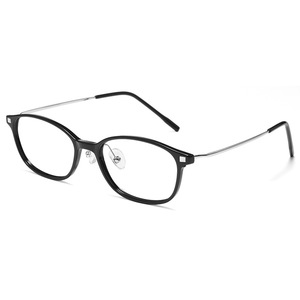
Featherweight Series
From ultralight aerospace-grade titanium mountings to precision compression-fit drill mounts, review our flagship optical models engineered for high-prescription compatibility, refined balance, and prolonged ergonomic stability.
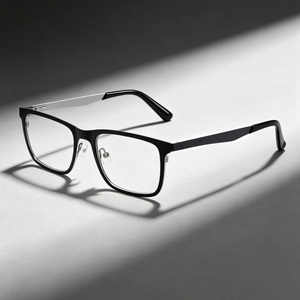
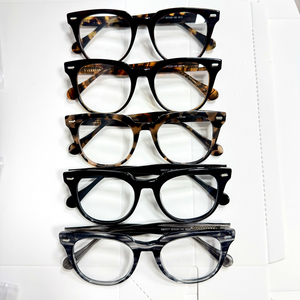
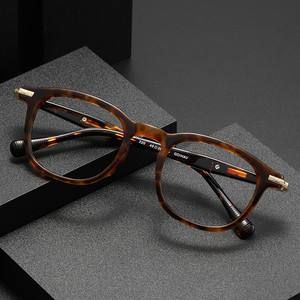



Rimless and three-piece compression optical frames represent the apex of mechanical eyewear manufacturing. Unlike conventional full-rim acetate or monel sheet metal spectacles, rimless optical frames transfer all physical stresses—such as bridge torsional torque, temple flexion, and facial spread—directly onto the optical lens substrate through micro-drill points. When global optical brands, distributors, and optometry clinics source wholesale inventory from Chinese manufacturing hubs like Shenzhen and Danyang, evaluating a supplier's structural proficiency goes far beyond surface electroplating aesthetics.
Historically, traditional rimless mountings relied on threaded screw-and-nut assemblies fitted with star washers and hex caps. These archaic configurations presented major operational bottlenecks for dispensaries: chronic screw loosening, localized stress fractures in CR-39 monomer lenses, and lens rotation due to mechanical vibration. Modern tier-1 factories have entirely disrupted this space through screwless compression bushing architectures and high-modulus Beta-Titanium (β-Ti) alloy wire-forming. By integrating medical-grade polyoxymethylene (POM) dual-sleeve compression plugs directly into CNC-machined 1.40mm to 1.60mm drill apertures, our frames isolate the lens surface from shear stresses, dramatically mitigating laboratory edge chipping and field fracture rates.
Utilizing high-tensile POM elastomer grommets that expand inside the lens chamber, eliminating screw loosening, absorbing kinetic shock, and ensuring absolute axial stability without localized stress cracking.
Multi-stage physical vapor deposition achieves coating thicknesses exceeding 0.6μm with IP black, palladium, and 24K real gold finishes that pass rigorous 72-hour artificial sweat and salt spray tests.
High-recovery memory titanium chassis engineered with yield strengths reaching 1200 MPa, providing lightweight comfort (<8g) while maintaining perpetual bridge symmetry across diverse pupillary distances.
Optical supply chain executives are operating in a rapidly consolidating B2B landscape driven by higher consumer discernment for Quiet Luxury, the proliferation of digital freeform surfacing, and rising average progressive power demands. To navigate this landscape profitably, category buyers must align their wholesale purchasing strategies with four decisive shifts unfolding over the 2025–2030 horizon:
| Procurement Pillar | Conventional Manufacturing Methodology | Next-Generation Paradigm (Our Factory Standards) | Strategic ROI for Retail Chains |
|---|---|---|---|
| Glazing Substrate Compatibility | CR-39 & Standard 1.56 Mid-Index resins prone to stress splitting at drill points. | Exclusively optimized for high-index MR-7, MR-8, Polycarbonate, and Trivex substrates. | Reduces laboratory lens breakage rates from ~4.8% down to under 0.2%. |
| Hinge Architecture | Traditional 3-barrel friction hinges requiring repetitive washer replacement and tightening. | Screwless interlocking micro-cam hinges and flexible cylindrical cylinder pivots. | Virtually eliminates retail post-purchase adjustments and warranty returns. |
| Prescription Coverage | Flat base-curve mounts limited to -4.00D or risk front facial flattening. | Pre-compensated pantoscopic angle mounts with dynamic bridge offsets up to -8.50D. | Broadens dispensing addressable audience to high-myopia and presbyopic consumers. |
| MOQ & Rapid Customization | Rigid batch tooling requiring 1,200+ pcs per SKU with 90-day lead times. | Agile 5-axis CNC laser cutting allowing hybrid small-batch customization (100–300 pcs). | Decreases capital lockup in inventory and minimizes retail obsolescence. |
Furthermore, environmental compliance and material traceability have transitioned from optional certifications to mandatory trade prerequisites. Progressive B2B importers are pivoting toward bio-based cellulose acetates and certified lead-free, nickel-free titanium ingots conforming to strict EU REACH and FDA 21 CFR standards. Factories lacking closed-loop effluent treatment and authenticated material testing sheets face increasing border customs scrutiny, highlighting the imperative of vetting certified factory partners directly at origin.
Operating as an integrated designer-manufacturer, our enterprise bridges the historical divide between European optical design aesthetics and the production efficiency of precision Chinese manufacturing. Rooted in the design philosophy of "Presence, Without Announcement," our optical frames reject gaudy exterior branding, focusing entirely on structural ergonomics, uncompromised proportion, and tactile material refinement.
Full CAD/CAM engineering team delivering prototyping within 10 working days. From custom pantoscopic tilts to specialized bridge widths and custom lens edge-grooving, we tailor chassis to your exact demographic specs.
Every signature rimless silhouette is designed with corresponding sun/tinted geometry, giving retail buyers a comprehensive optical display wall and sunglasses line without doubling sourcing overhead.
Every batch undergoes automated 2D optical dimensional scanning, hinge torsion cycles, and cross-hatch adhesion testing before shipment, guaranteeing instant glazing readiness for high-volume automated optical labs.
We advise laboratory glazing using high-impact polyurethane monomers such as MR-8 (1.60 index), MR-7 (1.67 index), Trivex, or Polycarbonate. Standard 1.50 CR-39 and brittle high-index 1.74 resins are susceptible to micro-fissures around drilled holes unless fitted with our proprietary elastomeric damping washers.
For in-stock ready-to-ship models, our MOQ begins at 50 to 100 units across mixed colorways. For bespoke OEM/ODM manufacturing featuring custom laser-engraved temple logos, custom bridge geometries, and specialized PVD plating colors, standard production runs start at 300 pieces per model.
Yes. Every wholesale frame order is accompanied by detailed CAD drawings, vector drill mapping files (DXF), and lens contour trace coordinates compatible with major automated edging equipment including Essilor, Nidek, Briot, and MEI edging systems.
Our raw materials strictly utilize pure Titanium (Ti ≥ 99.4%) and medical-grade Beta-Titanium alloys. All vacuum ion coatings use titanium nitride base layers with zero nickel interlayers, fully certified under EN 1811:2011+A1:2015 European standard for nickel release limits.