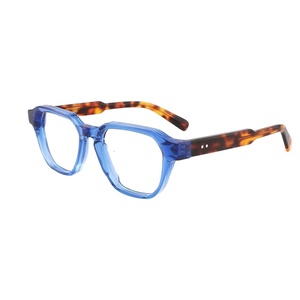
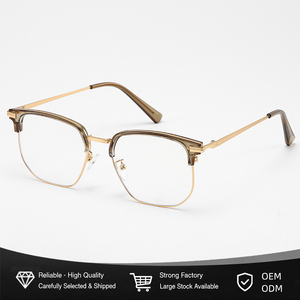
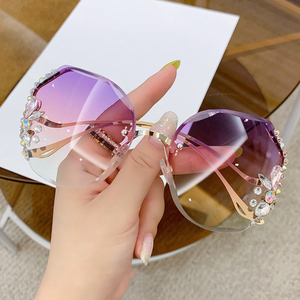
China Wholesale Custom Prescription Eyewear Factory & Suppliers
Precision CNC Machining, Premium Italian & Domestic Cellulose Acetate, Ultra-Light Titanium, and Full-Scope OEM/ODM Eyewear Solutions for Global Optical Retailers.
2.4M+
Annual Frame Glazing & Export
±0.05mm
CNC Lens Groove Tolerance
100%
Rx Glazing Fit Guarantee
50+
Global Optical Chains Supplied
Factory Showroom
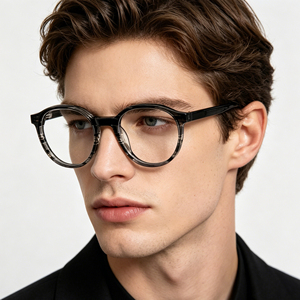
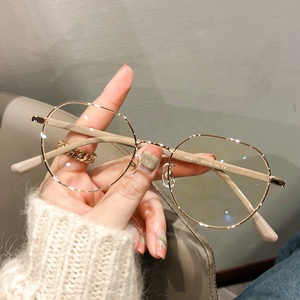
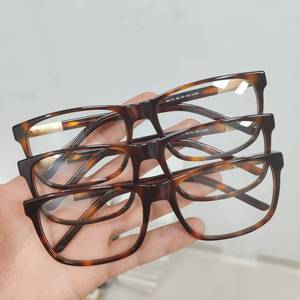
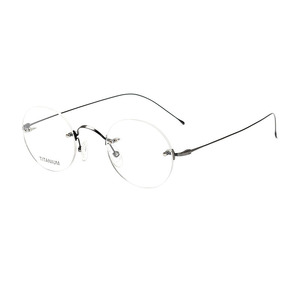
Core Prescription Frames & Sunglasses Lineup
Engineered for seamless glazing compatibility with single-vision, digital progressive, and high-index lenses. Each unit undergoes multi-stage hand finishing, ultrasonic cleaning, and five-axis stress testing.
Engineering Standards for Custom Prescription Eyewear Manufacturing
A rigorous examination of metallurgy, polymer stability, optical groove milling, and glazing tolerancing for brand founders and supply chain directors.
Material Aging & Curing Cycles
Unlike rapid injection plastics, high-grade cellulose acetate sheets must undergo controlled temperature and humidity conditioning for a minimum of 45 to 60 days. This stabilizes residual solvent volatility, preventing post-sale frame warpage and temple shrinkage when optical shops edge high-minus lenses into the rims.
Tolerancing & Optical Grooving
Prescription integrity depends on exact groove beveling. We utilize multi-axis CNC routers operating at ±0.05mm dimensional tolerances with a standardized 110° V-groove. This profile provides maximum retention stability for both polycarbonate, Trivex, and high-index 1.67/1.74 lenses under severe thermal stress.
Ergonomics & Pantoscopic Tilt
Global optical brands require varied facial geometry solutions. We produce customized bridge splay angles (20° to 35°), frontal wrap adjustments, and standardized 8° to 12° pantoscopic tilts. Interchangeable Asian-fit built-up nose pads and titanium paddle temples allow flexible tailoring across diversified global demographics.
Material Category
Tensile Strength (MPa)
Specific Gravity (g/cm³)
Prescription Capacity Range
Key Lab Glazing Requirement
Cured Cellulose Acetate
85 – 110
1.28
Plano to -12.00 / +6.00D
Controlled heating box (55°C–65°C) insertion
Beta-Titanium Alloy
900 – 1250
4.50
Plano to -8.00 / +4.00D
Cold-snap insertion with calibrated groove lock
Monel & Stainless Composite
550 – 780
8.10
Plano to -6.50 / +4.00D
Locking screw tension limit ≤0.25 Nm
Rimless Compression Post
Dependent on Lens
Ultra-Low
Plano to -5.00 / +3.00D
Pressure bushing; Polycarbonate/Trivex mandatory
Market Intelligence
Future Trends in Global Eyewear Procurement (2025–2030)
Data-driven shifts dictating how international optical labels, independent practices, and distributors optimize product lifecycles and retail margins.
Circular & Bio-Based Acetates
Regulatory mandates across Europe (REACH directives) and North American sustainability demands are accelerating adoption of eco-acetates containing bio-based plasticizers (>68% natural origin from wood pulp and cotton). Our factory operates dedicated extrusion runs for biodegradable polymers that deliver pristine crystal clarity without premature brittleness.
Smart Frame Architectural Readiness
With smart audio, heads-up prescription waveguides, and photochromic electro-tinting emerging rapidly, wholesale frame architectures are transforming. We engineer hollowed-out titanium core temples, internal wiring pathways, and dual-cavity hinge assemblies that accommodate sub-miniature sensors without compromising optical center alignment.
Flexible On-Demand Batch Sizing
The traditional requirement of 1,200 pieces per SKU is ending. Advanced computerized nesting software and rapid tooling protocols allow us to support agile brands with mixed-color batching down to 300 pieces per style. This drastically reduces inventory risk and allows brands to align collections with seasonal customer sentiment.
Why Partner With Us
Manufacturing Capabilities & OEM/ODM Excellence
Decades of fine eyewear craftsmanship backed by modern automated infrastructure, ethical workplace compliance, and end-to-end quality assurance.
In-House Tooling & Prototyping
From CAD rendering to physical resin prototype in 72 hours. We run bespoke CNC mold-making rooms, saving up to 40% in initial upfront R&D costs for custom temple and bridge castings.
Rigorous Glaze Validation
Every batch of optical frames is test-cut using computerized lab edgers (Essilor, Nidek) across high minus and plus profiles to ensure rim bevel tracks seat smoothly without lens twist or optical aberration.
Full International Compliance
Fully compliant with ISO 12870:2016 ophthalmic optics standards, CE Medical Devices Regulation (EU) 2017/745, and FDA Class 1 registration (Device Listing number verified for clear U.S. customs entry).
Turnkey Packaging & Branding
Custom micro-fiber cleansing cloths, collapsible leatherette magnetic cases, and branded rigid retail packaging engineered to maximize retail unboxing appeal and brand equity.
Buyer Knowledge Base
Frequently Asked Questions for Optical Wholesalers
Clear, direct answers regarding custom prescription eyewear sourcing, minimum order requirements, lab glazing compatibility, and quality control protocols.
What are your minimum order quantities (MOQ) for custom optical frame production?
For custom acetate eyewear involving new bespoke tooling and proprietary color laminations, our standard MOQ is typically 300 pieces per style, which can be split across 2 to 3 color variants. For existing mold profiles or ready-stock mixed batches, we accept initial trial orders starting from 50 to 100 units to support emerging optical boutiques and regional distributors.
Can optical labs easily glaze progressive and high-minus lenses into your frames?
Yes. All our optical frames are delivered with high-rigidity demo lenses that preserve rim structure during transit. Frame eyewires are engineered with standardized 110-degree V-groove channels, sufficient rim depth, and balanced pantoscopic angles. This ensures smooth cold or low-heat glazing on automatic edging machines (such as Nidek, Essilor, and MEI) without frame roll-in or stress fractures.
How does your factory ensure nickel-safe and skin-safe hypoallergenicity?
All metal components, including bridges, pad arms, and decorative temple hinges, strictly adhere to EN ISO 12870 and EN 16128 nickel-release limits. We employ advanced IP (Ion Plating) vacuum deposition and multi-layer electrophoretic protective lacquers, guaranteeing zero skin irritation and long-term resistance to sweat and cosmetic corrosion.
What is the standard production cycle for OEM prescription eyewear orders?
Initial technical drawings and CAD modeling are completed within 3 to 5 business days. Rapid 3D physical or resin samples are provided in 7 to 10 days. Once pre-production samples are fully approved, standard mass production takes 45 to 60 days. This timeline accounts for our mandatory 45-day acetate curing period to ensure permanent structural stability.
Do you supply complete prescription glazed eyewear directly to optical chains?
Yes. In addition to supplying frames with demo lenses, we offer complete centralized Rx finishing through our cleanroom optical processing partner labs. We can source, surface, hard-coat, AR-treat, and glaze single-vision, digital freeform progressives, photochromic, and blue-light lenses according to your patient prescription batch files, arriving patient-ready.
What quality control steps are taken prior to international export?
Every production run passes an exhaustive 4-stage inspection based on AQL 1.5 standards: incoming material spectro-analysis, CNC groove dimensional inspection, 20,000-cycle mechanical hinge endurance testing, and individual surface hand inspection under optical grade light booths prior to packaging.
Launch or Scale Your Eyewear Collection With Precision Manufacturing
Connect directly with our engineering and procurement team for confidential CAD reviews, sample requests, material swatches, and factory-direct volume price matrices.