Curated Optical & Polarized Sunglasses Benchmark Assortment
Precision-machined silhouettes balancing micro-gram weight distributions, dual-use optical glazing grooves, and optical-grade sun protection. Explore our eight core benchmark export models available for scalable wholesale distribution and bespoke white-label runs.
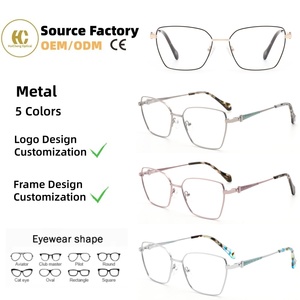
Custom Handcrafted Metal Acetate Optical Glasses Frame
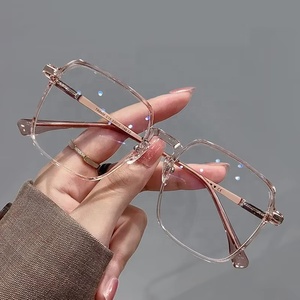
2025 Custom Logo TR90 Anti-Blue Light Square Frame
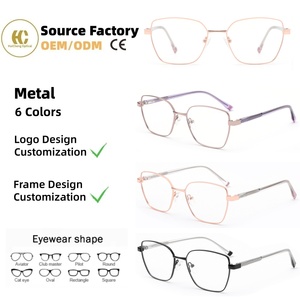
Custom Fashion Metal Optical Glasses Durable Full-Rim
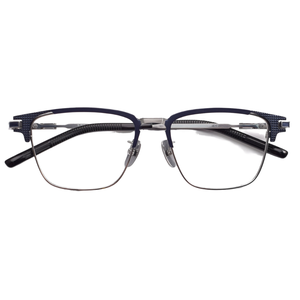
Luxury Titanium Classic Frame with Blue Light Blocking
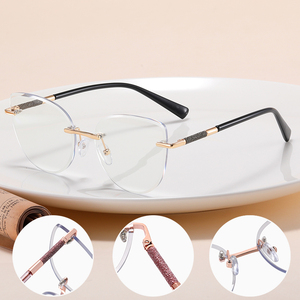
Rimless Stainless Optical Frame Unisex Reading Silhouette
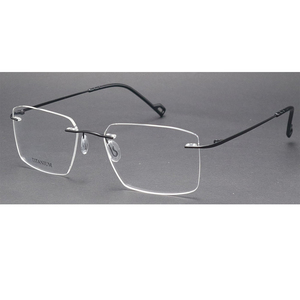
Readsun Gentleman 0.5 High-End Titanium Rimless Frame
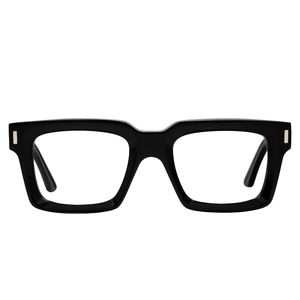
Sifier Retro Spectacles Custom Men's Fashion Eyewear
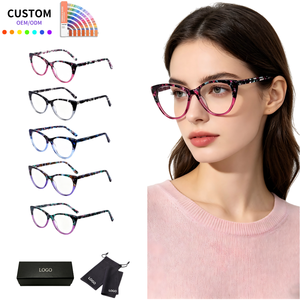
Floral Cat-Eye Acetate Optical & Polarized Prescription Frame
Presence, Without Announcement. Engineering the Modern Polarized Silhouette.
In high-tier optical wholesale, excessive external branding has yielded to the "Quiet Luxury" paradigm. Discerning global distributors require products whose commercial resonance stems entirely from haptic touch, balanced mass distribution, and flawless material depth.
Our OEM/ODM manufacturing facilities in Shenzhen and Wenzhou operate under a synchronized dual-purpose protocol: every optical silhouette is engineered alongside an identical polarized sunglass twin. By synchronizing groove depths, bridge tension tolerances, and temple flex dynamics, we empower optical clinics and luxury boutiques to merchandise cohesive, high-turnover collections with unified prescription glazing compatibility.
Core Factory Metallurgical & Chemical Specifications
- Cellulose Acetate Origin: Renewable Cotton Linter & Wood Pulp (>68% Bio)
- Titanium Purity: Grade 2 Pure & Beta-Ti (Ti-15V-3Cr-3Sn-3Al)
- Polarized Lens Matrix: Triacetate Cellulose (TAC) 1.1mm / Cast CR-39 / Nylon
- Surface Coating Technology: Multi-layer Broad-Spectrum AR + Oleophobic Nanocoat
- Nickel Leaching Standards: Passes EN ISO 12870 & EN 16128 Compliance
Factory Engineering Standards: Solving Birefringence & Wearer Fatigue
Why high-end optical buyers avoid generic trading houses. How advanced Chinese manufacturing infrastructure eliminates chromatic aberrations, stress-induced delamination, and mechanical hinge slacking.
Zero-Stress Birefringence Mitigation
Inferior assembly forces polarized lenses into undersized frame eyewires under excessive thermal loads, triggering localized internal tension that warps the Polyvinyl Alcohol (PVA) film. This results in rainbow fringes and visual distortion. Our factory employs computerized 3D laser-scanning eyewire cutters and calibrated torque-controlled glaze beveling to ensure sub-0.05D prismatic deviation across all lens meridians.
Vacuum PVD Ion Plating & Sputtering
Standard electroplating degrades rapidly when exposed to skin sebum and saline coastal humidity. Our metal frames undergo ultrasonic degreasing followed by Physical Vapor Deposition (PVD) ion plating in a 10^-4 Pa high-vacuum chamber. This molecularly fuses titanium nitride and chromium carboboride matrices onto the base metal, passing the 96-hour continuous saline sweat immersion test without pit corrosion or flaking.
Precision Five-Barrel & OBE Hinges
The consumer's perception of luxury is forged at the temple joint. We engineer custom-tooled five-barrel, seven-barrel, and precision German OBE-style interlocking hinge nodes. Screws are treated with micro-encapsulated anaerobic polyamide threading adhesives (Nylok) that eliminate screw back-out, retaining factory-specified hinge damping across a minimum of 20,000 smooth opening cycles.
2025–2030 Global Polarized Eyewear Procurement Trends
Procurement directors across North America, Europe, and Australia are navigating tectonic shifts in consumer expectations and regulatory mandates. Volume purchasing must now satisfy rigorous traceability benchmarks:
- 1. Bio-Based & Circular Cellulose Migration: Global brands are phasing out petroleum-derived phthalate plasticizers. Procurement orders are transitioning toward biodegradable acetates synthesized using triethyl citrate, ensuring environmental compliance with EU REACH and California Prop 65.
- 2. Optical-Sun Hybridization (Dual SKU Synergy): Retail floor footprints are optimizing. Buyers demand that every optical frame mold has an instant drop-in polarized clip-on or companion sunglasses SKU sharing identical geometry to reduce tooling costs by 40%.
- 3. High-Abbe Value Lens Formulations: While legacy polycarbonate exhibits low Abbe values (~30) causing lateral chromatic fringes, modern procurement emphasizes high-impact cast polyamides (Nylon, Abbe 52) and CR-39 polarizers (Abbe 58) with hydro-oleophobic anti-static coatings.
China Supply Chain Consolidation Advantage
China manufactures over 70% of the world's high-precision eyewear frames and polarized lenses. The structural advantage lies in the deep industrial clusters of Shenzhen (specializing in high-end titanium and hand-polished acetate) and Wenzhou/Danyang (global centers for high-capacity precision metal stamping, injection TR90, and optical monomer lens casting).
Partnering directly with a vertically integrated OEM/ODM factory eliminates multiple tiers of broker markups while granting overseas brands unmediated access to mold engineers, CAD prototyping within 72 hours, and batch-consistent colorway anodizing.
Factory Audit & Mechanical Testing Benchmark Matrix
Every export shipment undergoes destructive, mechanical, and spectral validation in accordance with ANSI Z80.3, ISO 12312-1, and AS/NZS 1067.1 global eyewear criteria.
| Testing Module | Standard Reference | Factory Threshold Parameter | Commercial Purpose | Result |
|---|---|---|---|---|
| Polarizing Efficiency | ISO 12312-1:2022 Cl. 5.3.3 | P ≥ 99.4%, Transmittance Match ≤ 3% | Guarantees elimination of glare from asphalt and water | CERTIFIED |
| Bridge Fatigue Flex | EN ISO 12870:2018 Cl. 4.8 | 20,000 Cycles ±5mm deflection @ 40Hz | Prevents bridge snapping during optician lens glazing | CERTIFIED |
| Sweat / Saline Immersion | ISO 12870 Cl. 4.9 (48hr Saline) | 96 Hours 5% NaCl steam chamber @ 35°C | Guarantees frame plating resists sweat acidity and oxidation | CERTIFIED |
| Drop Ball Impact Test | FDA 21 CFR 801.410 | 16g steel ball dropped from 1.27m height | Ensures lens will not shatter or fracture upon impact | CERTIFIED |
| UV400 Spectrophotometry | ANSI Z80.3:2018 Cl. 4.6 | 0.0% transmittance ≤ 400nm wavelengths | Blocks 100% harmful UVA, UVB, and High Energy Blue Light | CERTIFIED |
Frequently Asked Questions for Optical Wholesalers & Distributors
Clear, definitive answers to complex technical, financial, and logistical questions encountered when sourcing polarized sunglasses directly from Chinese manufacturers.
What is the fundamental difference between TAC, CR-39, and Nylon polarized lenses?
TAC (Triacetate Cellulose) is a multi-layered film laminate typically 0.74mm to 1.1mm thick, offering exceptional scratch-resistant hard coats and cost efficiency for fast-fashion and commercial retail. CR-39 is a cast optical-grade resin delivering superior Abbe clarity (58) and optical depth, ideal for premium boutique frames. Nylon (Polyamide) blends extreme impact durability with high optical clarity (Abbe 52), making it the premier choice for drill-mount rimless sunglasses and high-wrap sports sunglasses.
Can your optical frames be fitted with customer-tailored prescription polarized lenses?
Yes. Every optical model in our catalog is engineered with strict base-curve radii (standard Base 4 or Base 6) and calibrated V-bevel eyewire grooves. This ensures independent optical labs can hot-glaze high-index prescription single-vision or progressive polarized lenses without frame flare, front rim warping, or lens popping.
What are typical Minimum Order Quantities (MOQs) for OEM custom projects?
For ready-stock models featuring your private logo, MOQs begin at 100 to 300 pieces across assorted standard colorways. For complete custom OEM/ODM production involving custom tooling molds, specialized acetate lamination sheets, or proprietary laser-cut titanium components, the standard production threshold is 300 to 500 pieces per model (divided into 2 to 3 color variations).
How do you prevent polarized lens delamination under severe temperature swings?
Delamination occurs when moisture penetrates the edge boundary between the PVA polarizer and adjacent cellulose or resin layers. We apply a proprietary edge-sealing polyurethane barrier around each cut lens perimeter and utilize high-stability hydrophilic adhesives that undergo 24-hour boiling water immersion and thermal-shock testing (-20°C to +65°C) without film separation.
What documentation is provided to satisfy US FDA and European CE import regulations?
We provide complete import compliance bundles with every shipment: FDA Device Registration Numbers, Drop Ball Impact Test Reports (21 CFR 801.410), Declarations of Conformity (DoC) under EU Medical Device Regulation (EU) 2017/745 for optical frames, PPE Regulation (EU) 2016/425 for sunglasses, as well as full ISO 12312-1 and REACH chemical safety dossiers.
What is the standard turnaround time for prototyping and mass manufacturing?
2D engineering schematics and 3D CAD files are finalized within 48 to 72 hours. CNC working prototypes are typically delivered via international courier in 10 to 14 business days. Mass production cycles require 35 to 45 days for TR90 and metal collections, and 50 to 65 days for artisanal cured cellulose acetate due to our rigorous 72-hour tumbler polishing schedule.
Elevate Your Eyewear Assortment with Precision Manufacturing
Connect with our technical engineering and wholesale export team. Request complete catalog line sheets, CAD prototyping quotes, material master samples, or arrange a third-party factory quality inspection audit.
Send an Inquiry