Engineered TR90 & Optical Frame Portfolio
Precision-molded thermoplastic polyamides, ultra-lightweight ergonomic architectures, and certified laboratory protection frames ready for worldwide OEM/ODM distribution.
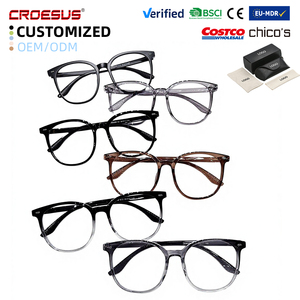
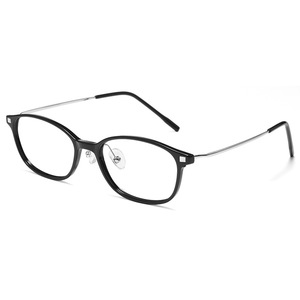
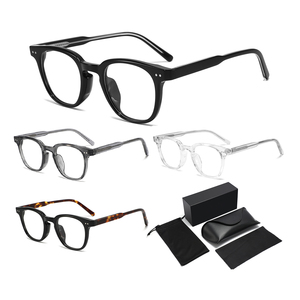
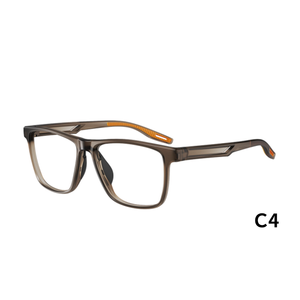
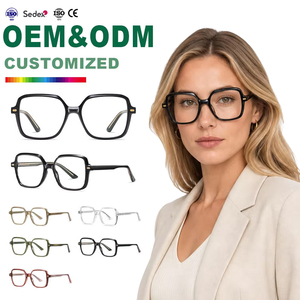
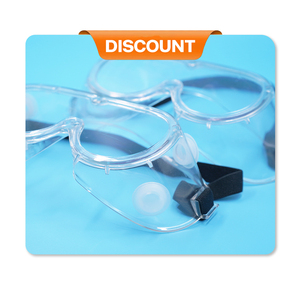

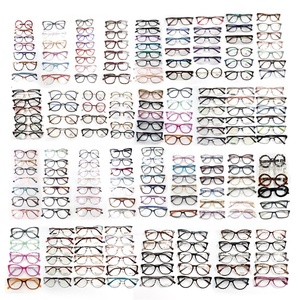
The TR90 Optical Manufacturing Paradigm
As global optical retail shifts from rigid cellulose acetate to ultra-flexible, hypoallergenic, and biomechanically stable polymers, China’s specialized injection facilities have evolved into the epicenter of high-yield Grilamid polyamide processing.
TR90 (thermoplastic polyamide produced originally through Swiss EMS-GRIVORY polymer engineering) represents an advanced formulation within the cycloaliphatic amorphous polyamide family. In contrast to conventional optical frame substrates such as cellulose propionate, extruded acetate, or cold-stamped stainless steel, TR90 exhibits an exceptional memory retention coefficient coupled with a remarkably low specific gravity. For international eyewear brands, prescription lens distributors, and independent chain opticians, sourcing optical frames manufactured from certified TR90 resins resolves the long-standing industry tension between frame weight, mechanical resilience, and long-term dimensional stability under diverse climatic humidity and temperature profiles.
Within Chinese precision eyewear manufacturing centers, state-of-the-art injection molding machines with closed-loop micro-tolerance barrels process virgin-grade polyamide pellets at controlled mold temperatures (80°C to 110°C). This level of process control ensures that internal molecular stress remains isotropic throughout the eyeglass rim circumference, effectively eliminating optical lens popping, bezel rim deformation, and premature hinge-pocket snapping under high-diopter prescription lens tension.
Comprehensive Optical Polymer Comparative Matrix
Rigorous physical, chemical, and ophthalmic laboratory testing metrics comparing Virgin Swiss TR90 against Cellulose Acetate, Polycarbonate, and Ultem (PEI).
| Evaluation Parameter | Swiss Virgin TR90 (Polyamide) | Cellulose Acetate | Polycarbonate (PC) | Ultem (PEI Polyetherimide) |
|---|---|---|---|---|
| Specific Gravity / Density | 1.14 - 1.15 g/cm³ (Featherweight) | 1.28 - 1.32 g/cm³ (Heavy) | 1.20 - 1.22 g/cm³ (Medium) | 1.27 - 1.28 g/cm³ (Medium-High) |
| Flexural Elastic Modulus | 1600 - 1800 MPa (Superior Memory) | 2200 - 2700 MPa (Rigid, brittle in cold) | 2300 - 2500 MPa (Rigid) | 3200 MPa (Ultra-Stiff) |
| Thermal Distortion Temp (HDT @ 0.45 MPa) | 125°C - 175°C (High stability) | 65°C - 75°C (Warps in hot vehicles) | 135°C (Good) | 200°C (Extreme) |
| Cold-Glazing Capability (Optician Lab) | Excellent (Flexible groove entry) | Requires Hot Air Warmer (80°C) | Poor (Cracks under stress) | Fair (Requires precision edging) |
| Biocompatibility (ISO 10993) | 100% Non-Cytotoxic / FDA Class I | Plasticizer leaching possible | Bisphenol-A (BPA) concerns | Medical grade certified |
| Chemical / Sweat Resistance | Resistant to sebum, ethanol & acetone | Degrades with sweat & skin acids | Prone to environmental stress cracks | Excellent chemical resistance |
Zero-Residual Elastic Memory
Even when deflected beyond 90 degrees during accidental impacts, TR90 molecular cross-chains instantaneously return to the original optical pantoscopic tilt and frame wrap angle.
Significant Freight Cost Reductions
With an average net frame weight of only 7.2 grams to 11.5 grams, wholesale consignments reduce international air freight and customs tariff overheads by up to 34% compared to acetate lots.
Hypoallergenic Dermatological Safety
Compliant with European REACH regulations (EC) No 1907/2006 and free from toxic phthalate plasticizers, making TR90 frames the gold standard for pediatric and hyper-sensitive wearers.
Why Global Brands Partner with Chinese TR90 Exporters
Combining high-tonnage micro-injection automation, robotic multi-axis spray finishing, and optical laboratory quality control.
1. Multi-Cavity High Precision Injection Tooling
Our tooling engineering departments utilize Swiss AgieCharmilles EDM and Japanese Makino CNC milling machines to manufacture hardened H13 and S136 stainless steel molds. With dimensional tolerances held within ±0.015mm, we guarantee consistent lens bevel channel depth (standard 0.6mm V-groove depth), allowing opticians across European and North American labs to execute automated lens edging without frame cracking or axis misalignment.
2. Robotic PVD & Rubberized Soft-Touch Coating
Raw TR90 polyamide presents a naturally slick, non-polar surface energy that repels standard paints. Our export manufacturing lines employ low-pressure plasma discharge pretreatment, followed by electrostatic UV-cured baking and Physical Vapor Deposition (PVD). This process achieves 4B/5B cross-hatch tape adhesion (ASTM D3359), ensuring our metallic, gradient, and soft-touch rubberized finishes withstand 72-hour artificial sweat immersion tests.
3. Ultrasonic Integrated Hinge Anchorage
Unlike cheaper cold-pressed pin systems that loosen under daily wear, our optical frames feature high-frequency ultrasonic embedment or direct insert-molding of German OBE or Italian Visottica-Comotec nickel-silver five-barrel hinges. The molten polyamide flows into anchor grooves, delivering pull-out torque resistance exceeding 18.5 Nm, satisfying ISO 12870 spectacles standards.
4. Ergonomic Bridge Customization (Asian vs. Western Fit)
Recognizing global anatomical diversity, we engineer distinct bridge geometries. Our Western bridge iterations offer 18mm to 20mm distance-between-lenses (DBL) with balanced crest angles, while our Asian and Universal-fit models integrate raised 12mm to 14mm ergonomic TR90 nose pads or embedded memory-titanium pad arms with medical-grade silicone pads to prevent downward frame slippage.
5. Comprehensive OEM/ODM Private Label Incubation
From 2D industrial rendering and 3D SLA rapid prototyping (24-hour turnaround) to pilot batch sampling and mass export shipping, we offer turnkey solutions. Services include precision laser pad printing, custom core-wire temple engraving, Pantone color matching (PMS), pantascopic tilt calibration, and compliant eco-friendly packaging complying with EU 94/62/EC directives.
6. End-to-End International Regulatory Compliance
Every optical export lot ships with accredited third-party laboratory documentation (SGS, Intertek, or TÜV Rheinland). Products fully conform to CE Medical Devices Regulation (EU MDR 2017/745) Class I, US FDA 21 CFR 801.410 drop ball impact resistance, ANSI Z80.5 optical frame guidelines, and ISO 12870 ophthalmic optics testing.
Next-Generation Trends Shaping the TR90 Sector (2025–2030)
Key shifts in chemical composition, sustainable feedstock sourcing, and cross-material co-molding transforming global wholesale procurement strategies.
Bio-Based Polyamide (Eco-TR90)
Driven by ESG mandates and European circular economy policies, Chinese resin formulators are transitioning to 45%–58% castor oil-derived sebacic acid polymers (PA11/PA1010 variants). These match Grilamid’s memory coefficient while slashing product lifecycle carbon emissions by 40%.
Co-Molded Titanium Hybrids
Monolithic plastic frames are giving way to structural co-molding. Ultra-thin TR90 front rims are now mechanically interlocking with Beta-Titanium and aerospace carbon-fiber temple cores, creating modern minimalist frames weighing under 8 grams without compromising on-face adjustability.
Smart Chassis & Audio Integration
With smart eyewear expanding into mainstream consumer optical channels, precision injection factories are developing specialized TR90 chassis with internal micro-channels designed to house bone-conduction transducers, MEMS microphones, and micro-lithium batteries without external structural bulk.
Direct-Glaze High-Wrap Sports Rx
Traditional 6-base and 8-base wrap frames previously prohibited high-minus prescriptions due to optical aberration and lens edge thickness. Contemporary dual-axis CNC TR90 front chassis incorporate compensatory step-bevels, allowing standard ophthalmic edgers to mount lenses up to -6.00 Diopters.
Standardized Laboratory Verification Workflow
Every export production batch undergoes 6 distinct mechanical and chemical verification checkpoints prior to customs release.
Bridge Flexural Fatigue Test
Frames undergo continuous cyclical bridge deflection of 25mm at 40 cycles per minute for 20,000 cycles (ISO 12870 clause 4.8). Zero structural cracking, whitening, or permanent plastic deformation is permitted.
Artificial Perspiration Immersion
Specimens are immersed in an acidic and alkaline synthetic sweat bath (buffered salt, urea, and lactic acid mixture) for 24 hours at 35°C ± 2°C, checking for coating blister formation, delamination, or color shifting.
Hinge Endurance & Torque Retention
Automated robotic actuators open and close the temples over 10,000 continuous cycles. Retained frictional torque must remain within 0.05 Nm to 0.15 Nm, preventing loose, flapping frame temples.
Thermal Chamber Shock Resistance
Frames are cycled from -15°C to +60°C within 30 minutes in a high-low temperature chamber to verify that internal stress does not induce micro-crazing around the ophthalmic lens bevel channels.
Drop Ball Impact Velocity Check
A 5/8-inch (16mm) steel ball is dropped from a height of 50 inches (1.27m) directly onto the glazed demo lens and front frame assembly per FDA Title 21 CFR 801.410, verifying shatter-proof structural integrity.
Cross-Hatch Coating Adhesion Check
Using a precision multi-blade cutter, a 1mm x 1mm lattice pattern is scribed into the cured topcoat. Pressure-sensitive 3M 600 tape is applied and vigorously stripped to guarantee Grade 5B zero-flaking adhesion.
Frequently Asked Questions for Optical Buyers
Direct answers to technical, commercial, logistic, and contractual questions commonly encountered by overseas eyewear procurement executives.
How do opticians glaze high-prescription lenses into TR90 frames without rim heating?
Unlike cellulose acetate frames which require softening in a frame heater at 70°C–80°C, high-grade TR90 frames are engineered for "cold-insertion." The memory polymer boasts high elastic elongation (over 100% at tensile yield), allowing ophthalmic lab technicians to snap edged lenses with a standard 110-degree V-bevel directly into the eyewire groove without heat. Applying excessive localized heat with industrial heaters should actually be avoided, as it can degrade the surface coating and compromise polymer memory tension.
What is the standard Minimum Order Quantity (MOQ) for custom OEM TR90 manufacturing?
For custom injection tooling (creating a proprietary bespoke silhouette), the standard MOQ is typically 1,200 pieces per model, distributed across 3 to 4 distinct colorways (approx. 300 pieces per SKU). For existing factory-owned tooling molds featuring client private label laser engraving and customized pantone spraying, our typical trial order MOQ starts at 300 pieces total (100 pieces per colorway). In-stock ready-to-ship catalog lots can be ordered starting from 50 pieces.
How can buyers distinguish between Swiss Grilamid TR90 and cheap recycled PC/Nylon counterfeits?
Counterfeit low-cost frames blend industrial polycarbonates or recycled general-purpose polyamides. To distinguish them: (1) Density Check: Genuine TR90 floats in a concentrated saline solution (specific gravity 1.14 vs. PC's 1.22); (2) Deflection Recovery: Bend the temple 90 degrees for 30 seconds; genuine TR90 returns to zero degrees instantly, whereas substitutes show whitening (stress-crazing) or permanent angle creep; (3) Acetone Resistance: Swab the raw frame with pure acetone; PC immediately clouds and degrades, while pure TR90 remains unaffected.
What are the standard production lead times from 3D CAD design approval to FOB dispatch?
The standard development timeline encompasses: 3D CAD file optimization (3 business days), rapid SLA physical resin proofing (3-5 days), high-precision steel tooling mold development (25-30 days), T1 sample inspection and client sign-off (7 days), and commercial mass injection, robotic coating, assembly, and QA packaging (30-35 days). Overall turnaround for a complete ground-up custom program is 65 to 75 calendar days. Repeat reorders on active tooling molds are fulfilled within 25 to 30 days.
Are TR90 optical frames suitable for high-diopter prescriptions (+4.00D to -8.00D)?
Yes, provided the frame front is designed with appropriate eye sizes (48mm–52mm) and optimized center thickness. Our high-Rx TR90 frames feature enhanced 2.2mm rim depths and steep interior bevel tracks that conceal thick minus-lens perimeter profiles. Furthermore, because TR90 resists eyewire stretching, high-plus or high-minus lenses maintain their prescribed vertex distance and pantoscopic angle without loosening over time.
What shipping terms and international logistics support do you provide?
We provide full international Incoterms support, including EXW, FOB (Ningbo, Shanghai, or Shenzhen), CIF, and DDP (Delivered Duty Paid) via express courier (DHL, FedEx, UPS) or scheduled air and ocean freight. Every export consignment is packed in moisture-sealed anti-static inner polybags, individually sleeved in bubble wraps, and master-cartoned in 5-ply double-wall corrugated boxes reinforced with edge protectors to prevent crush damage during transit.
Accelerate Your Optical Supply Chain with Direct Factory Pricing
Connect with our technical optical engineering desk to request our comprehensive TR90 line sheet, 2025/2026 digital catalog, material compliance certificates, or a rapid quote for custom OEM/ODM manufacturing programs.