Export-Grade Luxury Spectacle & Sun Frames
Examine eight benchmark optical silhouettes and sun configurations engineered to satisfy strict European, North American, and Asian ophthalmic dispensing criteria. Every frame embodies balanced pantoscopic tilt, medical-grade skin tolerance, and micro-tolerance hinge assembly ready for immediate glazing.
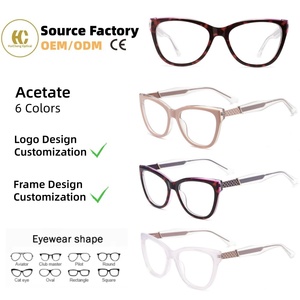
Custom Vintage Transparent Acetate Optical Frames Slingshot Spring Hinge OEM/ODM
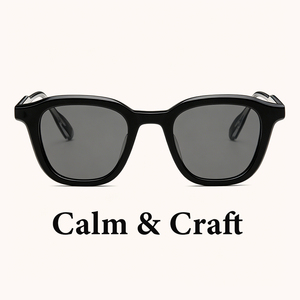
TFB Square Tortoise Retro Luxury Designer High Quality Custom Wholesale Sunglasses
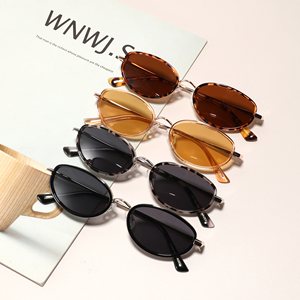
2026 Custom Logo Unisex Acetate Luxury Small Frame Sunglasses for Boutique Brands
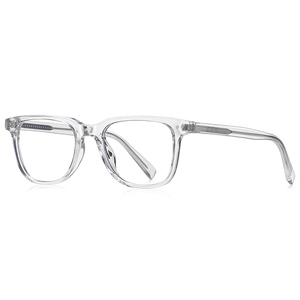
Ultra Light Myopia Frame Anti-Blue Light & UV Protection Ergonomic TR90 CP Glasses
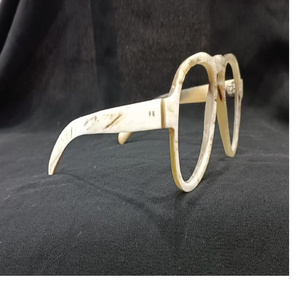
Handcrafted Genuine Buffalo Horn Spectacle Frames Bespoke Sustainable Foldable Design
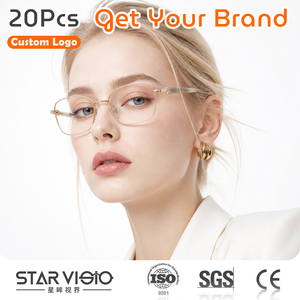
Luxury Square Gold Metal & Acetate Prescription Optical Eyewear Frames
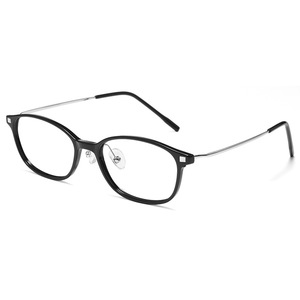
Ultra-Light TR90 Frame 5080xh 7g Featherweight Solid High Prescription Women Eyewear
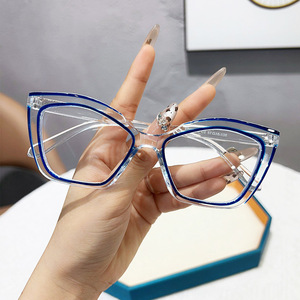
Retro Art Unisex Myopia Eyeglass Frame Vintage Celebrity Optical Glasses Frame 97199
The Paradigm Shift in Luxury Eyewear Manufacturing: Why Global Brands Partner with Top Chinese Exporters
The global spectacle frame market has crossed an inflection point where procurement officers from Milan, London, Tokyo, and New York no longer view Chinese optical manufacturing merely through the lens of cost arbitrage. Today, China’s high-precision eyewear industrial clusters—predominantly situated across Shenzhen (Henggang), Wenzhou, and Danyang—represent the pinnacle of automated five-axis micro-milling, ultra-pure bio-cellulose curing, and bespoke metallurgical engineering.
Historically, bespoke luxury was synonymous exclusively with Northern Italian ateliers or Japan’s Fukui prefecture. However, aggressive capital investment into computerized numerical control (CNC) machining centers, automated tumbling barrel technology, and closed-loop plating ecology has remapped global supply chain authority. China’s premier luxury spectacle exporters operate fully integrated facilities where optical tolerances are maintained within ±0.05 mm, surpassing traditional benchcraft consistency while maintaining scalable OEM/ODM delivery cycles.
Furthermore, the contemporary luxury consumer demands "Quiet Luxury"—a brand aesthetic that eschews ostentatious, billboard-sized exterior monogramming in favor of tactile superiority, flawless beveled bevels, whisper-smooth friction hinges, and rich, organic color depth. Leading Chinese manufacturers have restructured their engineering departments around this movement, providing private-label clients with end-to-end prototyping that harmonizes European stylistic minimalism with advanced ergonomic weight distribution calibrated for global facial morphologies.
Material Superiority: The Engineering Behind Luxury Optical Frames
A luxury frame is fundamentally defined by its structural integrity over multi-year duty cycles, its galvanic corrosion resistance against dermal perspiration, and the refractive depth of its material matrix. When sourcing spectacle frames from elite Chinese suppliers, buyers encounter rigorous material specifications that match or exceed ISO standards.
Cellulose Acetate & Bio-Acetate
Utilizing plant-based cotton linter and renewable wood pulp, high-grade acetate sheets are aged in climate-controlled stabilization rooms for 60 to 90 days. This degassing phase removes volatile plasticizers, eliminating frame shrinkage and ensuring pristine crystal transparency and deep tortoiseshell marbling that will never warp during ophthalmic lens heating.
Japanese & Aerospace Titanium
Beta-titanium (β-Ti) alloy temples provide an exceptional strength-to-density ratio with elastic shape-memory retention, while pure Grade 2 titanium front rims deliver 100% biocompatibility for sensitive skin. Precision micro-plasma welding prevents heat-affected discoloration, paired with ion-plating (IP) vacuum deposition for long-lasting colorfast finishes.
Natural Water Buffalo Horn
Ethically sourced Asian water buffalo horn is hand-selected for unique keratin grain directionality and cross-laminated under hydraulic pressure with organic eco-resins. This multi-ply cross-grain lamination eliminates natural horn brittleness, allowing master artisans to carve ultra-thin luxury spectacle rims that warm pleasantly against the wearer’s skin.
| Performance Characteristic | High-Density Cured Acetate | Aerospace Grade β-Titanium | Natural Laminated Horn | Injection Memory TR90 |
|---|---|---|---|---|
| Tensile Strength (MPa) | 75 - 95 | 880 - 1050 | 65 - 80 | 120 - 150 |
| Specific Weight (g/cm³) | 1.28 | 4.43 | 1.30 | 1.02 |
| Ophthalmic Lens Glazing Flexibility | Excellent (Hot air frame heater) | Rigid (Precise groove beveling) | Specialist Lab (Cold glazing) | Standard Snap-Fit |
| Skin Biocompatibility | Hypoallergenic (Phthalate-free) | 100% Inert (Nickel-free) | 100% Organic Natural Keratin | FDA Food Contact Compliant |
| Target Retail Price Tier | Mid-High ($180 - $450) | Luxury ($350 - $800) | Prestige Bespoke ($650 - $1800+) | Accessible / Active ($70 - $160) |
Factory-Floor Advantages: Why Our Export Infrastructure Protects Your Margin & Reputation
In the luxury optical distribution sector, customer lifetime value is built on the dispensing optician's confidence. If a temple hinge loosens after three months, or if an acetate rim cracks during lens insertion at the edging lab, the retailer bears the reputational damage. Our export operations are engineered to insulate brands from these operational failures.
Rigorous Mechanical Stress Testing
Every production run undergoes 20,000-cycle bridge flexion endurance checks, 15,000-cycle temple hinge rotation testing under ISO 12870, and 48-hour artificial sweat immersion to verify that electroplating and protective varnishes remain unblemished under intense tropical humidity.
Dual Silhouette Strategy (Optical + Sol)
Reflecting the merchandising philosophy established by forward-thinking boutique houses, we engineer optical frames and matching "Sol" sunglass counterparts sharing the exact same bridge geometry and eye wire perimeter, halving retail tooling costs while doubling visual brand cohesion.
Global Regulatory Turnkey Packaging
Shipments arrive completely cleared for import: FDA Device Facility Registration (US), CE Medical Device Class I Declaration (EU MDR 2017/745), UKCA certification, and comprehensive material chemical test sheets verifying non-toxic REACH Annex XVII compliance.
Future Procurement Vectors: 2026–2030 Optical Trends & Sourcing Shifts
To maintain market leadership, eyewear buyers must anticipate the aesthetic, demographic, and metallurgical evolutions driving consumer purchasing patterns over the next half-decade. Below are the key structural movements impacting OEM orders today.
1. Architectural Sculpting & 3D Volume
Flat acetate plates are yielding to chunky 8mm to 10mm raw acetate profiles intricately beveled around the bridge and temple transitions. Precision CNC milling creates multi-faceted light-reflecting edges while keeping total frame weight feather-light through hollowed temple geometry.
2. Bio-Circular & Degummed Acetate
Driven by European corporate sustainability mandates, major buyers are phasing out traditional petroleum-derived phthalate plasticizers. Next-generation bio-acetates certified under ISO 14855 achieve full industrial biodegradability within 180 days while retaining flawless crystal optical sheen.
3. Integrated Smart & Acoustic Channels
Without looking like clunky tech accessories, luxury acetate frames now incorporate micro-machined inner-wire temple channels prepared for bone-conduction audio modules, microphone arrays, or blue-light tint smart electrochromic lens connectivity.
4. Ergonomic Inclusive Sizing
High-end exporters are providing pre-engineered nose pads with extended splay angles and deeper keyhole bridge contours, meeting the global demand for "Alternative Fit" or "Asian Fit" frames that prevent cheekbone slippage on shallower nasal bridges.
Frequently Asked Questions for Optical Wholesalers & Eyewear Importers
What are the key technical differences between fashion-grade and export-grade luxury optical frames?
Fashion-grade or promotional frames often rely on rapidly molded polycarbonate or low-grade CP (cellulose propionate) injected with petroleum-based plasticizers, featuring low-tolerance wire hinges that wobble and snap under stress. In contrast, export-grade luxury spectacle frames utilize block-milled high-density cured cellulose acetate or Japanese beta-titanium. They feature five-barrel or seven-barrel integrated riveted hinges (or German OBE slingshot spring systems), calibrated pantoscopic angles (typically 8° to 12°), and uniform lens groove depths to guarantee that opticians can edge high-index prescription lenses (-8.00D or +4.00D) into the eyewire without frame deformities or lens flaking.
How does your manufacturing facility accommodate private label branding and bespoke OEM design?
We provide full-spectrum turnkey OEM/ODM engineering. Starting from 2D vector sketches or 3D CAD files (STEP/IGES), our engineering team generates rapid 3D SLA prototyping within 72 hours for fit and proportion evaluation. Once verified, custom tooling and CNC programs are deployed for pilot runs. We offer high-resolution internal laser etching, metallic logo core casting inside custom wire cores, diamond-cut temple end-tips, and fully customized hard cases, micro-denier cleaning cloths, and CE-marked packaging suites ready for distribution.
What are your minimum order quantities (MOQ) and standard delivery lead times for custom runs?
For custom acetate optical collections, standard MOQ starts at 300 pieces per shape, which can typically be split across 2 to 3 tailored acetate colorways (100–150 units per color). For specialized beta-titanium or natural water buffalo horn bespoke production, MOQs can be negotiated down to 100–200 pieces per model to accommodate boutique and capsule series. Production lead times for virgin OEM orders range from 45 to 65 calendar days, accounting for the mandatory 72-hour barrel tumbling, ultrasonic cleansing, hand-alignment, and multi-stage optometric QA.
Can optical frames be ordered with pre-fitted blue-light blocking or sun tint lenses for hybrid retail?
Yes. Following the proven "Optical + Sol" merchandising model, clients can dual-order any frame chassis with optical-grade CR-39 demo lenses with anti-reflective coating, plano premium 420nm blue-light filtration lenses for digital screen wearers, or Category 3 polarized polyamide/nylon sun lenses. All sun components conform to ANSI Z80.3, EN ISO 12312-1, and AS/NZS 1067 standards, featuring hydrophobic and oleophobic vacuum coatings.
How do you manage quality control and consistency across reorders over multiple seasons?
Every client shape is codified into digital master tool paths and stored alongside physical "Golden Samples." Acetate color sheets are batch-matched using spectrophotometers to keep delta-E color variation under 0.8 across seasons. Our factory operates under ISO 9001 certified protocols: every finished frame is checked by hand for four-point planar symmetry, hinge torque consistency (0.15 - 0.25 N·m), and eyewire dimension integrity before individual barcoding and moisture-barrier vacuum packaging.
What documentation is provided to ensure smooth customs clearance in the United States and EU?
We supply complete export documentation portfolios with every commercial shipment. For the United States, this includes our FDA Device Registration and Owner/Operator Number, Drop Ball Impact Test Certificates (21 CFR 801.410), and complete customs commercial invoices. For the European Union and the UK, we provide the Declaration of Conformity under EU MDR 2017/745 (Class I Medical Devices), technical construction files adhering to EN ISO 12870:2018, and third-party laboratory reports verifying compliance with REACH SVHC restrictions for nickel release and toxic dyes.
Elevate Your Eyewear Collection With Precision Manufacturing
Partner directly with China's dedicated luxury spectacle frame engineers and exporters. Request our complete wholesale line sheet, material swatch kits, and technical OEM/ODM quotation for your upcoming retail collections.
Get a Quote