High-Precision Certified Titanium Optical Frames
Engineered for high-yield prescription glazing, hypoallergenic biological tolerance, and prolonged wear resilience. Manufactured in Class 100,000 cleanroom environments conforming to European Medical Device Regulation (EU MDR 2017/745).
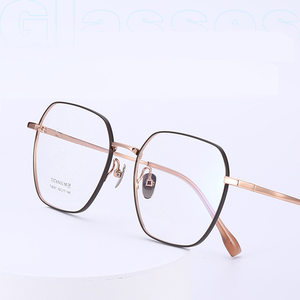

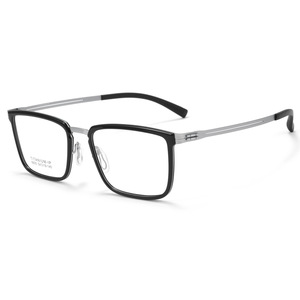
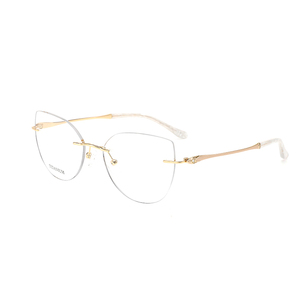
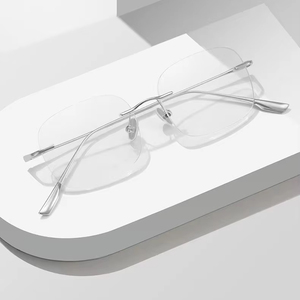
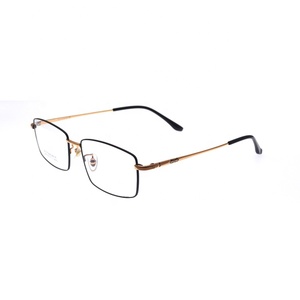
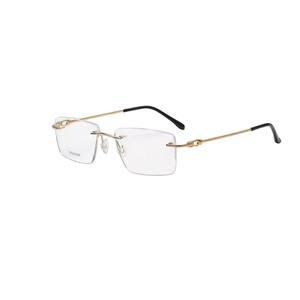
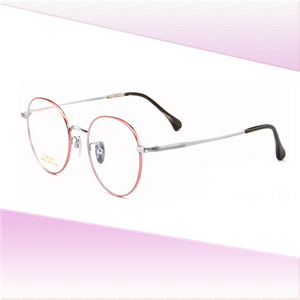
Engineering Integrity: Metallurgical Control, Microwelding, & Surface Science
Temple Eyewear operates at the intersection of medical engineering precision and quiet luxury eyewear design. We control the entire value chain from vacuum arc remelting to 5-axis micromachining, ensuring every chassis matches international dispensary tolerances.
Aerospace Titanium Selection
We source certified Grade 1 & Grade 2 Alpha Pure Titanium alongside surgical-grade Beta-Titanium (Ti-15V-3Cr-3Sn-3Al). This dual-alloy strategy achieves unyielding structural bridge stability coupled with highly flexible, shape-memory temple ergonomics that eliminate head pinching.
Argon-Shielded Micro Laser Welding
Titanium absorbs oxygen, nitrogen, and hydrogen at temperatures exceeding 400°C, causing interstitial embrittlement. Our automated robotic laser welders work inside 99.999% pure pressurized argon chambers, yielding seamless joints that endure 30% higher shear force than conventional torch-brazed frames.
Multi-Stage PVD Ion Plating
Traditional wet chemical electroplating degrades quickly under human perspiration. We utilize Physical Vapor Deposition (PVD) in high-vacuum plasma chambers, depositing Titanium Nitride (TiN) or Diamond-Like Carbon (DLC) coatings at 1.2-micron thickness. This guarantees zero corrosion across a 72-hour artificial sweat immersion test (ISO 12870).
CE MDR Compliance & Complete Technical File
Every batch shipped to European ports comes fortified with a comprehensive Class I Medical Device Technical File, complete with EN ISO 12870 endurance documentation, biocompatibility testing under ISO 10993-5 (cytotoxicity), and strictly audited nickel-free certification conforming to EN 1811:2011.
B2B Whitepaper: The Optical Science of Titanium Frame Fabrication
For opticians, chain retailers, and private label optical brands, frame failure at the dispensary lab is a primary driver of margin erosion. When ophthalmic lenses are inserted via automatic bevel-edgers, uneven rim grooves or inconsistent metal elasticity create severe circumferential stress, leading to lens flaking, axis distortion, or outright hinge fracturing. Temple Eyewear engineers its titanium chasses to resolve these precise mechanical pain points.
Pure Titanium has an elastic modulus of approximately 105 GPa—nearly half that of stainless steel—making it resilient and impact-absorbing, yet rigid enough to retain exact base curve geometries (+/- 0.05 diopter base curve tolerance). When producing ultra-thin rim wires, we implement proprietary cold-drawing and precision profiling dies to ensure the eyewire bevel angle matches international lens bevel standards (110° to 120° V-bevel profiles) precisely, preventing edge breakout during high-minus lens glazing.
| Material / Engineering Parameter | Standard Commercial Eyewear Alloys | Temple Precision Pure Titanium (Gr 1/2) | Temple High-Flex Beta Titanium (Ti-15-3-3-3) |
|---|---|---|---|
| Density / Weight Ratio | 8.4 - 8.9 g/cm³ (Monel / Nickel-Silver) | 4.51 g/cm³ (~48% lighter than steel) | 4.75 g/cm³ (Optimal light-mass balance) |
| Tensile Strength (MPa) | 400 - 650 MPa | 345 - 485 MPa (Structural stability) | 950 - 1200 MPa (Ultra-high elasticity) |
| Biological Compatibility | Frequent allergic contact dermatitis | 100% Hypoallergenic, Bio-inert | 100% Nickel-free, Non-reactive |
| Sweat Corrosion Endurance | Pitting & green verdigris after 12-24 mos | Immune to acidic sweat and sea spray | Complete chemical passivity |
| Glazing Tension Tolerance | Rigid; risk of stripped barrel threads | Stable shape retention during mounting | High elastic deflection for easy snap-in |
Furthermore, the integration of screwless hinge systems and Teflon-sleeved 5-barrel joints mitigates screw loosening caused by everyday thermal expansion cycles. By utilizing CNC wire-cutting (EDM) instead of crude metal stamping, our tolerances maintain a micro-deviation benchmark of ≤ 0.03mm. This guarantees that wholesale buyers receive frictionless temple action across consecutive batch cycles without requiring manual technician adjustments prior to floor display.
2026-2030 Global Eyewear Procurement & Technology Trends
Market dynamics in high-end optical distribution are shifting rapidly from fast-fashion disposable frames to quiet luxury, structural sustainability, and verified technical traceability. Optical group purchasing organizations (GPOs) and independent retail consortiums must align their supplier portfolios with these emerging pillars.
"Quiet Luxury" & Logo-Free Minimalism
Global optical retail data reveals that high-net-worth consumers are systematically rejecting ostentatious exterior logos. Growth is concentrated in architectural, understated silhouettes where material quality, tactile balance, bevel polishing, and hinge damping speak for the brand. Wholesalers prioritizing architectural pure titanium are capturing 24% higher average margin per display tray.
MDR Regulatory Audits & Carbon Footprint Tracking
The enforcement of the EU Medical Device Regulation (MDR) has eliminated non-compliant sub-tier exporters lacking validated quality control frameworks. Importers now demand full cradle-to-gate traceability, including audited virgin titanium smelting footprints, non-hazardous ultrasonic degreasing chemistry, and closed-loop anodization facilities.
Optical-Sun Crossover Assortment Models
Retail dispensaries increasingly demand unified merchandising. Rather than separating optical and sun collections, leading buyers implement paired merchandising: ordering identical core titanium silhouettes in optical demo lenses alongside matching high-index polarized sunglass versions (Sol series). This doubles inventory efficiency and enhances brand identity recognition.
Frequently Asked Questions for B2B Importers & Opticians
Comprehensive technical and commercial answers addressing production capabilities, minimum order volumes, laboratory glazing parameters, and regulatory verification.
Q1 How do you verify and certify pure titanium versus titanium alloy?
Every incoming melt batch of titanium rod and sheet stock undergoes Inductively Coupled Plasma Optical Emission Spectrometry (ICP-OES) testing to verify chemical composition. Alpha Pure Titanium conforms to ASTM B348 Grade 1/2 with a minimum titanium content of 99.4%, while Beta-Titanium is verified for vanadium, chromium, and tin content. Full metallurgical raw material mill test certificates (MTC) are archived and provided with every export shipment.
Q2 What documentation do you supply for European Union MDR compliance?
We provide a complete Class I CE technical dossier in accordance with EU MDR 2017/745, Annex II and III. This includes the EU Declaration of Conformity (DoC), EN ISO 12870 laboratory mechanical test reports (bridge fatigue, temple flexure, sweat corrosion), EN 1811 nickel release assay reports (< 0.28 ug/cm2/week threshold), and risk management documentation per ISO 14971.
Q3 Are your titanium frames suitable for high progressive and high-minus prescriptions?
Yes. Our titanium eyewires are cold-rolled with engineered rim profiles featuring a uniform groove depth of 0.6mm and a 115° apex angle, providing optimal seating for both high-index plastic (1.67, 1.74) and polycarbonate lenses. For high-minus prescriptions, our Japanese-style pure titanium block series provides a 3.5mm to 4.2mm rim thickness to effectively conceal lens edge thickness without adding noticeable weight.
Q4 What are the Minimum Order Quantities (MOQ) for OEM/ODM private label programs?
For custom OEM/ODM production involving custom tooling and bespoke pantoscopic angles, our baseline MOQ is 300 pieces per model (divided into 2-3 standard colorways). For our catalog-ready stock models available for immediate wholesale distribution or laser-branding, the MOQ is 50 pieces per model. We provide rapid sample prototypes via 3D metal sintering and CNC milling within 14 working days.
Q5 How does your PVD coating resist sweat corrosion compared to electroplating?
Electroplating forms a superficial metal deposit that easily breaks down through micro-fissures when exposed to the lactic acid, sodium chloride, and fatty acids in human sweat. Our Physical Vapor Deposition (PVD) processes are performed in high-vacuum plasma chambers where evaporated metal ions bond at an atomic level with the titanium surface. All finishes pass the 72-hour continuous ISO 12870 artificial sweat test without flaking, blistering, or discoloration.
Q6 Can you accommodate custom laser engraving and branded packaging for boutique chains?
Yes. We offer turnkey private labeling services. We execute fiber laser engraving on inner temples, bridge undersides, and temple tips down to 0.4mm font height with zero metal burring. Furthermore, we design and produce coordinated packaging accessories, including full-grain leather magnetic cases, microfiber lens cloths, and barcoded retail outer boxes conforming to international GS1 retail standards.
Initiate Your Titanium Sourcing Partnership
Request our comprehensive technical line sheet, metallurgical test certificates, and wholesale pricing guide. Connect directly with our optical engineering and export team.