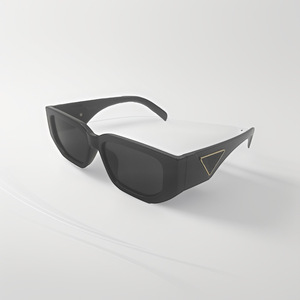
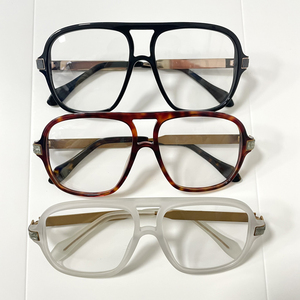
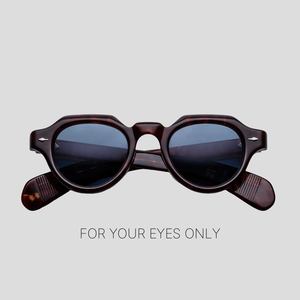
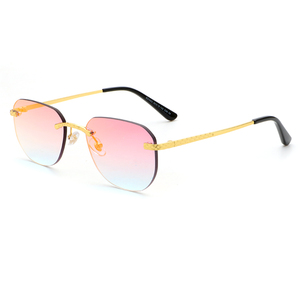
Certified Optical Assortment & Signature Sun Collections
Every silhouette is crafted with standardized lens bevel channels, verified pantoscopic tilt, and consistent temple tension to streamline ophthalmic prescription edging.

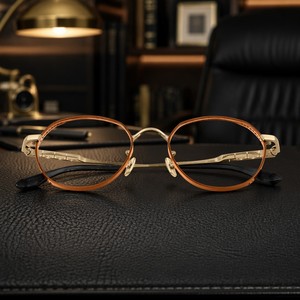
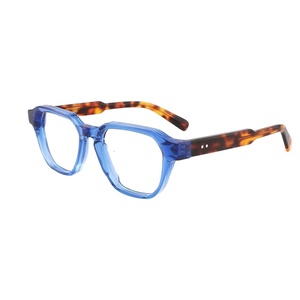
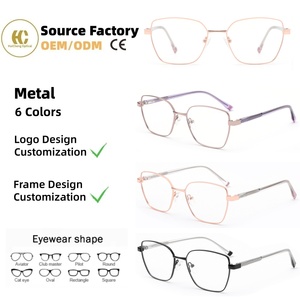
Precision Manufacturing Meets Global Medical Device Compliance
The global prescription eyewear market demands uncompromising mechanical reliability, strict chemical non-toxicity, and millimeter-exact lens bevel profiles.
Full CE MDR 2017/745 Compliance
Our entire prescription optical frame catalog is classified as Class I Medical Devices under European Regulation (EU) 2017/745. We maintain verifiable Technical Documentation files, complete clinical evaluation assessments, and assign Unique Device Identifiers (UDI-DI) for full traceability across EU customs and internal health registries.
Mazzucchelli & Cured Acetate Blocks
We source authentic cellulose acetate sheets from world-renowned producers, including Mazzucchelli 1849, undergoing proprietary 60-day aging chambers to purge volatile residual solvents. This prevents frame shrinkage, lens pinching, and post-sale warpage during cold or heat-assisted ophthalmic glazing.
IP Vacuum Ion-Plating & Beta-Titanium
Metal and hybrid frames utilize Japanese-standard pure titanium and memory beta-titanium wire, coated with industrial Ion Plating (IP) under high-vacuum conditions. Surpassing EN ISO 12870 corrosion endurance tests, our finishes resist sweat, UV exposure, and guarantee non-detectable nickel release under EN 16128.
Optimized Lab Glazing Geometry
Every frame groove is engineered with standard 115° to 120° V-cut bevel profiles and constant depth tolerances (+/- 0.05mm). Compatible with robotic tracers (OMA/VCA data protocols) from Essilor, Briot, and Nidek, lab technicians experience zero slippage and instantaneous single-vision and progressive lens mounting.
Agile OEM/ODM & Turnkey Private Labeling
We empower optical brands and retail buying groups with full end-to-end bespoke development: 3D CAD rendering within 72 hours, rapid CNC physical prototyping within 7 days, laser logo etching, pad printing on demo lenses, custom temple core embossing, and bespoke eco-friendly packaging integration.
AQL 1.0 Optical Quality Assurance
Every batch undergoes rigid multi-stage quality control exceeding standard consumer-goods benchmarks. Testing includes 20,000-cycle bridge fatigue tests, spring hinge flex-endurance verification, bridge distortion resistance, and 48-hour perspiration immersion testing before export clearance.
CE Certified Medical Prescription Eyewear vs. Generic Wholesale Frames
Why opticians and optical distributors face catastrophic returns when procuring non-medical certified promotional eyewear for corrective lens glazing.
| Evaluation Parameter | CE Certified Bulk Medical Frames (Our Standard) | Generic Commercial Wholesale Frames |
|---|---|---|
| Regulatory Qualification | Class I Medical Device (EU MDR 2017/745), FDA Registered, UKCA | Unregulated or Generic Personal Protective Equipment (PPE) |
| Biocompatibility & Nickel Safety | 100% compliant with ISO 10993 cytotoxicity & EN 16128 non-nickel release | Often contains high-leaching brass alloys; risks contact dermatitis |
| Bevel Stability & Glazing | Precision CNC cold/warm bevel profile calibrated to +/- 0.05mm tolerance | Irregular rim depth leading to lens pop-out or edge stress fractures |
| Material Curing & Aging | 60+ days oven curing for cured acetate; zero plasticizer leaching | Raw, un-cured extruded plastics prone to warping under heating fans |
| Hinge Tensile Strength | Integrated Teflon-friction screws; German OBE or custom 5-barrel systems | Uncoated rivets prone to loosen after 300 cycles; temple flaring |
| Optician Return Rates | Consistently tracked below 0.15% across global glazing networks | Commonly exceeds 6.0% to 12.0% due to lab breakage during insertion |
Future Procurement Trends in the Global Bulk Prescription Eyewear Market
As the international vision care sector moves rapidly toward digitized retail models and consolidated corporate clinic chains, prescription frame procurement is shifting from purely aesthetic transactional buying to systemic supply chain resilience and clinical compliance. Enterprise buyers, optometric buying groups, and regional distributors are navigating a landscape defined by tighter medical regulations and advanced digital surfacing laboratories.
1. The Impact of EU MDR 2017/745 Enforcement
Under the European Medical Device Regulation, corrective spectacles and their supporting mountings are tightly scrutinized. Distributors are no longer permitted to import uncertified frames without technical documentation proving dimensional stability, biocompatibility, and batch-level recall traceability. Importers must hold full Technical Files and work exclusively with manufacturers who supply valid Declarations of Conformity and verifiable UDI registrations. Failure to verify these credentials exposes importers to immediate port seizures and retail bans across European Union territories.
2. Omnichannel Glazing and Automated Lab Tracer Alignment
Centralized optical laboratories now process tens of thousands of lenses daily using automated edgers from Schneider, Satisloh, and Essilor. Frames that lack rigorous geometric symmetry cause automatic optical edger calibration failures, slowing down supply chains. Modern wholesale buyers require supplier CAD libraries that link directly into laboratory management software (LMS) via standardized VCA/OMA data packets, eliminating manual physical frame tracing and slashing lab cycle times.
3. Circular Bio-Acetates and ESG Traceability
Corporate eyewear retailers are establishing ambitious ESG mandates requiring frames made from bio-based cellulose acetate (derived from sustainably harvested wood pulp and cotton linters) paired with bio-plasticizers. The procurement trend shows an undeniable shift away from traditional petroleum-based phthalate plasticizers toward certified ISCC Plus (International Sustainability and Carbon Certification) bio-resins that yield zero toxic residues during lifecycle biodegradation.
4. High-Index Lens Optimization & Thin-Profile Rim Engineering
With global myopia rates skyrocketing, demand for -4.00D to -10.00D corrective lenses is at an all-time high. Optical buyers are demanding deep, retro-aesthetic acetate and metal profiles that conceal thick high-index (1.67 and 1.74) lens edges while maintaining ultralight facial balance. Precision frame suppliers must calibrate eyewire thickness and internal bevel positioning toward the front surface to hide edge bevel thickness cleanly.
Product Development Vectors: Next-Generation Materials in Optical Manufacturing
The boundary between high-fashion boutique aesthetics and medical ergonomics has dissolved. Modern prescription frame engineering demands materials capable of withstanding constant adjustments by opticians with temple heating units and bending pliers, while retaining lasting structural memory.
High-Density Cellulose Acetate (HDCA)
Traditional acetate requires minimum rim cross-sections of 4.5mm to avoid lens flexing. By compressing cellulose blocks under 300 metric tons of pneumatic pressure, High-Density Acetate achieves structural rigidity at thicknesses under 2.8mm. This reduces overall frame weight by up to 35% without sacrificing tensile strength or groove stability during prescription lens edging.
Bio-Circular Polyamide 11 (PA11)
Produced via 3D Selective Laser Sintering (SLS) and advanced injection techniques using 100% castor oil beans, bio-polyamide exhibits exceptional impact resistance, chemical inertia against perspiration, and extreme flexibility. PA11 frames are completely hypoallergenic, offer zero water absorption, and maintain dimensional precision in varying climates.
Medical Titanium (Grade 4 & Beta alloy)
Used widely for bridge components and temple flex arms, aerospace-grade beta-titanium achieves a modulus of elasticity that adapts instantly to craniometric anatomical differences. Applied through specialized PVD ion-plating chambers, titanium frames resist acidic sweat, cosmetics, and harsh environmental salt fog without tarnish or flaking.
Frequently Asked Questions for B2B Eyewear Buyers & Importers
Clear, authoritative technical answers addressing compliance, manufacturing tolerances, optical laboratory integration, and wholesale supply terms.
What regulatory documentation is included with CE-certified bulk prescription eyewear shipments?
How do your prescription frames support high-minus and progressive ophthalmic glazing?
What are your minimum order quantities (MOQ) for custom private label optical collections?
Can you supply 3D CAD step files or OMA/VCA trace datasets for optical lab automation?
How does your factory ensure nickel-free compliance for sensitive skin across metal frames?
What is your production lead time for bulk repeat orders and customized prototyping?
How do you manage quality control and acceptable quality limit (AQL) standards?
Do your demo lenses come printed with sizing and water-soluble markings for edging?
Scale Your Optical Brand With Verified CE Prescription Eyewear
Connect directly with our engineering and international export accounts department. We deliver comprehensive line sheets, custom physical sample sets, compliance dossiers, and wholesale pricing tiered for sustained business growth.