Choosing designer sunglasses in 2026 requires more than recognizing a famous logo. Global buyers now compare optical performance, material quality, cultural fit, and verified brand origin. A beautiful frame can still disappoint if it slips on a humid street or pinches behind the ears.
Robert Marc, a respected eyewear designer, once said, “Eyewear is the first thing people notice about you.” That insight remains practical. Sunglasses shape a buyer’s first impression, especially during business travel, social events, and outdoor photography. This guide examines frame proportions, lens protection, bridge design, and finishing details. It also considers how facial features and personal style influence a confident choice.
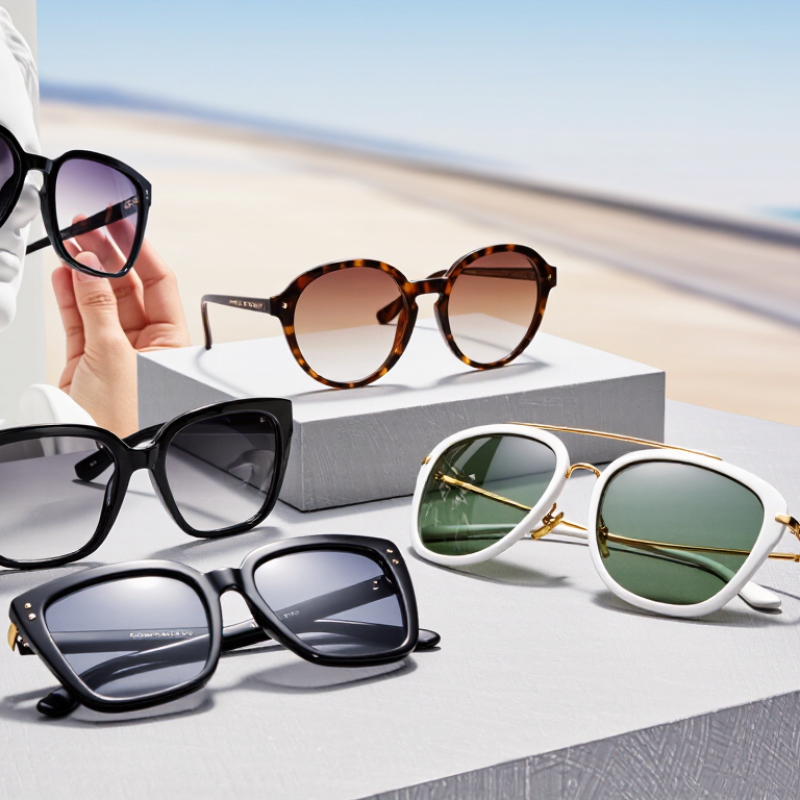
Look closely.
For bright coastal destinations, high-quality polarized lenses can reduce reflected glare from water and glass. UV protection should be clearly documented, not assumed from a dark tint. Buyers should check product descriptions, manufacturer information, and regional testing claims before purchasing. Standards and labeling can differ between markets.
Authenticity matters just as much. Inspect hinge movement, logo placement, engraving quality, packaging, and the seller’s return policy. Authorized retailers usually provide stronger traceability. However, even premium stores can offer limited fit guidance. I have found that a carefully measured frame often matters more than a seasonal color trend.
Sustainability also deserves honest attention. Recycled acetate sounds appealing, but buyers should ask about durability, repair options, and transparent material sourcing. No single feature guarantees a responsible purchase. The best designer sunglasses balance protection, comfort, identity, and long-term value across borders.
Euromonitor’s 2025 eyewear market data offers a useful starting point for international sunglass planning. It helps buyers compare regional demand, category momentum, and consumer spending conditions. However, market averages can hide important local differences. Demand is uneven. A practical buyer should compare the data with store feedback, search behavior, and seasonal sales records. Coastal shoppers may prefer polarized lenses, while urban professionals may value lightweight frames and subtle colors. These are working assumptions, not universal rules.
Regional climate also affects product selection. Strong sunlight, humidity, and temperature changes can influence lens materials, frame comfort, and packaging needs. Buyers should examine fit preferences across age groups and face shapes. In some markets, smaller frames may feel more wearable. In others, larger silhouettes may attract attention. Euromonitor’s findings can identify opportunity areas, but they cannot replace local testing. A limited trial can reveal whether interest becomes actual purchase behavior.
Reliability matters when interpreting global data. Check the publication date, category definitions, geographic coverage, and research methodology. Separate retail value from unit demand before setting purchasing targets. I would avoid treating premium growth as guaranteed profit, especially when exchange rates and logistics costs change quickly. My own approach would combine Euromonitor’s 2025 evidence with interviews from optical retailers and customer reviews. One weakness remains: short-term fashion shifts can make a careful forecast look wrong. Recheck assumptions before expanding inventory.
When choosing designer sunglasses in 2026, treat “UV400” as a claim requiring evidence. UV400 should indicate protection against ultraviolet wavelengths up to 400 nanometres. Dark lenses alone prove nothing. Polarization does not automatically guarantee ultraviolet protection.
Ask the supplier for a recent laboratory report linked to the exact lens material and model. The report should show ultraviolet transmittance results, test conditions, sample identification, and laboratory competence. Compare those details with ISO 12312-1 requirements for sunglasses and related eyewear intended for general use. This standard also considers optical quality, lens performance, and mechanical safety. A certificate with no traceable sample details is weak evidence.
Regional rules still matter. A product sold in the European market may require different documentation from one sold elsewhere. Check local labeling, importer responsibilities, language requirements, and any rules triggered by protective claims. Do not assume one global certificate covers every market.
In practice, I also inspect hinges, lens edges, and visible gaps around the frame. Small gaps can increase glare and discomfort, although they do not automatically mean UV failure. The process is not perfect. Testing may represent one sample, while production can vary. Keep purchase records, request batch controls, and reconsider suppliers who avoid clear answers.
For global buyers in 2026, lens technology deserves more attention than frame appearance. The World Health Organization reports that at least 2.2 billion people live with vision impairment worldwide. Sunglasses cannot correct every problem, but better optical evidence can reduce avoidable discomfort.
Polarization is useful near water, glass buildings, and wet roads. It filters much of the horizontal glare reaching the eyes. However, polarization does not automatically provide ultraviolet protection. Check the lens report for spectral transmittance from 280 to 400 nanometres. A UV400 claim should block ultraviolet radiation through 400 nanometres. ISO 12312-1 also evaluates optical power, prism imbalance, luminous transmittance, and impact performance. Ask for test results, not only a polished product description.
Try a simple field check. View a phone screen through the lens, then rotate it ninety degrees. Strong darkening suggests a polarizing filter. The test is useful, but incomplete. It cannot prove UV protection, colour accuracy, or low distortion. That shortcut fails. I once trusted a dark lens too quickly; darkness can hide poor optical quality. Inspect straight window frames through the lens. Bending lines may indicate unwanted distortion. For driving, compare neutral grey and brown tints under changing light. Avoid extremely dark lenses without verified transmission data. The Vision Council’s consumer research continues to show that comfort and glare reduction influence eyewear choices, but personal fit still matters. A lens can meet a standard and feel wrong on your face.
Choosing sunglasses for different climates starts with frame fit, not appearance alone. A frame should sit evenly across the nose without leaving painful pressure marks. The temples should touch the head gently, even after several hours. In humid regions, sweat can make loose frames slide quickly. In colder areas, people may wear hats or thicker layers, so temple length needs extra consideration. I have found that a slightly flexible frame often feels safer during travel, though it may not look as structured. That trade-off deserves honest attention.
Tips: Measure your current comfortable pair before ordering online. Check lens width, bridge width, and temple length. For wide faces, select broader proportions without forcing the hinges outward. For narrow faces, adjustable nose pads can improve stability. Materials also matter. Lightweight acetate-like composites can feel comfortable in heat, while durable metals may suit dry, changing conditions. However, some metals may feel cold against the skin. Small details matter.
In tropical climates, choose frames with smooth surfaces that are easy to clean after sweat or sea air exposure. For strong sunlight, lenses should provide reliable UV protection from a qualified optical provider. In snowy regions, side coverage can reduce reflected glare and wind discomfort. People who move between climates should avoid extremely tight frames; swelling and skin sensitivity can change throughout the day. A professional fitting remains useful, especially when prescription lenses are involved. Even careful sizing can fail when face shape and personal comfort are ignored.
Choosing designer sunglasses in 2026 requires more than checking a polished product page. Verify the seller, receipt, model code, lens markings, and return address. Ask for detailed photographs before payment. The OECD and EUIPO estimated counterfeit goods represented 2.5% of global trade, worth about $464 billion, using 2019 data. That figure still makes authentication a commercial priority, not a minor concern. My checklist is useful, but not perfect.
Price comparisons must use the landed cost. Add the item price, shipping, import duty, sales tax, and brokerage fee. Customs treatment depends on the product classification, origin, and destination country. Check the applicable tariff through the International Trade Centre’s Market Access Map. Grand View Research valued the global eyewear market at approximately $115.8 billion in 2023, showing why pricing can vary across crowded channels. A low price may reflect a promotion, missing tax, or incomplete paperwork. Sometimes, I have seen “free delivery” hide expensive clearance charges.
Warranty language deserves close reading. Confirm coverage for hinges, lenses, coatings, and manufacturing defects. Ask who pays return shipping and where repairs occur. Keep the invoice, customs documents, and dated photographs. A warranty may be valid only in the purchasing region, while local consumer rights can differ. Do not assume international coverage. Written terms matter. A one-year promise without a service address is weak evidence of reliability.
Audit Authenticity, Duties, Pricing, and Warranty Before a 2026 Purchase
| Decision Area | What to Audit | Reliable Evidence or Benchmark | Global-Buyer Action Before Purchase | Red Flag |
|---|---|---|---|---|
| Authenticity and traceability | Verify the seller, invoice, product reference, country of dispatch, and return address. Confirm that the frame, packaging, case, and documentation are consistent. | A legitimate commercial invoice should identify the seller, buyer, item description, quantity, price, currency, shipping terms, and date. A product reference should match the seller's written listing and the physical product. | Request clear photographs of the frame markings, lens markings, packaging, and invoice before payment. Pay through a method that provides transaction records and dispute procedures. | No invoice, mismatched references, or pressure to pay outside the platform. |
| UV protection | Check whether the lenses provide protection against ultraviolet radiation rather than assuming that a dark tint or premium appearance provides protection. | “UV400” normally indicates filtering of ultraviolet wavelengths up to approximately 400 nm. The tint, price, and polarization of a lens do not by themselves prove UV protection. | Ask for the manufacturer's lens specification or conformity documentation. Prefer documentation that states the applicable optical-safety standard and test scope. | “Polarized” is presented as proof of UV protection without a separate UV specification. |
| Optical and impact standards | Identify the safety standard relevant to the destination market and the intended use, including ordinary sun exposure, driving, sports, or industrial activities. | EN ISO 12312-1 is widely used for general-purpose sunglasses in many markets. In the United States, spectacle-lens impact-resistance requirements are addressed by 21 CFR 801.410. Requirements differ by jurisdiction and product category. | Ask for a declaration of conformity, test report, or product specification that names the applicable market and standard. Do not treat a generic “CE” statement as the only proof. | A logo is shown without a standard, test scope, declaration, or traceable documentation. |
| Lens category and driving suitability | Check visible-light transmission, lens category, and whether the lenses are suitable for road use in the destination country. | Under the commonly used European lens-category system, categories 0–4 describe increasing darkness. Category 4 is intended for very intense light and is generally not suitable for driving. | Select a general-purpose category for everyday use unless the product documentation specifically supports another purpose. Confirm local driving rules for tinted or photochromic lenses. | Very dark lenses are marketed for driving without a stated category or transmission value. |
| Prescription and fit | Review bridge width, temple length, lens width, frame material, nose-pad adjustment, and compatibility with prescription lenses. | Frame dimensions are commonly printed in millimetres, for example: lens width – bridge width – temple length. Fit must be compared with a pair that already fits well. | Measure a well-fitting pair and compare all three dimensions. For prescription use, confirm lens-centering, pupillary-distance, and laboratory compatibility before ordering. | Only a generic “one size fits all” description is provided. |
| Customs classification | Confirm the likely tariff classification, customs value, country of origin, and importer or consignee responsibility. | Sunglasses are commonly associated with HS heading 9004, with subheading 9004.10 used for sunglasses in the Harmonized System. The final national tariff code and rate are determined by the importing country's customs authority. | Ask the seller or customs broker for the proposed HS code and check it against the destination customs tariff before paying. | The seller promises “no customs charges” without naming the import arrangement. |
| Import duty and tax | Separate the product price, shipping, insurance, customs duty, import VAT or GST, brokerage fees, and local delivery charges. | A common planning formula is: landed cost = item price + shipping + duty + import tax + brokerage fees. Tax bases and duty rates vary by country, origin, value, and delivery terms. | Obtain a written landed-cost estimate. Check whether the checkout uses duties-paid or duties-unpaid delivery and whether the carrier may collect fees on arrival. | The checkout total omits tax and does not explain who pays customs fees. |
| Illustrative landed-cost check | Test the seller's pricing with a transparent calculation rather than comparing only the advertised item price. | Example only: item price USD 180 + shipping USD 25 = customs value USD 205. At an assumed 8% duty: USD 16.40. If a 20% import tax applies to USD 221.40, tax equals USD 44.28. Estimated total before brokerage: USD 265.68. | Replace the assumed 8% and 20% rates with the official destination-country rates. Treat the example as a budgeting model, not a universal tariff quote. | A low sticker price is used to hide shipping, tax, duty, or brokerage costs. |
| Pricing comparison | Compare equivalent specifications: frame material, lens type, polarization, included accessories, prescription preparation, shipping terms, and after-sales support. | Price comparisons are meaningful only when the products have comparable specifications and the same currency, tax treatment, delivery term, and warranty scope. | Build a three-column comparison: advertised price, delivered price, and protected price after adding possible return shipping, taxes, and payment-conversion costs. | A price is substantially below comparable authorized-market offers with no explanation. |
| Currency and payment costs | Check exchange-rate markup, card or platform fees, currency conversion, and whether the final charge differs from the displayed price. | The amount charged in the buyer's account currency may include a payment-provider conversion spread or foreign-transaction fee that is not included in the item price. | Compare the seller's exchange rate with the card issuer's rate and save the order confirmation showing the original currency and amount. | The seller refuses to disclose the billing currency or final amount. |
| Warranty and statutory rights | Check the warranty period, covered defects, exclusions, claim process, repair or replacement method, and who pays shipping. | A commercial warranty is separate from mandatory consumer rights. Statutory guarantees, refund rights, and distance-selling rules depend on the buyer's jurisdiction and the seller's legal location. | Save the warranty terms, invoice, serial or product reference, and delivery record. Confirm whether an international claim can be processed from the buyer's country. | “Lifetime warranty” is advertised without duration, exclusions, or claim instructions. |
| Return and refund logistics | Review the return window, condition requirements, return address, refund timing, customs paperwork, and whether return postage is reimbursed. | Cross-border returns may involve non-refundable duties, taxes, brokerage charges, currency losses, and international postage even when the product price is refunded. | Calculate the maximum return cost before ordering. Keep the original packaging and do not remove protective films or tags until the fit and condition are confirmed. | The return address is in another country but the listing gives no cost estimate. |
| Delivery and damage protection | Confirm dispatch country, tracking, estimated delivery time, packaging, signature requirements, and responsibility for transit damage. | Tracking proves movement but does not automatically provide insurance or compensation. Responsibility depends on the seller's terms, carrier contract, and delivery arrangement. | Photograph the unopened parcel and product immediately upon delivery. Report damage within the stated carrier or seller notification period. | No tracking, no damage-reporting deadline, or unclear carrier responsibility. |
| Final purchase decision | Combine authenticity, compliance, fit, delivered price, return exposure, and warranty support into one risk assessment. | A purchase is financially comparable only after all mandatory charges and realistic post-purchase costs have been included. | Proceed only when the seller can provide traceable product information, a documented delivered-cost estimate, clear return terms, and usable warranty support. | Any one of authenticity, total cost, or after-sales responsibility remains unresolved. |
It reduces horizontal glare from water, glass buildings, and wet roads. Driving can feel more comfortable.
No. Polarization and UV protection are different features. Check spectral data covering 280 to 400 nanometres.
View a phone screen through the lens. Rotate it ninety degrees. Strong darkening suggests polarization.
It cannot prove UV protection, colour accuracy, or low distortion. The shortcut is incomplete.
Look through the lens at straight window frames. Bent or wavering lines may reveal optical distortion.
No. Darkness can hide poor optical quality. Avoid very dark lenses without verified transmission data.
Measure lens width, bridge width, and temple length from a comfortable pair. Small differences matter.
The frame should sit evenly on the nose. Temples should touch gently without painful pressure after several hours.
Smooth surfaces are easier to clean in humid regions. Side coverage helps with snow glare and wind.
Yes. Personal comfort, face shape, swelling, and skin sensitivity can change during the day. Fit remains partly subjective.
Choosing designer sunglasses for global buyers in 2026 requires more than comparing appearance and price. Start by reviewing Euromonitor’s 2025 eyewear market data to understand regional demand, climate preferences, and purchasing trends. Then verify UV400 protection through reliable documentation and check whether the product aligns with ISO 12312-1 and applicable regional safety requirements. Lens performance should be assessed using evidence of polarization, glare reduction, optical clarity, and color accuracy rather than marketing language alone.
Frame selection is equally important. Consider face shape, bridge design, temple length, adjustable features, and sizing systems, while matching materials to local climate conditions such as humidity, heat, cold, or frequent sunlight exposure. Before completing a 2026 purchase, carefully audit authenticity indicators, seller reliability, import duties, total pricing, return policies, and warranty coverage. A transparent purchase process and complete product information can help buyers balance style, comfort, protection, durability, and long-term value across international markets.